Physical Address
304 North Cardinal St.
Dorchester Center, MA 02124
Physical Address
304 North Cardinal St.
Dorchester Center, MA 02124

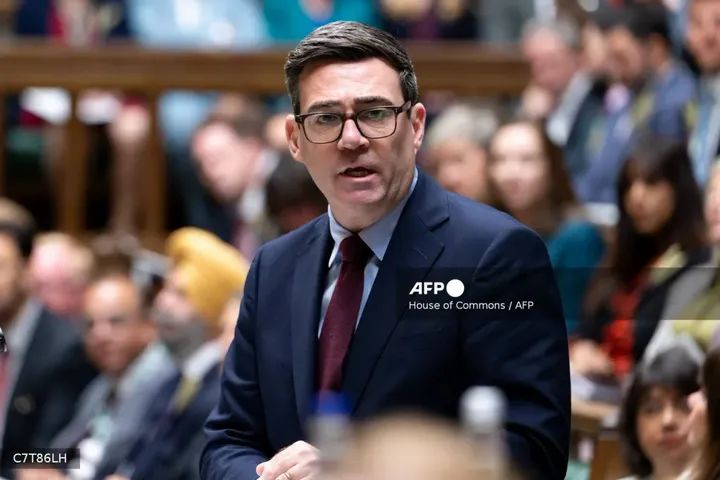
UK Prime Minister Andy Burnham is facing growing pressure from figures within the Premier League and the wider political establishment after comments he made about Manchester City following the club’s guilty verdict over breaches of the league’s financial rules.
The controversy erupted after an independent commission found Manchester City guilty of serious financial breaches covering a nine-season period between 2009/10 and 2017/18. The Premier League said the commission found that the club had used so-called “sham” contracts with commercial partners to artificially inflate revenues and reduce costs by more than £900 million. The commission also found that City had misstated accounts and breached its obligations to cooperate with the league’s investigation.
City has denied wrongdoing and has lodged an appeal against the commission’s findings. The club maintains that there were material errors in the judgment and has said it intends to challenge the decision through the established appeal process.
But while the football club prepares its legal challenge, Burnham’s comments have created a separate political storm.
The prime minister, who previously served as Mayor of Greater Manchester, said he would be “really concerned” if Manchester City’s Abu Dhabi-backed owners were forced to sell the club as a consequence of the verdict.
Burnham praised the contribution of the City Football Group and its owners to Manchester, pointing to their investment in the Etihad Stadium, the surrounding campus and wider development across the city.
He described the owners as a major partner in the development of modern Manchester and expressed appreciation for the money invested not only in the football club but also in the city itself.
Those remarks immediately attracted criticism because they came shortly after the independent commission had delivered one of the most significant financial-rule findings in Premier League history.
Several Premier League clubs have reportedly expressed concern about Burnham’s intervention, with senior figures worried that his comments could create a perception that politicians are attempting to influence or soften the consequences of an independent football disciplinary process.
The timing has also made the situation more sensitive.The commission’s findings were announced while Burnham was attending the Labour Party conference, and his response was seen by critics as unusually sympathetic towards Manchester City and its ownership.
Downing Street was subsequently forced to clarify the government’s position.
A No. 10 spokesperson stressed that the initial judgment against Manchester City was serious and that there could be no suggestion that the club was above the rules. The government also maintained that the football authorities must be allowed to follow the established process.
The clarification was significant because Burnham had appeared to raise concerns about what could happen to Manchester City if the club’s owners were ultimately forced to leave.
His comments also touched on the treatment of Everton, the club he supports. Burnham referred to Everton’s previous financial case and said he continued to believe that the club had not been treated fairly when it was punished by the Premier League.
That comparison has added another layer to the controversy because Burnham has previously campaigned on issues involving Everton and Premier League disciplinary decisions.
Critics argue that a sitting prime minister should be particularly careful when commenting on an ongoing football regulatory matter, especially where the government has broader economic and diplomatic interests involving the United Arab Emirates, where Manchester City’s ownership is based.
The issue is not simply about football.Manchester City is owned by Abu Dhabi-linked interests, and the club has become an important part of Manchester’s global economic and sporting identity since the takeover led by Sheikh Mansour in 2008.
The City Football Group has subsequently invested heavily in football infrastructure and development, while Manchester has benefited from wider investment associated with Abu Dhabi-linked businesses.
Burnham’s previous role as mayor of Greater Manchester means that he has long been associated with the city’s efforts to attract international investment. That history is now being examined alongside his comments about Manchester City.
The Liberal Democrats have also called for greater transparency over Burnham’s interactions with Manchester City’s owners and Abu Dhabi representatives.
The party has urged the prime minister to disclose any meetings he has had with the club’s ownership or related interests, arguing that the public should have clarity about the relationship between government officials and the club’s owners while the financial case is unfolding.
The situation has also attracted attention because of the wider economic relationship between Britain and the United Arab Emirates.
Reports have indicated that Emirati officials have warned that the Premier League’s handling of Manchester City could have implications for the broader UK-UAE relationship and future investment. The UAE is a major investor in Britain, making the controversy potentially more complicated than an ordinary dispute between a football club and its governing body.
For Burnham, however, the central issue is that Manchester City remains subject to an independent disciplinary process.
The prime minister has said he does not intend to intervene in the Premier League’s proceedings, despite his concerns about the possible economic consequences of losing the club’s Abu Dhabi owners.
His spokesperson has also sought to draw a line between Burnham’s personal views about the contribution of City’s owners to Manchester and the government’s position on football regulation.
That distinction has not completely ended the criticism.
The Independent Football Regulator is also monitoring the situation, while the Premier League has defended the findings of the independent commission.
The commission found that Manchester City had entered into arrangements that misrepresented the true nature of certain commercial agreements, resulting in revenues being artificially inflated and costs reduced. It also concluded that the club had committed several breaches of its duty to cooperate with the league’s investigation.
The scale of the findings is one reason the case has generated such intense interest.
Manchester City has enjoyed extraordinary success over the past decade and a half, winning numerous Premier League titles and establishing itself as one of the dominant clubs in European football.
The financial case therefore has implications beyond the club itself.
At stake is not only Manchester City’s reputation but also questions about how effectively football authorities can enforce financial regulations against the richest and most powerful clubs.
The Premier League has repeatedly stressed that its financial rules are intended to protect competitive balance and ensure that clubs operate within an established regulatory framework.
The City case has now become a major test of that system.
Manchester City, meanwhile, has chosen to appeal rather than accept the commission’s findings. The appeal process will determine whether the original findings are upheld, changed or overturned. Until that process is completed, the club’s legal position remains contested.
For Burnham, the controversy represents an uncomfortable intersection between politics, football, international investment and Manchester’s economic interests.
His supporters can point to the enormous investment made in the city by the owners of Manchester City and argue that acknowledging that contribution does not amount to interfering with the disciplinary process.
Critics, however, believe that a prime minister commenting publicly about the potential consequences of a guilty verdict risks undermining confidence in the independence of football regulation.
That disagreement is unlikely to disappear quickly.
The Premier League will now await the outcome of Manchester City’s appeal, while politicians and football authorities face continued questions about the relationship between government, wealthy football owners and the increasingly important business interests surrounding the sport.
For Manchester City, the immediate priority is clearing its name through the appeal process. For Burnham, the challenge is demonstrating that his long-standing interest in Manchester’s economic development can coexist with the principle that football’s disciplinary rules must apply independently and consistently.
The controversy has therefore grown far beyond the original financial case.
What began as a Premier League investigation into Manchester City’s finances has now become a wider debate over football governance, political influence, foreign investment and the responsibilities of public officials when powerful sporting institutions come under regulatory scrutiny.