Physical Address
304 North Cardinal St.
Dorchester Center, MA 02124
Physical Address
304 North Cardinal St.
Dorchester Center, MA 02124

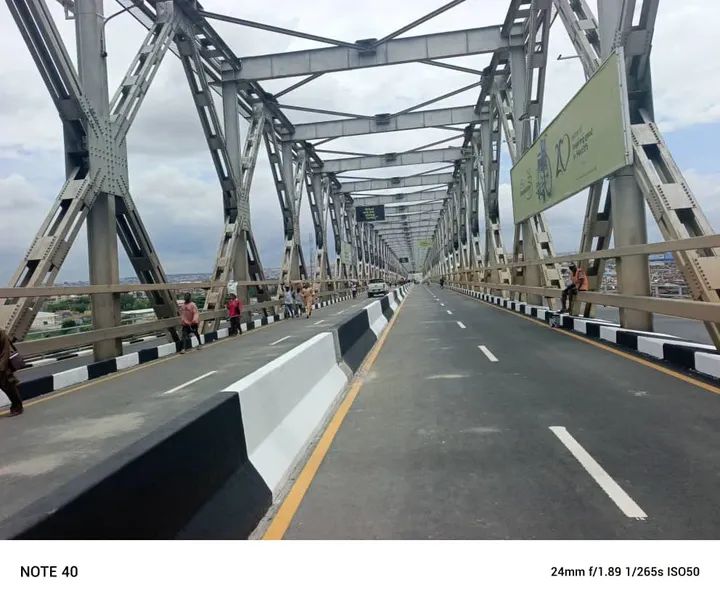
The Federal Government has indicated that the First Niger Bridge in Onitsha, Anambra State, could reopen to traffic this week following substantial progress in the rehabilitation of the ageing bridge.
The Federal Controller of Works, Anambra State Field Headquarters, Engr. Timothy Emenike, disclosed the development on Wednesday while addressing concerns surrounding the condition of the bridge and the newly installed traffic demarcations.
The announcement is expected to bring relief to thousands of motorists, traders, commuters and transport operators who have endured longer journeys, traffic congestion and increased transportation costs since the bridge was shut to traffic for emergency rehabilitation.
The First Niger Bridge is one of the most important transportation links between the South-East and South-South regions of Nigeria. It connects Onitsha in Anambra State with Asaba in Delta State and serves as a major gateway for commercial and passenger movement between the regions.
Its temporary closure therefore had a significant effect on road users, particularly those travelling between Anambra, Delta and other parts of the country.
The Federal Ministry of Works had initially closed the bridge from September 7, 2026, for a two-week emergency maintenance programme. The original plan was for the bridge to reopen on September 21.
However, persistent rainfall disrupted the rehabilitation schedule and forced the ministry to extend the closure. The Acting Federal Controller of Works had explained at the time that some sections of the work were affected by the heavy rains and that contractors needed a number of consecutive dry days to complete the outstanding tasks.
The rehabilitation became necessary after the Federal Government discovered that some important components of the bridge had deteriorated or been vandalised. Among the affected components were bolts and nuts, railings, parts of the expansion-joint steelwork and stanchion and steel-truss components.
The maintenance programme also involved work on the carriageway, removal of deteriorated asphalt and the laying of a new asphalt wearing course to provide motorists with a smoother and safer riding surface.
Other safety and security measures were included in the intervention, such as the installation of CCTV cameras and solar-powered streetlights. The measures are expected to improve visibility at night and strengthen surveillance around the bridge, particularly in view of previous concerns about vandalism.
The bridge rehabilitation has attracted considerable public attention because of the strategic role the structure plays in Nigeria’s road transportation network.
For many motorists, the closure meant relying on the Second Niger Bridge and other alternative routes. While the alternative routes provided an option for movement, commuters complained about traffic delays, longer travel times and increased fares.
Some travellers who normally complete their journeys within a relatively short period were forced to spend considerably longer on the road because of congestion around diversion routes.
The situation also affected businesses operating along the corridor, particularly transport operators, traders and other commercial activities dependent on regular movement between Onitsha and Asaba.
The Federal Government had repeatedly appealed to motorists to cooperate with the temporary traffic arrangements and use alternative routes while the rehabilitation lasted.
Following the completion of substantial portions of the work, attention has now shifted towards reopening the bridge and restoring normal traffic movement.
The latest development was confirmed by Emenike, who also sought to correct reports suggesting that the ministry had dismantled or destroyed the new demarcations installed on the bridge.
According to the Federal Controller, the openings seen in some portions of the demarcation were deliberately created to provide emergency access. They are intended to allow vehicles to make U-turns when necessary and give emergency agencies enough room to respond to accidents, breakdowns, fires or other incidents.
The clarification is particularly important because the bridge carries a large volume of traffic and any emergency situation can quickly create serious congestion if response vehicles cannot gain access to the affected section.
The Federal Road Safety Corps, Fire Service and other relevant agencies are therefore expected to benefit from the access points.
The ministry’s position is that the rehabilitation is not simply about resurfacing the bridge but about restoring its safety, improving traffic management and extending the usefulness of the structure.
The First Niger Bridge has served as a major transportation corridor for decades, making its maintenance an important national infrastructure issue. Its condition is particularly significant because of the enormous volume of economic activity that depends on the Onitsha-Asaba corridor.
Earlier in September, the Federal Ministry of Works said the intervention was aimed at restoring a safe, smooth and durable riding surface while improving motorability and reducing traffic difficulties around the bridge axis.
The Minister of Works, David Umahi, had also inspected the rehabilitation works following the initial closure. The minister subsequently expressed confidence in the progress of the project and said the bridge would reopen after the necessary repairs were completed. Reports from the inspection indicated that several of the vandalised structural components had been replaced, while other major works had also progressed.
The earlier delay caused by rainfall highlighted the difficulties involved in carrying out major road and bridge rehabilitation during the rainy season. Construction activities requiring dry conditions, particularly asphalt-related work, could not proceed effectively whenever heavy rainfall persisted.With the major rehabilitation works now substantially completed, the Federal Government is expected to make a final assessment before allowing unrestricted vehicular movement.
For commuters and transport operators, the anticipated reopening could not come at a better time. The return of traffic to the First Niger Bridge is expected to ease pressure on alternative routes and reduce the additional travel time experienced by motorists.
It could also help bring some stability to transportation costs along the Onitsha-Asaba corridor, where commuters have faced increased fares as transport operators dealt with longer routes, fuel consumption and delays.
However, the reopening also places responsibility on motorists and other road users to protect the rehabilitated infrastructure.
The concerns that led to the emergency intervention, particularly the reported vandalism of bridge components, have raised questions about the need for stronger surveillance and security around critical infrastructure.
The planned CCTV installation and improved lighting are therefore expected to play an important role in protecting the bridge from further vandalism.
The Federal Government will also need to ensure that maintenance does not stop once traffic resumes. Given the strategic importance of the First Niger Bridge, regular inspection and timely repairs could help prevent minor defects from developing into serious structural problems.
For residents, commuters and businesses in Anambra and Delta states, the expected reopening represents more than simply the removal of a road closure. It means the restoration of a vital transportation link that supports movement, trade and economic activity across the Niger.
If the final checks are completed as expected, motorists could soon return to the First Niger Bridge, bringing an end to weeks of disruption and allowing traffic between Onitsha and Asaba to return to normal.
The Federal Ministry of Works is expected to continue monitoring the facility after reopening to ensure that the newly completed rehabilitation works remain in good condition and that motorists can use the bridge safely and efficiently.





UK PM Andy Burnham Faces Pressure Over Manchester City Comments