Physical Address
304 North Cardinal St.
Dorchester Center, MA 02124
Physical Address
304 North Cardinal St.
Dorchester Center, MA 02124
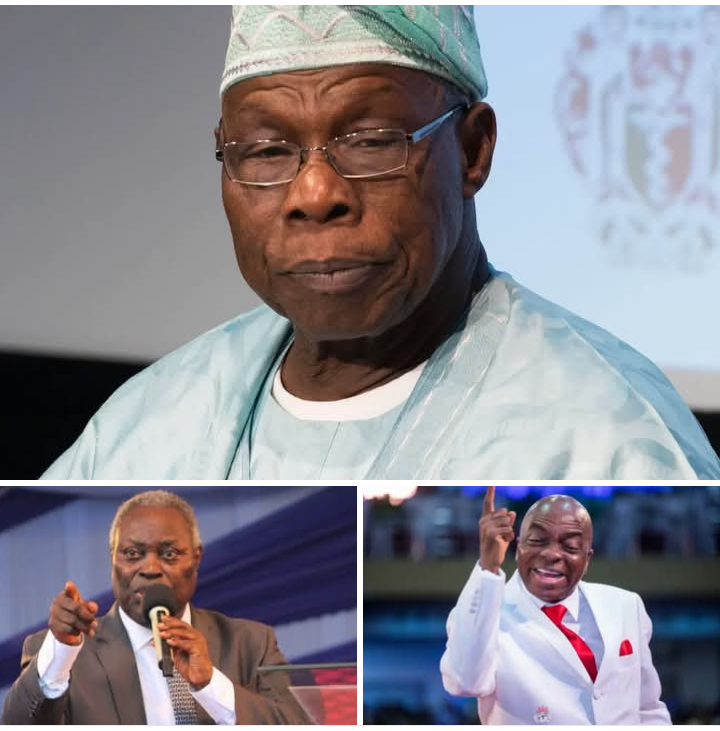
The Redeemed Christian Church of God (RCCG), Living Faith Church Worldwide, popularly known as Winners’ Chapel, and the Deeper Christian Life Ministry have rejected allegations that former President Olusegun Obasanjo allocated oil wells to their respective leaders during his administration. The controversy followed a viral video in which the founder and President of the Ministers’ Prayer Network, Rev. Prof. Mosy Madugba, alleged that some of Nigeria’s most influential Christian clerics benefited from oil well allocations during Obasanjo’s presidency between 1999 and 2007. The religious leaders mentioned in the allegation include Pastor Enoch Adeboye, General Overseer of RCCG; Bishop David Oyedepo, founder of Living Faith Church Worldwide; and Pastor William Kumuyi, General Superintendent of Deeper Christian Life Ministry. The allegation has generated considerable public attention, particularly because it involves prominent religious personalities whose ministries operate major educational, healthcare and other institutional establishments across Nigeria.
Madugba made the allegation while addressing his congregation in a sermon that subsequently circulated widely on social media. In the video, he claimed that Obasanjo had allocated oil wells to prominent pastors in Lagos, suggesting that the alleged petroleum interests were responsible for the enormous financial resources and investments associated with their ministries. He specifically mentioned Oyedepo, Adeboye and Kumuyi, alleging that they had benefited from the former president’s generosity through access to oil assets. According to him, the alleged allocations helped explain how some of the religious leaders established universities, hospitals and other institutions, while some also acquired private aircraft. Madugba further claimed that Obasanjo extended similar privileges to some of his associates and kinsmen in the Niger Delta. However, he did not present documentary evidence or official records to substantiate the allegations in the circulating video.
Reacting to the allegation, a senior media aide to Pastor Kumuyi dismissed the claim, describing it as ridiculous and insisting that the cleric had no interest in oil exploration or similar commercial ventures. The aide, who spoke on condition of anonymity, maintained that Kumuyi remained committed to his religious calling and the spiritual responsibilities associated with his ministry. He questioned the suggestion that the respected preacher could have benefited from an oil well allocation, stressing that his principal concern was preaching the gospel and winning souls for the Kingdom of God. According to the aide, the ministry had no involvement in the kind of business arrangement being alleged. He further emphasised that the cleric’s dedication to the Christian faith should not be confused with participation in petroleum-related commercial interests. The response represents a categorical rejection of the allegation against the Deeper Christian Life Ministry’s leader.
The Living Faith Church Worldwide also rejected the allegation, describing the suggestion that Obasanjo personally distributed oil wells to individual pastors as fundamentally questionable. The church’s Director of Media, Patrick Nkamiang, argued that petroleum resources were not the personal property of the President to be distributed at his discretion. He maintained that oil wells are strategic natural resources governed by the laws and regulatory framework of the Federal Republic of Nigeria. Nkamiang questioned the basis of Madugba’s claims, particularly the suggestion that a former president could simply allocate such valuable national assets to religious personalities. He stressed that oil wells were neither ordinary gifts nor properties that could be transferred without regard to established legal and regulatory procedures. His response shifted attention from the personalities involved to the broader legal question surrounding the ownership, administration and allocation of Nigeria’s petroleum resources.
Nkamiang also addressed the financial implications of the allegation, particularly the suggestion that Bishop Oyedepo’s wealth and institutional investments were products of oil well ownership. He maintained that Oyedepo operated a zero-tolerance policy towards gifts and donations whose sources could not be traced to legitimate personal or internally generated income. The church representative consequently rejected the insinuation that the bishop’s financial resources were connected to an alleged presidential allocation of oil wells. Interestingly, despite the seriousness of the allegation, Nkamiang indicated that Living Faith Church Worldwide would not pursue legal action against Madugba, explaining that the church would rather leave the matter to God. This position suggests that the church prefers to address the controversy through its public response rather than engage in a prolonged legal confrontation with the cleric who made the allegation.
The Redeemed Christian Church of God, on its part, adopted a more cautious approach to the controversy. An official in the church’s media unit, who also spoke anonymously, said the organisation would not issue a substantive response to the allegation until Madugba provided evidence to support his claims. The position effectively places the responsibility of establishing the allegation on the individual who made it. Rather than engage in speculation or an extended public exchange, the church indicated that verifiable evidence would be necessary before it could address the matter further. The response is particularly significant because Pastor Adeboye is among the most influential Christian leaders in Nigeria, with RCCG operating numerous parishes and institutions both within and outside the country. As of the publication of the report, the church had not presented a separate detailed rebuttal of the allegation.
Meanwhile, the allegations have brought renewed attention to the relationship between religious institutions, political authorities and the management of Nigeria’s natural resources. The country’s petroleum industry has historically attracted public debate over oil block allocations, licensing arrangements and the distribution of benefits derived from crude oil production. During Obasanjo’s administration, which lasted from 1999 to 2007, the allocation and management of petroleum assets formed part of broader discussions about transparency and accountability in the oil sector. However, the existence of controversies surrounding oil block allocations during that period does not, in itself, establish that the three named pastors received oil wells from the former president. It is important to distinguish between documented government policies and individual allegations that have not been supported by official records. The current controversy therefore raises legitimate questions about transparency, but those questions must be addressed through verifiable information rather than assumptions.
Another issue arising from the controversy concerns the financing of large religious institutions and the extent to which their investments should be understood within the framework of church administration. Living Faith Church Worldwide is associated with Covenant University, while RCCG owns Redeemer’s University. Both organisations have also established educational, healthcare and other facilities as part of their institutional activities. These investments have frequently attracted public attention because of their scale and the resources required to establish and maintain them. However, the existence of universities, hospitals, schools and other institutional assets does not automatically establish that their funding originated from petroleum investments or government allocations. Religious organisations may have several legitimate sources of income, including donations, offerings, institutional revenue and other lawful investments. Consequently, any attempt to connect the wealth of a religious organisation to a particular source of funding requires evidence capable of establishing that connection.
The controversy has equally generated mixed reactions among Nigerians on social media. While some individuals have expressed concern over the possibility of influential religious leaders benefiting from political patronage, others have challenged Madugba to provide concrete evidence rather than rely on statements made during a sermon. Some commentators have argued that allegations involving individuals of such public influence should be supported by official documentation, particularly where they concern the distribution of valuable national resources. Others have questioned why the alleged beneficiaries would require oil wells to establish institutions that could potentially be financed through the financial contributions of their congregations and other legitimate sources. The debate has consequently expanded beyond the personalities mentioned to include broader questions about religious accountability, public trust and the financial transparency of major religious organisations. Nevertheless, public reactions and social media discussions cannot independently establish the truth or otherwise of the allegation.
Efforts to obtain the reaction of former President Olusegun Obasanjo were reportedly unsuccessful at the time of the publication of the report. His Special Assistant on Media, Kehinde Akinyemi, neither answered calls nor responded to messages sent to him by journalists seeking clarification on the allegation. Similarly, when journalists contacted Madugba’s church for a response, an official identified as Blessing Madugba indicated that the organisation would get back to them. No subsequent clarification from the former president was included in the report. The absence of a response from Obasanjo does not amount to an admission of the allegation, just as the absence of documentary evidence in the circulating video does not establish that every aspect of the broader historical debate surrounding oil allocations is unfounded. What remains necessary is credible documentation capable of identifying the alleged oil wells, their ownership history, the beneficiaries and the legal instruments through which any such allocation was supposedly made.
Ultimately, the controversy surrounding the alleged allocation of oil wells to Adeboye, Oyedepo and Kumuyi has placed important questions of public accountability, religious credibility and responsible public communication at the centre of national discussion. While the three religious organisations have rejected or questioned the allegation, the responsibility remains with Madugba to provide verifiable evidence capable of establishing his claims. In a democratic society governed by the rule of law, serious allegations should neither be accepted merely because they are made by influential personalities nor dismissed without examining credible evidence. The constitutional principle of the presumption of innocence and the broader requirements of fairness demand that individuals be treated with dignity until allegations against them are properly established. For now, there is no documentary evidence presented in the reported video confirming that Obasanjo allocated oil wells to the three pastors. Until such evidence emerges, the claims remain unsubstantiated allegations rather than established facts.