Physical Address
304 North Cardinal St.
Dorchester Center, MA 02124
Physical Address
304 North Cardinal St.
Dorchester Center, MA 02124

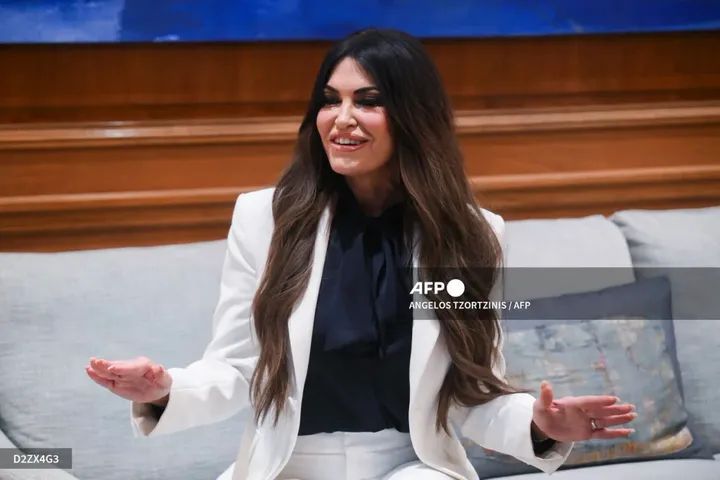
US President Donald Trump’s administration has asked Kimberly Guilfoyle, the United States ambassador to Greece, to resign following a series of allegations concerning her financial dealings and conduct before and during her diplomatic assignment. The announcement, made by White House press secretary Katie Zacharia on Tuesday, October 13, 2026, followed days of mounting controversy over reports that Guilfoyle allegedly sought financial assistance from a political donor in exchange for access to senior officials in the Trump administration. The development represents a significant setback for a diplomat who has maintained close ties with the president’s political circle. Although the White House confirmed that it had requested her resignation, Guilfoyle has denied wrongdoing and her legal team has challenged aspects of the allegations.
The decision came after weeks of damaging reports about Guilfoyle’s conduct, including allegations that she asked a prominent supporter of President Trump to pay a $100,000 credit card bill shortly before her Senate confirmation hearing. According to reports published by The Wall Street Journal, the request was allegedly accompanied by an offer to provide the donor with access to influential figures within the administration. The claims raised questions about whether personal financial interests had become entangled with the responsibilities associated with public office. The allegations have attracted considerable attention in Washington because diplomatic appointments carry significant responsibilities and are expected to be conducted in accordance with government ethics rules. However, the claims remain disputed, and the precise circumstances surrounding the alleged financial request have yet to be conclusively established.
White House press secretary Katie Zacharia confirmed the administration’s decision during a press briefing, stating that Guilfoyle had been asked to step down from her position. While the announcement was brief and did not provide a detailed explanation of the decision, it came after Trump publicly expressed dissatisfaction with the growing controversy. A day earlier, the president had told reporters that his administration was reviewing the situation and that officials were unhappy with the reports surrounding the ambassador. His remarks suggested that the allegations had become a serious concern for the White House, placing Guilfoyle’s position under increasing pressure. The subsequent resignation request marked a decisive development in a controversy that had been building for several weeks.
Guilfoyle’s legal representatives have strongly rejected suggestions that she engaged in improper financial conduct. According to statements issued by her lawyers, the money she allegedly sought from the donor was connected to outstanding payments for speaking engagements and public appearances that predated her nomination as ambassador. Her legal team has also challenged the authenticity or interpretation of messages cited in reports about the alleged transaction. These denials are central to the dispute because they present a different explanation for the financial request and challenge the suggestion that it was intended to secure political favours. As the controversy continues, the competing accounts underscore the importance of examining the available evidence before drawing conclusions about whether any ethical or legal violations occurred.
Beyond the reported $100,000 request, Guilfoyle has faced additional allegations concerning her conduct while serving as the United States’ top diplomatic representative in Greece. Reports have raised questions about her relationships with Greek business interests, including claims that she promoted the interests of a construction and energy company and permitted a lobbyist connected to the firm to attend private diplomatic meetings. Other reports have alleged that she accepted questionable gifts or hospitality and made remarks suggesting that the United States could use its influence against the Greek government. Such claims have raised concerns about the boundaries between diplomatic engagement, private commercial interests and the responsibilities of an ambassador. Guilfoyle and her representatives have disputed allegations of wrongdoing, and the claims should not be treated as proven findings.
The controversy has also placed Secretary of State Marco Rubio under scrutiny because he initially defended Guilfoyle’s performance as ambassador. During his visit to Athens, Rubio described her as a strong ambassador, but he later declined to comment directly on the substance of the allegations, saying he could not confirm whether the reports were true. His response reflected the sensitivity of a situation involving a senior diplomatic appointee and allegations that could affect confidence in the administration’s handling of official appointments. The episode has also highlighted the difficulties facing government officials when they must balance support for political colleagues with the need to ensure that allegations of misconduct receive appropriate scrutiny.
Guilfoyle’s background has contributed to the public interest surrounding the case. Before her appointment as ambassador, she was known as a television personality, former prosecutor and prominent Republican political figure. She also previously served as a host on Fox News and was engaged to Donald Trump Jr., the eldest son of President Trump. Her longstanding connections to the Trump political circle made her appointment a high-profile decision, drawing attention to her transition from political media and campaigning into diplomatic service. The latest controversy has therefore raised questions not only about her personal conduct but also about the scrutiny applied to political allies appointed to positions involving public trust and international relations.
The allegations have prompted calls for further investigation from Democratic lawmakers, who have argued that the reported conduct deserves a thorough examination. Reports indicate that the State Department’s Office of Inspector General has been examining the allegations, although the full scope and status of any formal investigation have not been publicly established. Lawmakers have also called for Guilfoyle to answer questions under oath about the claims. Any investigation would need to establish the facts surrounding the alleged financial request, the nature of her interactions with private business interests and whether her conduct complied with applicable government ethics requirements. Such scrutiny is important because ambassadors represent the United States abroad and are expected to protect the integrity of official diplomatic engagements.
The situation also carries implications for US-Greece relations, although there has been no indication in the reported developments that the controversy has fundamentally changed the relationship between the two countries. American ambassadors play an important role in coordinating diplomatic discussions, supporting economic cooperation and advancing their government’s foreign policy objectives. Questions about an ambassador’s conduct can nevertheless create distractions for diplomatic missions and complicate efforts to maintain public confidence in official representatives. For Greece, the allegations have placed additional attention on the activities of the American diplomatic mission in Athens, particularly claims involving private business interests and access to diplomatic meetings. The coming weeks may provide greater clarity about how the departure will be handled and whether further official action will follow.
Ultimately, the White House’s request for Guilfoyle to resign marks a significant moment for the Trump administration as it responds to allegations involving one of the president’s political allies. The case has renewed debate about transparency, ethical standards and the responsibilities of individuals appointed to represent the United States overseas. While the administration has moved to end Guilfoyle’s tenure, the allegations themselves remain subject to scrutiny, and her legal team continues to reject claims of wrongdoing. The outcome of any further investigation will be important in determining whether the reported conduct breached applicable rules or laws. For now, the controversy serves as a reminder that political connections do not remove the need for accountability, and that allegations involving public officials must be assessed on the evidence rather than political loyalty or public speculation.