Physical Address
304 North Cardinal St.
Dorchester Center, MA 02124
Physical Address
304 North Cardinal St.
Dorchester Center, MA 02124

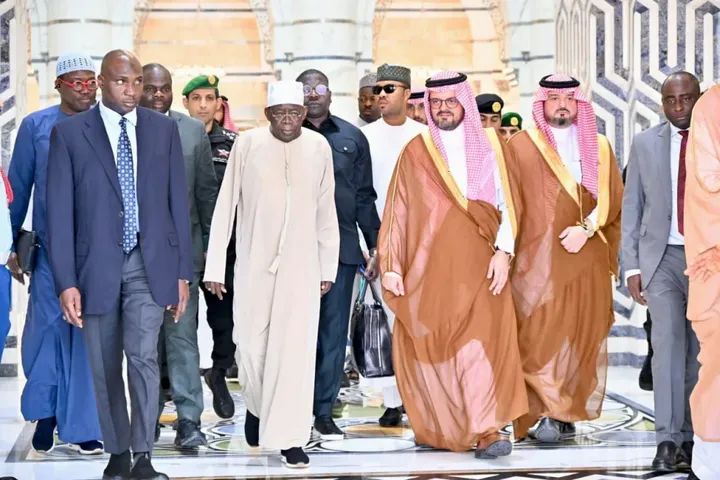
President Bola Ahmed Tinubu has departed Jeddah, Saudi Arabia, for Abuja after completing a week-long lesser pilgrimage, known as Umrah, in the holy city of Makkah. The Nigerian leader’s departure marks the conclusion of his religious visit to the Kingdom of Saudi Arabia, where he observed the Islamic rites associated with the pilgrimage. His return to Nigeria is expected to see him resume official responsibilities at a time when his administration continues to face pressing national issues, including economic challenges, security concerns and demands for improved living conditions across the country.
Tinubu travelled to Saudi Arabia to undertake Umrah, a voluntary Islamic pilgrimage that can be performed at different times of the year, unlike Hajj, which takes place during a specified period under the Islamic calendar. The pilgrimage involves visiting the Grand Mosque in Makkah and performing prescribed acts of worship, including Tawaf, the circumambulation of the Kaaba, and Sa’i, the walking between the hills of Safa and Marwah. For Muslims, Umrah represents an opportunity for spiritual reflection, devotion and seeking forgiveness, making the journey significant beyond its physical and ceremonial aspects.Jeddah served as the departure point for the president’s return journey to Nigeria. The Saudi city is a major international gateway for pilgrims travelling to and from Makkah, which lies approximately 70 kilometres away by road. Following the completion of the religious exercise, Tinubu proceeded to Jeddah ahead of his flight to Abuja. His movement between the two Saudi cities reflects the common travel arrangements for international visitors undertaking pilgrimage in Makkah before returning to their respective countries.
The president’s visit has also drawn attention to the relationship between his personal religious commitments and the responsibilities of his public office. As Nigeria’s head of state, Tinubu’s movements abroad are often followed closely by political observers, particularly when they coincide with significant developments at home. While religious observance is a personal matter, the president’s official travel arrangements remain a subject of public interest because Nigerians expect continuity in governance and effective attention to national priorities regardless of where the president is located.
Tinubu’s return comes against the backdrop of persistent economic concerns affecting households and businesses across Nigeria. The cost of food, transportation, housing and other essential goods remains a major concern for many citizens, while businesses continue to navigate changing operating costs and broader economic pressures. The administration has defended its economic policies as necessary measures aimed at stabilising the economy and laying the foundation for long-term growth. However, many Nigerians continue to demand more visible improvements in purchasing power, employment opportunities and the general standard of living.
Security is another major issue awaiting the federal government’s sustained attention. Several parts of Nigeria have experienced challenges involving terrorism, banditry, kidnapping and communal violence, prompting calls for stronger intelligence gathering, improved security coordination and more effective protection for vulnerable communities. Citizens and stakeholders continue to expect the government to strengthen the capacity of security agencies while addressing the underlying factors that contribute to insecurity. The president’s return provides an opportunity for his administration to maintain focus on these concerns and evaluate the progress of ongoing security measures.
The political atmosphere also remains important as parties, elected officials and political organisations continue to position themselves ahead of future electoral contests. Discussions about governance, accountability, party organisation and the performance of public officeholders are likely to remain central to national debate. For Tinubu’s administration, the challenge will be to demonstrate that its policies are producing tangible results while responding to criticism from opposition parties and other stakeholders. Public confidence in government is often shaped not only by policy announcements but also by the extent to which citizens experience improvements in their daily lives.
Nigeria’s diplomatic and economic relationship with Saudi Arabia remains another aspect of interest surrounding the visit. The two countries maintain connections through religious travel, trade, investment and broader diplomatic engagement. Saudi Arabia’s importance as a destination for Nigerian Muslim pilgrims makes the relationship particularly significant, while cooperation in economic and development matters can provide additional opportunities for engagement. Although the president’s immediate purpose in the country was religious, high-level visits to foreign countries often attract attention because of the wider diplomatic relationships between the nations involved. Any claims of specific agreements or diplomatic outcomes, however, would need to be supported by official information.
For many Nigerians, the conclusion of the president’s pilgrimage is less important than what follows his return to the country. Citizens will continue to assess the administration through its handling of economic hardship, public infrastructure, security, education, healthcare and employment. Expectations remain high that government institutions will function effectively and that decisions affecting the national economy will translate into practical benefits for ordinary people. The president’s return to Abuja therefore places renewed attention on the day-to-day responsibilities of leadership and the need to maintain momentum in addressing the country’s most urgent challenges.
Tinubu’s departure from Jeddah after completing Umrah brings his week-long religious visit to an end and signals his return to Nigeria’s political and administrative environment. The pilgrimage provided an opportunity for the president to fulfil an important religious obligation, while his return places him back at the centre of national governance. As Nigerians follow developments after his arrival in Abuja, attention is expected to remain on the administration’s next steps and its response to the issues affecting citizens. Ultimately, the significance of the president’s return will be measured not only by the completion of his overseas journey but also by the actions and decisions that follow.