Physical Address
304 North Cardinal St.
Dorchester Center, MA 02124
Physical Address
304 North Cardinal St.
Dorchester Center, MA 02124

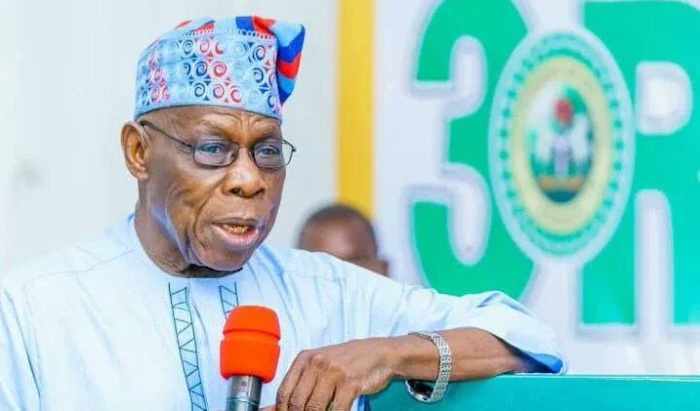
Former President Olusegun Obasanjo has warned that corruption continues to deepen poverty in Nigeria, arguing that the people who suffer most in a corrupt society are those who already have the least. He made the remarks in Lagos on Monday, September 28, 2026, while chairing the public presentation of Unexplained Wealth: A Trilogy of Nigerian Financial Law, a three-volume work authored by Senior Advocate of Nigeria, Dr. Wahab Shittu. Obasanjo used the occasion to renew his call for stronger institutions and a sustained fight against corruption and illicit wealth.
The former President described corruption as fundamentally incompatible with national development, saying a country cannot make meaningful progress when public resources are diverted for private benefit. According to him, corruption is “anti-social” and “anti-development,” regardless of the form in which it occurs. He maintained that while no country has completely eliminated corruption, governments can build institutions and systems strong enough to prevent it from becoming deeply rooted in public life.
Obasanjo also reflected on his own long involvement in Nigeria’s anti-corruption efforts, tracing his interest in the issue to his military career, when he served as a prosecutor under military law and participated in a court-martial involving corruption. He recalled efforts during his administration to establish stronger anti-corruption institutions, including the legal framework that eventually produced agencies such as the Independent Corrupt Practices and Other Related Offences Commission and the Economic and Financial Crimes Commission. He said his decision to support the presentation of Shittu’s book was informed by his belief that the fight against corruption remains central to Nigeria’s development.
The former President’s argument comes against a wider debate over unexplained wealth, asset recovery and accountability in Nigeria. The book launch brought together several prominent figures, including the Emir of Kano, Muhammadu Sanusi II, and former Vice-President Yemi Osinbajo, represented at the event by his former Chief of Staff, Ade Ipaye. Sanusi argued that laws dealing with unexplained wealth would have limited impact if investigators, prosecutors and judges do not apply them fairly and transparently. He also raised concerns about situations where political connections can influence whether questions are asked about wealth.
The discussion also highlighted the delicate balance between recovering illicit assets and protecting legitimately acquired property. Representing Osinbajo, Ipaye said Nigeria needs a clear and constitutionally sound framework capable of recovering stolen assets without criminalising wealth that was lawfully obtained. Prof. Olanrewaju Fagbohun, SAN, similarly cautioned against treating the absence of conventional documentation as automatic proof of criminal conduct. The different interventions underscored that the fight against corruption involves not only stronger enforcement but also due process, institutional independence and consistent application of the law.
Obasanjo’s latest comments are consistent with concerns he has expressed in recent weeks about Nigeria’s struggle to translate its enormous resources into improved living conditions. Earlier in September, he argued that Nigeria has sufficient natural resources, agricultural potential and human capital to support a prosperous economy, but identified policy inconsistency, corruption, crude oil theft and revenue leakages as obstacles to achieving that potential. He also called for greater fiscal accountability and continuity in economic policies aimed at addressing poverty.
For Obasanjo, the issue is therefore bigger than the theft of public money. When resources meant for roads, hospitals, schools, security, social programmes and other public services are lost through corruption or poor accountability, the consequences eventually reach ordinary citizens. The wealthy may have alternatives when public systems fail, but poorer Nigerians often depend heavily on government-provided services. That is why, in his view, corruption can make an already difficult economic situation even harder for vulnerable citizens.
He consequently urged Nigeria and other African countries to strengthen their laws and institutions while maintaining pressure on those involved in corruption and illicit financial activities. The former President stressed that the objective should not simply be to launch anti-corruption campaigns but to build a system in which wrongdoing is consistently investigated, prosecuted and sanctioned in accordance with the law.
The renewed debate comes at a time when accountability, poverty and the management of public resources remain major issues in Nigeria. Obasanjo’s position is that development and corruption cannot comfortably coexist, while other speakers at the Lagos event emphasised that anti-corruption measures must also respect constitutional safeguards and be applied without political discrimination. The challenge for the country, therefore, remains turning these principles into institutions and practices capable of protecting public resources and ensuring that national wealth translates into broader opportunities for Nigerians.