Physical Address
304 North Cardinal St.
Dorchester Center, MA 02124
Physical Address
304 North Cardinal St.
Dorchester Center, MA 02124

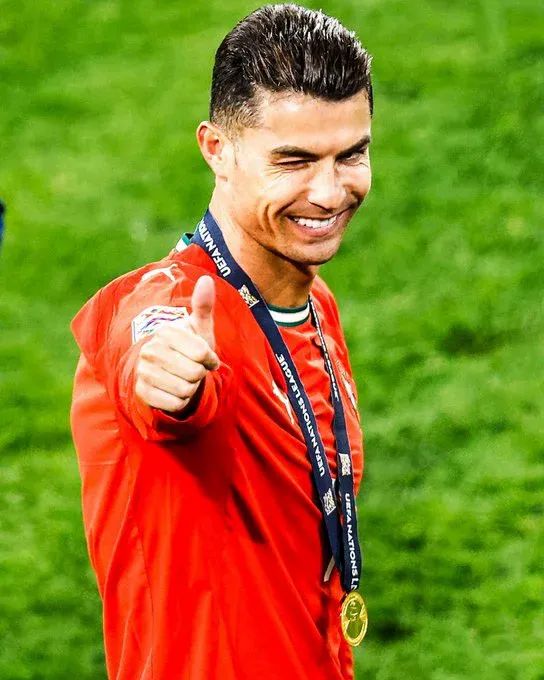
In announcing his decision, Ronaldo described the moment as a difficult one, acknowledging the emotional attachment he developed to the Portuguese national team throughout his career. He explained that the time had come to pass the number seven shirt to the next generation, expressing gratitude to the Portuguese people for their support over more than two decades. His message reflected the significance of representing his country, a responsibility he carried from his early days as a promising teenager to becoming the captain and leading figure of the national team. For Ronaldo, the decision represents more than the end of a sporting commitment; it closes a chapter that shaped much of his professional identity.Ronaldo’s international journey began in August 2003 when he made his senior debut for Portugal against Kazakhstan. At the time, he was a young winger whose speed, confidence and technical ability had already attracted attention following his emergence at Sporting Lisbon and subsequent move to Manchester United. Few could have predicted the extraordinary records that would follow. Over the next 23 years, he established himself as Portugal’s most influential footballer, making 234 appearances and scoring 146 goals for his country. Both figures stand as men’s international records, reflecting a level of consistency and longevity rarely achieved in the sport.One of the defining moments of Ronaldo’s international career came at the 2016 European Championship in France, when he captained Portugal to their first major international trophy. The final against France at the Stade de France was particularly dramatic, as Ronaldo was forced off in the first half after suffering an injury. Despite his absence from the pitch, he remained actively involved in encouraging his teammates from the touchline as Portugal eventually secured a 1–0 victory through Eder’s extra-time goal. The triumph was historic, ending decades of disappointment for Portuguese football and establishing Ronaldo as the captain who helped deliver a long-awaited European crown.
His contribution to Portugal did not end with the European Championship success. Ronaldo also played a significant role in the country’s victories in the UEFA Nations League in 2019 and 2025. The 2019 triumph was particularly memorable because Portugal defeated the Netherlands 1–0 in the final on home soil, with Gonçalo Guedes scoring the decisive goal. Six years later, the national team lifted the trophy again, adding another major achievement to Ronaldo’s international honours. These victories strengthened his legacy as a leader who helped Portugal move from being a talented but frequently unsuccessful national side to a team capable of competing for and winning major international titles.
Ronaldo also leaves international football with an extraordinary record at the FIFA World Cup. He appeared at six editions of the tournament, becoming one of only two players, alongside Argentina’s Lionel Messi, to achieve that milestone. He scored at every World Cup between 2006 and 2026, demonstrating an exceptional ability to remain relevant across different generations of players and changing tactical systems. His World Cup journey began in Germany as a young footballer and continued into his forties, making him one of the most enduring figures in the competition’s history. Although the ultimate ambition of winning the World Cup remained unfulfilled, his longevity and individual achievements ensured that his name would remain part of its history.
His final World Cup appearance came at the 2026 tournament, where Portugal were eliminated in the round of 16 by eventual champions Spain. The defeat ended the country’s hopes of lifting the trophy and intensified discussions about Ronaldo’s future with the national team. At his age, questions had increasingly emerged about whether he could continue competing at the highest international level and whether Portugal needed to begin building its attack around younger players. Nevertheless, his experience, leadership and remarkable goal-scoring history remained important aspects of his contribution to the national side, even as the team entered a period of transition.
The circumstances surrounding his retirement have also attracted attention because of tensions between Ronaldo and Portugal’s head coach, Jorge Jesus, during the September international break. Reports indicated that disagreements over his playing time and role in the team contributed to a difficult period within the national camp. Ronaldo subsequently left the squad following the controversy, while the situation generated considerable discussion among supporters and football commentators. The episode added an unexpected dimension to the conclusion of his international career, although his retirement announcement also focused on gratitude, pride and the importance of allowing a new generation to take responsibility for the national team.
Despite ending his international career, Ronaldo is not retiring from professional football altogether. The forward is expected to continue playing for Saudi Arabian club Al-Nassr, where he remains focused on his club responsibilities and personal career ambitions. His pursuit of the historic 1,000-goal milestone across competitive senior football is another major storyline that continues to attract attention. With 985 career goals reported at the time of his retirement announcement, the target remains a significant motivation as he continues his journey in club football. His decision to leave Portugal therefore marks a change in direction rather than an immediate farewell to the sport.
The Portuguese Football Federation has expressed deep gratitude and admiration for Ronaldo’s contribution to the national team, recognising his influence on the country’s footballing identity and his role in inspiring younger generations. The federation also indicated its intention to organise a special tribute to celebrate his achievements and give supporters an opportunity to honour a player who has represented Portugal with distinction for more than two decades. Such recognition is fitting for a footballer whose influence extends beyond goals and trophies. From his determination and discipline to his competitive spirit and global popularity, Ronaldo has helped place Portuguese football firmly on the international sporting map.
Ultimately, Cristiano Ronaldo’s retirement from international football marks the end of an extraordinary era for Portugal and world football. His 146 international goals, 234 appearances, European Championship triumph and two Nations League titles form a legacy that will be difficult for any future Portuguese footballer to surpass. More importantly, his career demonstrates the impact of ambition, consistency and an enduring commitment to excellence. As he hands over the number seven shirt, Portugal must look towards a new generation capable of carrying its footballing ambitions forward. Ronaldo may no longer wear the national colours on the pitch, but his name, achievements and influence will remain permanently woven into the history of Portuguese football.