Physical Address
304 North Cardinal St.
Dorchester Center, MA 02124
Physical Address
304 North Cardinal St.
Dorchester Center, MA 02124

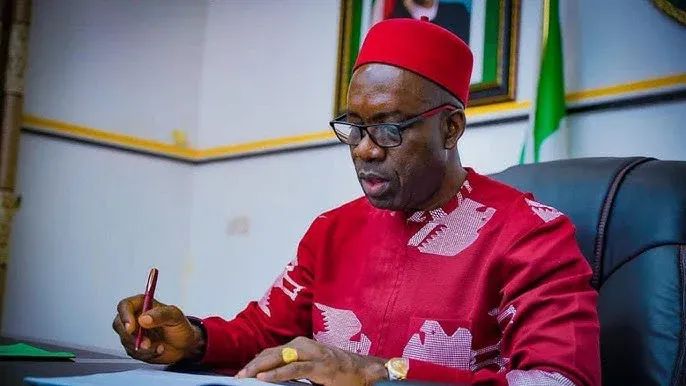
Anambra State Governor, Chukwuma Charles Soludo, has clarified his relationship with former Anambra State Governor and Labour Party presidential candidate Peter Obi, confirming that Obi’s wife is the godmother of one of his children. The clarification comes months after a public disagreement over the nature of the relationship between the two political figures and their families. Soludo’s revelation has renewed public interest in the personal connections between the governor and his predecessor, particularly against the background of their political differences and contrasting positions on issues of national importance. The development has also generated conversations about the distinction between personal relationships and political disagreements, especially in a political environment where alliances and rivalries frequently attract public attention.
The revelation is significant because both Soludo and Obi are influential figures in Anambra State and Nigerian politics more broadly. Obi governed Anambra State from 2006 to 2014, while Soludo assumed office in 2022 after winning the November 2021 governorship election. Although both men have held the same office at different times, their political approaches, public communication styles and relationships with national political developments have sometimes placed them on different sides of public debate. Their interactions are therefore frequently examined by political observers seeking to understand the dynamics of leadership, succession and political influence in the state. Soludo’s confirmation of the godparent relationship provides another dimension to the public understanding of the connection between the two families.
Godparenthood occupies an important place in many Nigerian families, particularly among communities where religious and cultural traditions place considerable emphasis on spiritual guidance, family bonds and mutual responsibility. The relationship often extends beyond the ceremony at which it is established, with godparents expected to provide guidance, encouragement and support to their godchildren as they grow. In some families, such relationships also create close connections between parents, strengthening friendships and reinforcing a sense of shared responsibility. Soludo’s revelation that Obi’s wife serves as the godmother of one of his children therefore points to a personal connection that exists independently of their public positions. However, the precise significance of that relationship to their present political interactions should not be assumed beyond what the governor has confirmed.
The clarification has also revived discussions about an earlier public disagreement concerning the relationship between the two families. When political figures exchange statements about personal connections, their comments can quickly become subjects of wider interpretation, particularly when the individuals involved have a history of working within the same political environment. Supporters may interpret such exchanges as evidence of friendship, rivalry or an attempt to correct public misconceptions, while critics may view them through the lens of existing political divisions. In the case of Soludo and Obi, the public’s interest is heightened by their shared history in Anambra politics and the prominent roles both have played in national conversations. Nevertheless, understanding the circumstances surrounding their disagreement requires distinguishing confirmed statements from speculation about their private motivations.Soludo’s clarification also raises an important question about whether personal relationships should be used to measure political cooperation. In a democratic society, politicians can maintain family friendships, religious connections and longstanding personal relationships while disagreeing over public policy, party affiliation or the direction of government. Such differences do not necessarily invalidate personal bonds, just as personal connections do not automatically guarantee political agreement. Public officials are expected to make decisions based on their understanding of the public interest, constitutional responsibilities and political convictions. Consequently, the existence of a godparent relationship between members of the two families does not, in itself, establish that Soludo and Obi share the same political interests or have resolved every disagreement between them.
The relationship between the two men has attracted particular attention because of their differing political trajectories. Obi became a nationally prominent figure following his 2023 presidential campaign, during which he attracted considerable support, especially among young voters and Nigerians seeking alternatives to the established political parties. Soludo, an economist and former Governor of the Central Bank of Nigeria, has pursued his own political and developmental agenda as governor of Anambra State. Their respective public profiles mean that comments about their relationship can easily become part of broader discussions about political leadership, economic development and the future of opposition politics in Nigeria. However, their individual political positions should be assessed on their respective merits rather than solely through the nature of their personal relationship.
For political observers, the development offers an opportunity to reflect on the complex nature of relationships within Nigerian politics. Political history is filled with examples of individuals who maintained personal connections despite belonging to different political parties or disagreeing over important national questions. At the same time, personal friendships have not always prevented political competition, public criticism or disagreements over policy. The distinction is particularly relevant in Anambra State, where political developments often attract attention beyond the state’s boundaries because of the national prominence of its past and present leaders. Soludo’s confirmation therefore adds context to the discussion but should not automatically be interpreted as evidence of an emerging political alliance or a change in either man’s political position.The episode also demonstrates how social media and online news platforms influence the interpretation of statements made by public officials. A brief clarification about a family relationship can quickly generate headlines, reactions and competing narratives, with some commentators focusing on the personal connection while others attempt to connect it to broader political calculations. Although public discussion is a normal feature of democratic life, the speed of online commentary can sometimes encourage conclusions that go beyond the available facts. Responsible reporting requires presenting the governor’s confirmation accurately, explaining the relevant political background and avoiding unsupported claims about what the relationship means for future political developments. Readers, in turn, should distinguish between the information that has been confirmed and interpretations offered by commentators.
Beyond the immediate controversy, the development highlights the importance of civility in political disagreements. Political competition is an essential component of democracy, but it does not require public officials or their supporters to treat every difference as a permanent personal conflict. Acknowledging personal connections can remind the public that political figures, despite their positions and disagreements, remain individuals with families, friendships and private commitments. However, such recognition should not prevent legitimate scrutiny of their decisions, public statements or performance in office. The appropriate balance is to respect personal relationships while continuing to hold political leaders accountable for their constitutional duties and the consequences of their policies.
Ultimately, Soludo’s confirmation that Peter Obi’s wife is the godmother of one of his children has brought renewed attention to the relationship between the two prominent Anambra political figures. While the revelation provides clarification about a personal connection between their families, its broader political implications remain a matter of interpretation unless either man provides further confirmation. The development serves as a reminder that personal relationships and political disagreements can coexist without necessarily cancelling each other out. For Anambra residents and political observers across Nigeria, the more important consideration remains how the state’s leaders use their experience, influence and public responsibilities to advance development, strengthen democratic institutions and improve the lives of citizens. Whether or not the revelation changes public perceptions of Soludo and Obi, their respective records in public office will ultimately remain central to assessing their contributions to Nigerian politics.