Physical Address
304 North Cardinal St.
Dorchester Center, MA 02124
Physical Address
304 North Cardinal St.
Dorchester Center, MA 02124

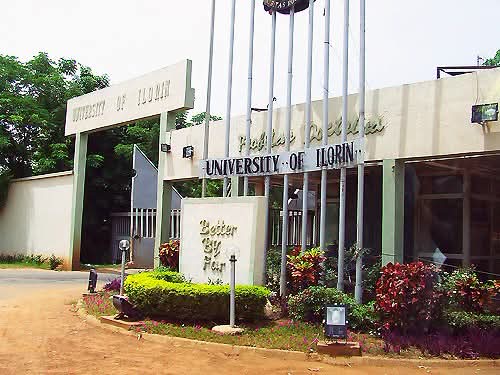
The University of Ilorin (UNILORIN) has emerged as Nigeria’s leading university in research quality in the latest Times Higher Education (THE) World University Rankings, recording a research quality score of 69.4 per cent.
The result places the University of Ilorin ahead of other Nigerian universities in the specific research quality category of the 2027 Times Higher Education assessment. The ranking was released on September 30, 2026, during the World Academic Summit hosted by the University of Cape Town in South Africa.
The latest recognition is another significant milestone for the institution, which has in recent years placed increasing emphasis on research, academic publications, innovation and international collaboration.
According to the university, UNILORIN’s 69.4 per cent research quality score is the highest recorded by any Nigerian university in the 2027 edition. The institution said the result reflects years of academic work by its lecturers, researchers, postgraduate students and other members of the university community.
The Vice Chancellor of the University of Ilorin, Professor Wahab Olasupo Egbewole, SAN, described the development as a product of sustained academic effort rather than an overnight achievement.
Egbewole congratulated members of the university community, particularly academic staff whose research and publications contributed to the institution’s performance. He said the outcome reflected “years of patient, disciplined scholarship” by researchers whose work has gained attention and citations beyond Nigeria.
The significance of the ranking goes beyond simply having a high percentage score. Research quality is one of the major areas assessed by Times Higher Education and is designed to measure the strength and influence of research produced by universities.
In the 2027 methodology, THE assesses research-intensive universities across five broad areas: teaching, research environment, research quality, industry and international outlook. The organisation uses a range of carefully calibrated performance indicators to arrive at its scores.
For research quality specifically, UNILORIN’s performance was driven by four field-normalised measures: citation impact, research strength, research excellence and research influence.
These measures are important because academic research is not judged simply by the number of papers produced. The extent to which research is read, cited, recognised and used by other scholars also matters when determining its wider academic influence.
Professor Suleiman Funsho Ambali, the university’s Project Manager for University Ranking Implementation, explained that research quality remains one of UNILORIN’s strongest areas.
According to Ambali, the university recorded a research quality score of 69.4, compared with 67.8 for the University of Lagos, 66.5 for Bayero University, Kano, and 64.9 for the University of Ibadan. He said UNILORIN’s score was also significantly above the national average of 43.3.
The figures give some context to the university’s latest achievement. While overall university rankings consider several aspects of institutional performance, the research quality category focuses specifically on the strength and influence of academic research.
This distinction is important because UNILORIN is not being presented as the overall number-one university in Nigeria by THE. In the overall 2027 Nigerian ranking, several universities share the top position based on the overall score, while UNILORIN is particularly distinguished for its performance in research quality.
The latest THE ranking also showed an improvement in UNILORIN’s overall global position. The university moved from the 1,201–1,500 band in the 2026 edition into the 1,001–1,200 band in the 2027 edition, according to the university’s analysis of the results.
UNILORIN is also among seven Nigerian universities that made it into the global top 1,200 in the latest edition.
For the university management, the latest result is being viewed as both recognition and motivation. Egbewole described the achievement as a milestone rather than a final destination, pointing out that the ranking also highlights areas where the institution still needs to improve.
Among those areas are global academic reputation, research funding and doctoral output. The Vice Chancellor has consequently urged staff to continue publishing in reputable indexed journals, strengthen international research partnerships and ensure that the university’s research activities are properly documented and visible to the wider academic community.
The development comes against the background of UNILORIN’s broader push to improve its standing in global university rankings. The institution has been pursuing its Vision 1:10:500 agenda, which seeks to position the university as the leading institution in Nigeria, among the top 10 universities in Africa and eventually within the world’s top 500.
The latest research result suggests that the university is already building a strong foundation in one of the areas that international ranking organisations consider important.
Research has become increasingly important to universities around the world because of its connection to innovation, economic development, healthcare, technology, public policy and the solution of social problems. For Nigerian universities, stronger research performance can also help attract international collaborations, funding opportunities and partnerships with institutions outside the country.
UNILORIN has recorded other research-related achievements in recent rankings. In the 2026 SCImago Institutions Rankings, for instance, the university emerged first in Nigeria and 18th in Africa in Aquatic Science, while its research pillar was placed at the 58th percentile globally.
The university has also continued to expand its academic workforce. In March 2026, its Governing Council approved the promotion of 43 academic staff to the rank of Professor and 40 others to the position of Reader, following recommendations from the university’s Appointments and Promotions Committee.
Such developments are significant in a university environment where experienced academics and active researchers play a major role in sustaining postgraduate education, publications, supervision and research output.
However, the latest ranking also comes with a challenge for UNILORIN. Maintaining a leading position in research quality requires continuous investment. Research funding, modern laboratories, access to academic databases, international partnerships, postgraduate training and support for researchers will remain important if the university wants to build on its current performance.
For students, the achievement could also have wider implications. A university with a strong research culture provides opportunities for students to work alongside academics, participate in research projects and gain exposure to current developments in their respective fields.
For Nigeria’s higher education sector, UNILORIN’s performance is another indication that Nigerian universities can compete for recognition in specific areas of global academic assessment when sustained attention is given to research and scholarly output.
The university has therefore welcomed the latest recognition while maintaining that there is still considerable work ahead.With a 69.4 per cent score, UNILORIN has established itself as Nigeria’s strongest performer in the research quality category of the latest Times Higher Education assessment. The next challenge will be turning that research strength into even greater international visibility, stronger partnerships and practical contributions to society.
As Professor Ambali put it, UNILORIN’s research is already being cited around the world. The university’s ambition now is to ensure that the world increasingly recognises where that research is coming from.