Physical Address
304 North Cardinal St.
Dorchester Center, MA 02124
Physical Address
304 North Cardinal St.
Dorchester Center, MA 02124

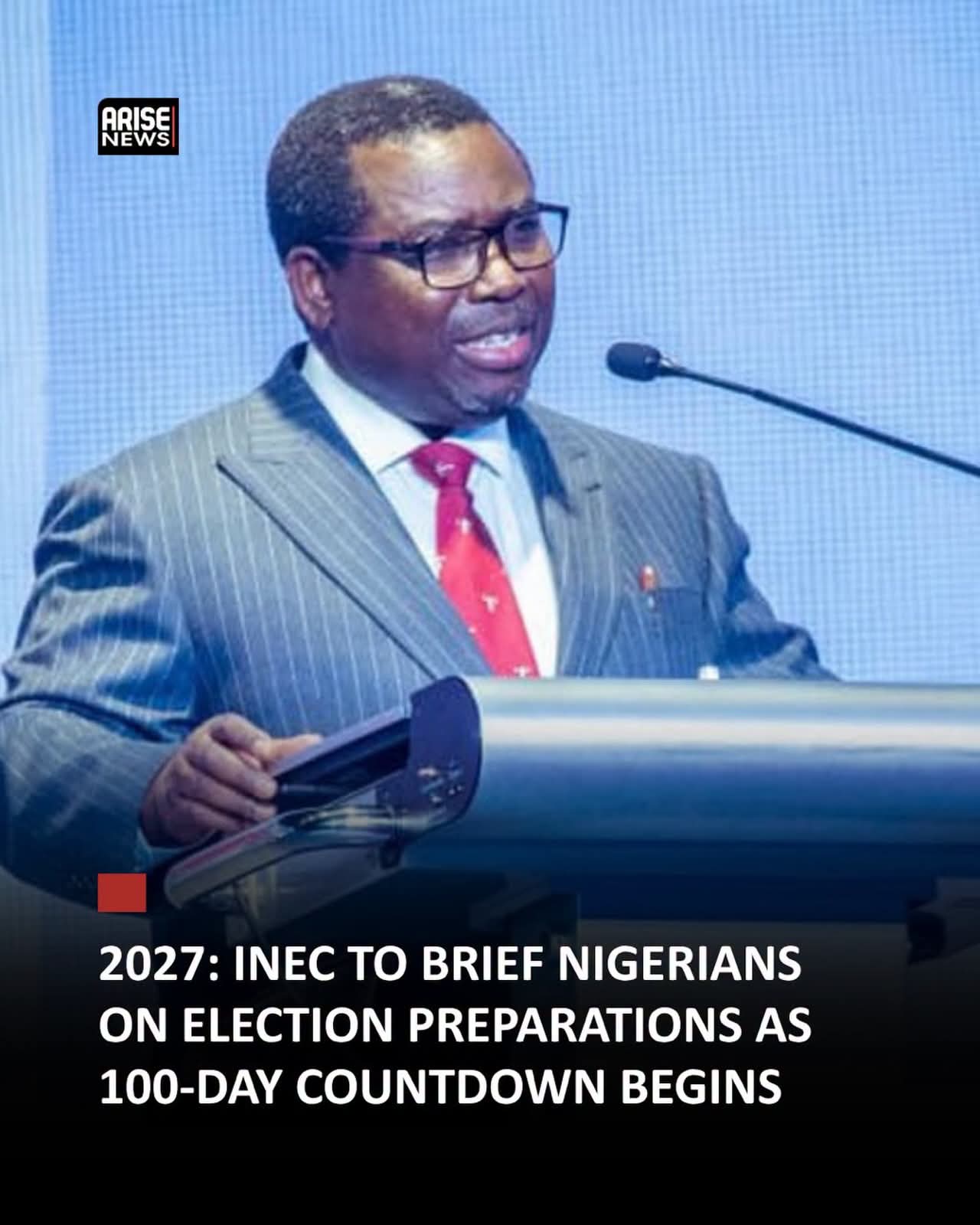
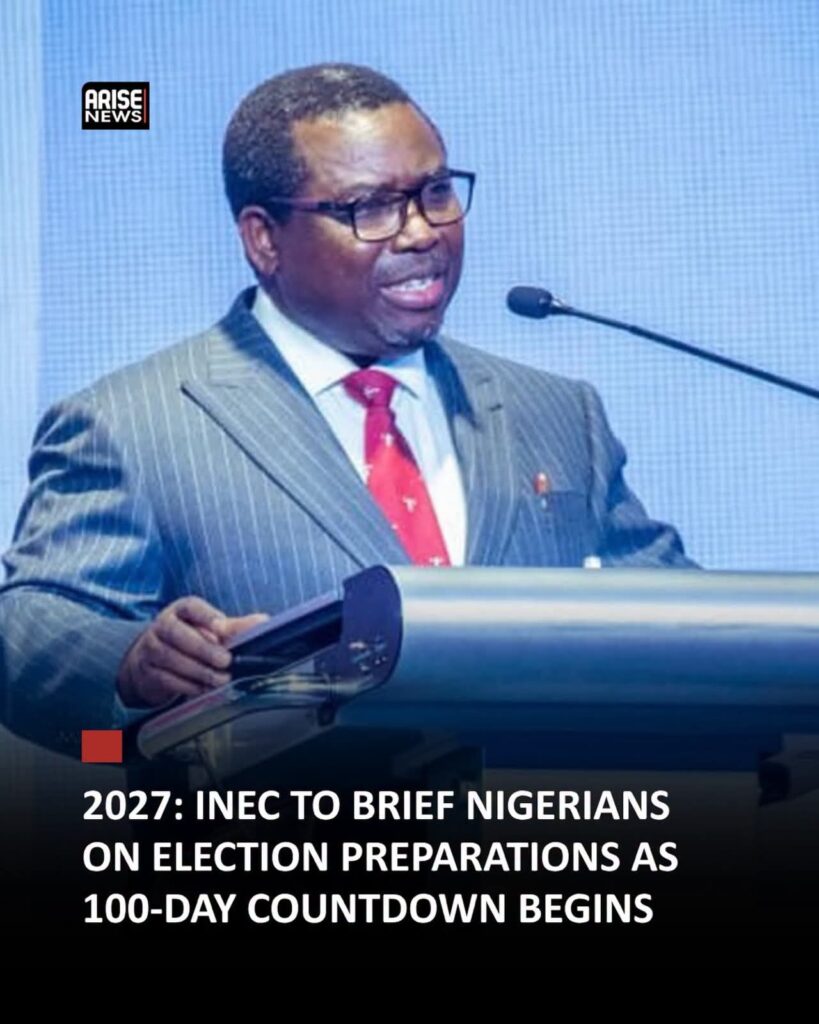
The Independent National Electoral Commission (INEC) is set to officially begin the 100-day countdown to the 2027 General Election with a World Press Conference and National Stakeholders’ Meeting scheduled to hold in Abuja on Tuesday, October 6.
The event is expected to provide Nigerians, political parties and other key stakeholders with a clearer picture of the commission’s level of preparedness for the elections, which are expected to be among the most closely watched political contests in the country’s recent history.
The countdown comes at a critical stage in the electoral calendar, with political parties intensifying preparations and politicians increasingly positioning themselves ahead of the 2027 polls. INEC is expected to use the engagement to update the public on several important aspects of the electoral process, including the voters’ register, nomination of candidates, election logistics, deployment of technology and other measures being put in place to ensure that the elections are conducted efficiently and transparently.
The commission’s decision to hold the briefing 100 days before the election is also expected to strengthen communication between INEC and the public. With concerns often raised during election periods over logistics, voter registration, accreditation, result management and the overall credibility of the electoral process, the commission will be under pressure to demonstrate that it is adequately prepared for the task ahead.
Political parties and their representatives are expected to be among the major participants at the stakeholders’ meeting. Security agencies operating under the Inter-Consultative Committee on Election Security (ICCES), diplomatic representatives, development partners, civil society organisations, election observers, religious leaders, traditional rulers, youth organisations, disability advocates and senior media executives are also expected to participate.
The broad representation is expected to give INEC an opportunity to engage directly with institutions and groups that play important roles in the electoral process. It will also provide a platform for stakeholders to raise concerns, seek clarification and discuss ways of ensuring that the 2027 elections are peaceful, inclusive and credible.
INEC Chairman, Professor Joash Amupitan, has meanwhile continued to appeal to political parties and their supporters to conduct their campaigns peacefully and focus on issues that directly affect Nigerians.
Amupitan made the appeal in Minna, Niger State, while speaking during the turbaning ceremony of INEC National Commissioner and Secretary to the Commission, Rose Oriaran-Anthony, at the Emir’s Palace.
The INEC chairman stressed the importance of issue-based political campaigns as the country moves closer to the 2027 elections. Rather than allowing political competition to degenerate into personal attacks, intimidation, violence or inflammatory rhetoric, political actors are expected to present their programmes and allow Nigerians to assess competing ideas.
His message also extended to traditional rulers, whom he urged to use their influence and respected positions in society to promote peace throughout the electoral process.
Traditional institutions have historically played an important role in maintaining peace and resolving disputes at the grassroots. With elections often generating intense political emotions, INEC believes traditional rulers can contribute significantly by encouraging their subjects and communities to reject violence, hate speech, intimidation and other actions capable of threatening peaceful elections.
The call for peaceful campaigns comes as political activities surrounding the 2027 elections continue to gather momentum across the country. Political parties are already preparing their structures, while politicians seeking elective positions are increasingly engaging supporters and building alliances ahead of the electoral contest.
For INEC, the coming weeks will therefore be crucial. Beyond conducting the elections themselves, the commission will be expected to ensure that every stage of the process is properly managed, from voter registration and party nominations to the deployment of personnel and materials across polling locations.
The integrity of the voters’ register is also expected to remain a major issue as the commission approaches the election. Political parties and voters alike will be interested in how INEC has addressed concerns surrounding voter records and how it intends to ensure that eligible Nigerians can participate while preventing electoral malpractice.
Logistics will equally remain a major consideration. Nigeria’s size and difficult terrain have historically presented challenges to election administration, particularly in remote communities. The movement of election materials, deployment of personnel and timely opening of polling units will therefore be closely watched by political parties, observers and voters.
The commission is also expected to provide more information on its use of technology in the electoral process. Previous elections have increased public expectations regarding electronic accreditation, result management and other technological tools designed to reduce human interference and improve transparency.
The October 6 engagement is therefore likely to attract significant attention as Nigerians seek answers about the commission’s readiness and the measures being adopted to guarantee a credible election.
As the 100-day countdown begins, the responsibility for peaceful elections will not rest solely on INEC. Political parties, candidates, supporters, security agencies, the media, civil society organisations, traditional and religious leaders and ordinary citizens all have important roles to play.
The success of the 2027 General Election will ultimately depend not only on the ability of INEC to organise the polls but also on the willingness of political actors to respect the rules and accept democratic competition.
With just 100 days to the election, the commission’s message is clear: political competition should not become a threat to national peace. Candidates and parties will have the opportunity to convince Nigerians through their policies, programmes and records, while voters will ultimately decide who receives their mandate.
The Abuja stakeholders’ meeting is consequently expected to serve as an important checkpoint in the journey to the 2027 elections, giving the public a clearer understanding of what INEC has done so far and what remains to be completed before Nigerians head to the polls.
The commission is expected to provide further details on election preparations during the World Press Conference and National Stakeholders’ Meeting as the country formally enters the final 100-day stretch towards the 2027 General Election.