Physical Address
304 North Cardinal St.
Dorchester Center, MA 02124
Physical Address
304 North Cardinal St.
Dorchester Center, MA 02124

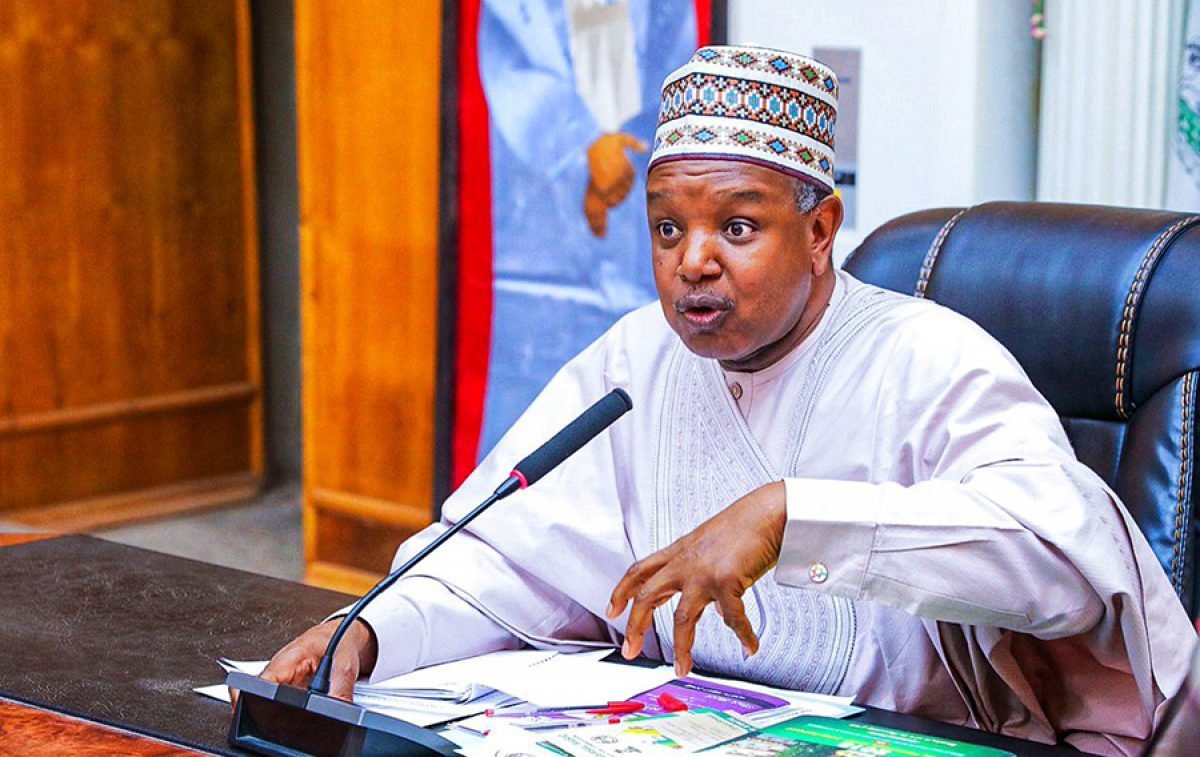
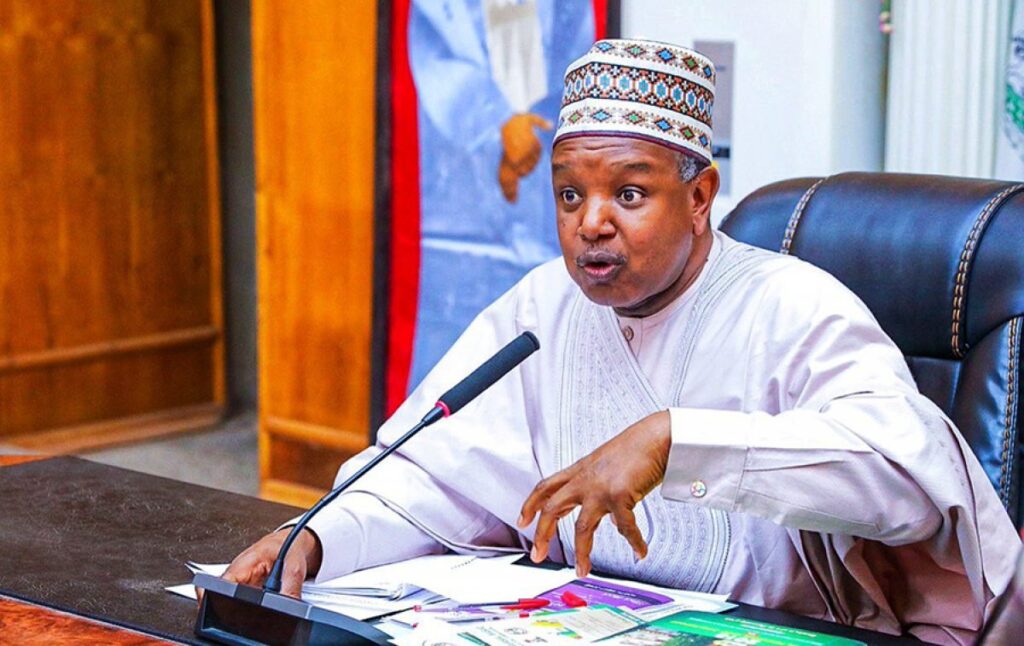
Nigeria’s Minister of Budget and Economic Planning, Senator Abubakar Atiku Bagudu, has said the country must significantly increase the size of its national budget and mobilise more financial resources if it is to achieve the Federal Government’s ambition of building a $1 trillion economy.
Bagudu made the remarks in Abuja while speaking at a capacity-building workshop for the Senate Press Corps, where he challenged policymakers, lawmakers and other stakeholders to take a fresh look at the country’s approach to budgeting. He argued that Nigeria cannot expect to deliver development on the scale required by its population while working with a relatively small national budget. According to him, the discussion should not begin and end with how much money is currently available, but should also consider the level of resources required to meet the country’s development needs.
The minister compared Nigeria’s budgetary capacity with that of other heavily populated countries, using Brazil and Pakistan as examples. He noted that Nigeria’s budget remains considerably smaller despite having a population and development challenges that require substantial public investment. Bagudu said the gap raises a fundamental question about how the country can provide infrastructure, security, healthcare, education and other public services at the level Nigerians expect without expanding the resources available to government. He stressed that the government would need stronger revenue mobilisation and greater investment to move towards the $1 trillion target.
The $1 trillion ambition is part of the Federal Government’s longer-term economic planning. The Ministry of Budget and Economic Planning has said the target is being pursued through the National Development Plan for 2026–2030, with economic growth, investment and private-sector participation expected to play major roles. Bagudu has previously said the government wants to achieve the target by growing the economy at an average annual rate of about seven per cent, while the ministry has also emphasised the importance of domestic and international investment in sectors such as manufacturing, agriculture, energy and the digital economy.
Bagudu’s latest comments also bring the size and effectiveness of Nigeria’s public finances back into focus. He argued that increasing the budget alone would not be enough if the additional resources were not properly deployed. He said the budget should be viewed as an instrument for achieving national development objectives, rather than simply a yearly document listing government expenditure. The government has similarly been promoting investment-focused budgeting designed to use public funds to attract larger amounts of private capital into infrastructure, agriculture, manufacturing, energy, housing and other productive sectors.
For the minister, the road to a $1 trillion economy will therefore require more than announcing an ambitious economic target. It will involve expanding Nigeria’s revenue base, improving investment, strengthening public financial management and creating conditions that allow businesses and private investors to contribute more substantially to economic growth. The Federal Government has maintained that the target is ambitious but achievable, while its development plans place considerable emphasis on private-sector participation and partnerships.
Bagudu has also stressed that Nigeria’s development needs cannot be addressed by looking only at capital spending. Government must continue to fund salaries, security, debt servicing and other recurrent obligations while also providing money for infrastructure and development projects. That balance, he suggested, is part of the wider challenge facing policymakers as they seek to expand the economy without placing unsustainable pressure on public finances.
The minister’s comments come as the Federal Government continues to position the $1 trillion economy target as a central part of its economic agenda. Earlier in the year, the Ministry of Budget and Economic Planning reaffirmed that the 2026–2030 National Development Plan would serve as a major framework for economic reforms, investment priorities and development programmes. The government has also identified stronger domestic production, infrastructure development and improved revenue mobilisation as important components of the strategy.
At the heart of Bagudu’s argument is a simple economic question: how can Nigeria deliver bigger results with limited resources? His position is that the country must begin thinking beyond the traditional approach of preparing budgets according to what government can immediately afford and instead build the revenue, investment and financing capacity needed to meet its long-term development ambitions.
Whether Nigeria ultimately reaches the $1 trillion mark will depend on several factors, including the pace of economic growth, investment levels, productivity, exchange-rate developments, fiscal management and the ability of both government and the private sector to expand productive activity. For now, the Federal Government’s position remains that stronger resource mobilisation and a larger, more purposeful budget will be necessary if the country is to move closer to that target.Bagudu’s latest intervention has therefore placed the national budget at the centre of the conversation about Nigeria’s economic future. The argument is that a country seeking to become a $1 trillion economy cannot continue to think small about the resources required to build infrastructure, create jobs, strengthen public services and support productive businesses. The challenge now is not merely to increase the size of the budget, but to ensure that every additional resource mobilised translates into measurable economic and social value for Nigerians.