Physical Address
304 North Cardinal St.
Dorchester Center, MA 02124
Physical Address
304 North Cardinal St.
Dorchester Center, MA 02124

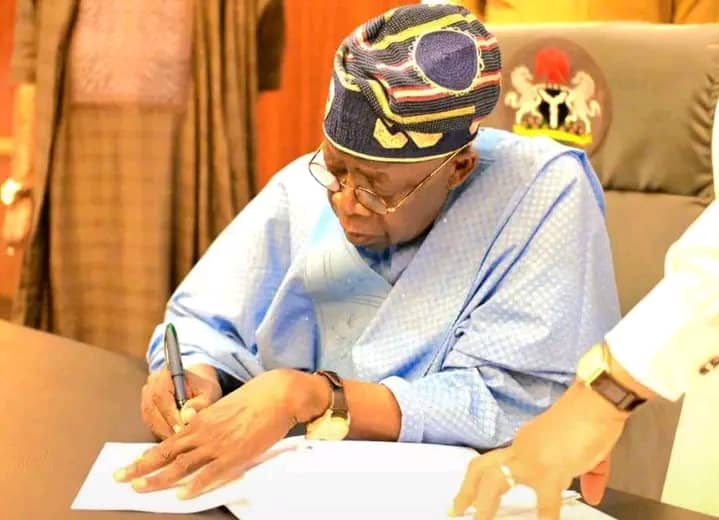
A fresh war of words has erupted between the Presidency and prominent Christian leaders over the state of Nigeria’s democracy, preparations for the 2027 general election and the country’s political direction.
The disagreement followed strong statements by the Catholic Bishops’ Conference of Nigeria (CBCN), the Pentecostal Fellowship of Nigeria (PFN) and the National Christian Elders Forum (NCEF), all of which expressed concern over the conduct of future elections, political inclusion, insecurity and governance under President Bola Tinubu.
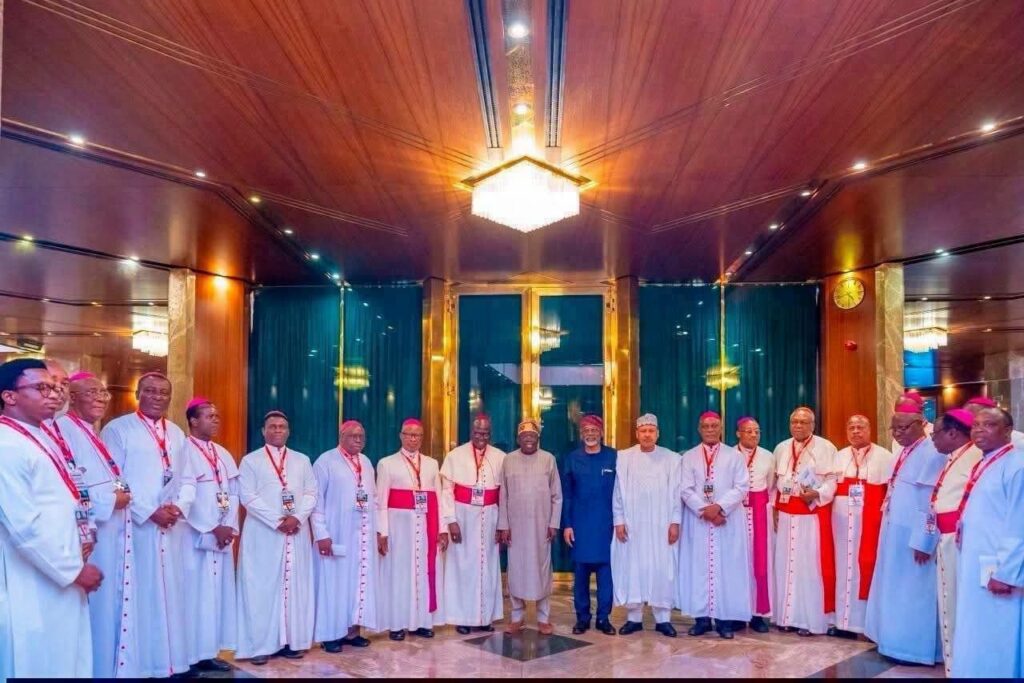
The Catholic bishops had urged the Federal Government to ensure that the 2027 elections are free, fair and credible. They also warned against any move that could undermine Nigeria’s multiparty democracy or create the impression of a one-party state. In addition, the bishops appealed to President Tinubu not to seek to retain power through unfair political advantages.
The National Christian Elders Forum also criticised the administration, accusing it of failing in its constitutional responsibility to protect lives and improve the welfare of Nigerians. The group argued that the country was facing growing hardship and insecurity and urged the President to abandon any plan to seek re-election in 2027. Instead, it called on him to devote the rest of his tenure to restructuring Nigeria and laying the foundation for a new constitution.
The forum also renewed its criticism of the Muslim-Muslim presidential ticket, describing it as insensitive in a country with deep religious diversity. According to the elders, the arrangement has further heightened concerns among many Christians, particularly at a time when insecurity continues to affect several communities. They also called for an independent electoral commission and an impartial judiciary capable of guaranteeing credible elections.
The Pentecostal Fellowship of Nigeria equally rejected the idea of another Muslim-Muslim presidential ticket in 2027. In a communiqué issued after its National Executive Council meeting, the fellowship maintained that Nigeria is a secular and multi-religious nation whose diversity should be reflected in its political leadership.
Speaking through its National Publicity Secretary, Dr. Sylvanus Ukafia, the PFN stressed that inclusive leadership promotes national unity, mutual trust and a sense of belonging. The fellowship also condemned any attempt to restrict Christian evangelism, describing such actions as unconstitutional.
The latest controversy stems from the meeting held on July 28, 2026, between President Tinubu and a delegation of the Catholic Bishops’ Conference of Nigeria led by Archbishop Matthew Man-Oso Ndagoso at the Presidential Villa in Abuja.
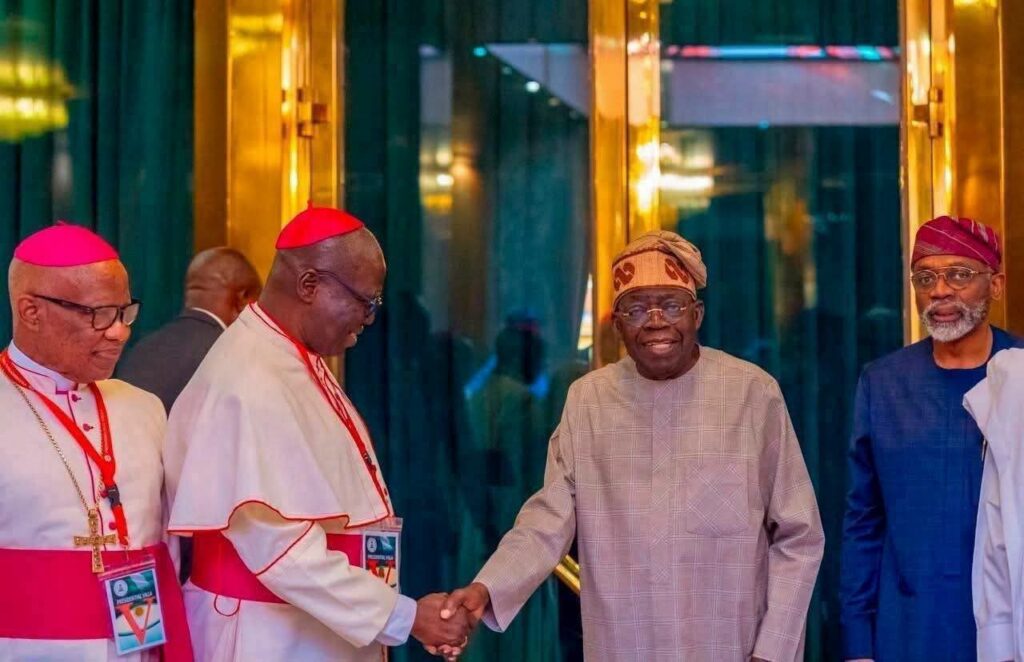
During the meeting, the bishops raised concerns about worsening insecurity, economic hardship and what they described as an unhealthy political atmosphere ahead of the next general election. They insisted that only transparent, free and credible elections would preserve Nigeria’s democracy and prevent future political instability.
They also expressed concern over the absence of the traditional Christian-Muslim balance at the highest level of government, noting that both President Tinubu and Vice President Kashim Shettima are Muslims.
Archbishop Emeritus of Abuja, Cardinal John Onaiyekan, later spoke publicly about the meeting, revealing that the bishops gave the President an honest assessment of the country’s economic and security challenges. According to him, President Tinubu disagreed with their position and defended the performance of his administration.
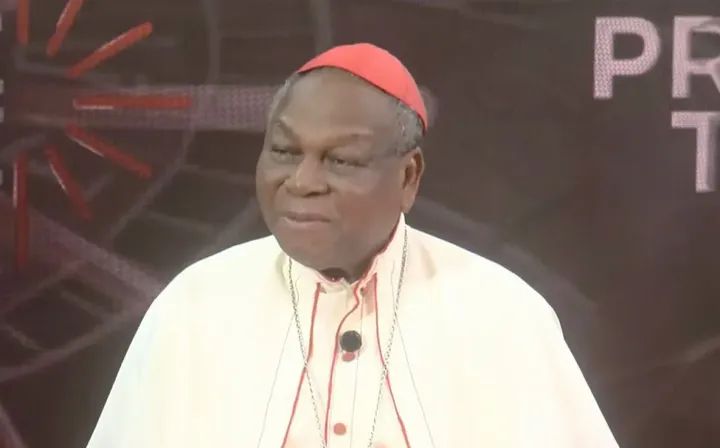
Onaiyekan also warned that many Nigerians remain worried about the integrity of future elections, arguing that public confidence can only be restored through credible electoral reforms and stronger democratic institutions.The Presidency, however, strongly rejected the criticism. Presidential spokesman Daniel Bwala argued that Cardinal Onaiyekan was expressing the views of the Catholic Church rather than speaking for all Christians. He also defended the President’s response, insisting that the bishops’ assessment did not reflect available data on the economy and governance.
Another presidential aide, Temitope Ajayi, criticised the public discussion of what transpired during the meeting, arguing that such conversations should have remained confidential. He also maintained that religious leaders do not possess exclusive authority on national issues.
President Tinubu had also responded directly during the meeting, defending the Independent National Electoral Commission (INEC) and insisting that the electoral body remains impartial and has not discriminated against any political party.He dismissed claims that opposition parties were being intimidated, stating that every political contestant has equal opportunity under the law. The President also declared that he would vigorously defend his political mandate ahead of the 2027 elections, insisting that democratic contests are won through political engagement rather than sympathy.
On the economy and security, Tinubu maintained that his administration’s reforms were gradually producing results and that efforts to tackle terrorism, banditry and kidnapping were being intensified through ongoing security reforms.
The Presidency’s response drew criticism from Northern Christian leaders. The Northern Christian Association, through its Chairman, Rev. Joseph John Hayab, defended Cardinal Onaiyekan and the Catholic bishops, describing the attacks against them as unnecessary and disrespectful.
Hayab said the bishops spoke not only for Catholics but for millions of Nigerians concerned about the country’s future. He also cautioned against attempts to create divisions among Christian denominations for political purposes, stressing that Christians across different churches remain united on issues affecting the nation.
Former Vice President Atiku Abubakar also faulted the Presidency’s reaction, accusing government officials of attacking respected religious leaders instead of addressing the concerns they raised. He called on the government to apologise to Cardinal Onaiyekan and the Catholic faithful, insisting that criticism from religious leaders should be treated as an opportunity for reflection rather than confrontation.
The exchanges have further intensified national conversations ahead of the 2027 general election, with religious organisations continuing to advocate credible elections, inclusive governance and stronger democratic institutions, while the Presidency insists it remains committed to democratic competition and the implementation of its economic and security agenda.