Physical Address
304 North Cardinal St.
Dorchester Center, MA 02124
Physical Address
304 North Cardinal St.
Dorchester Center, MA 02124

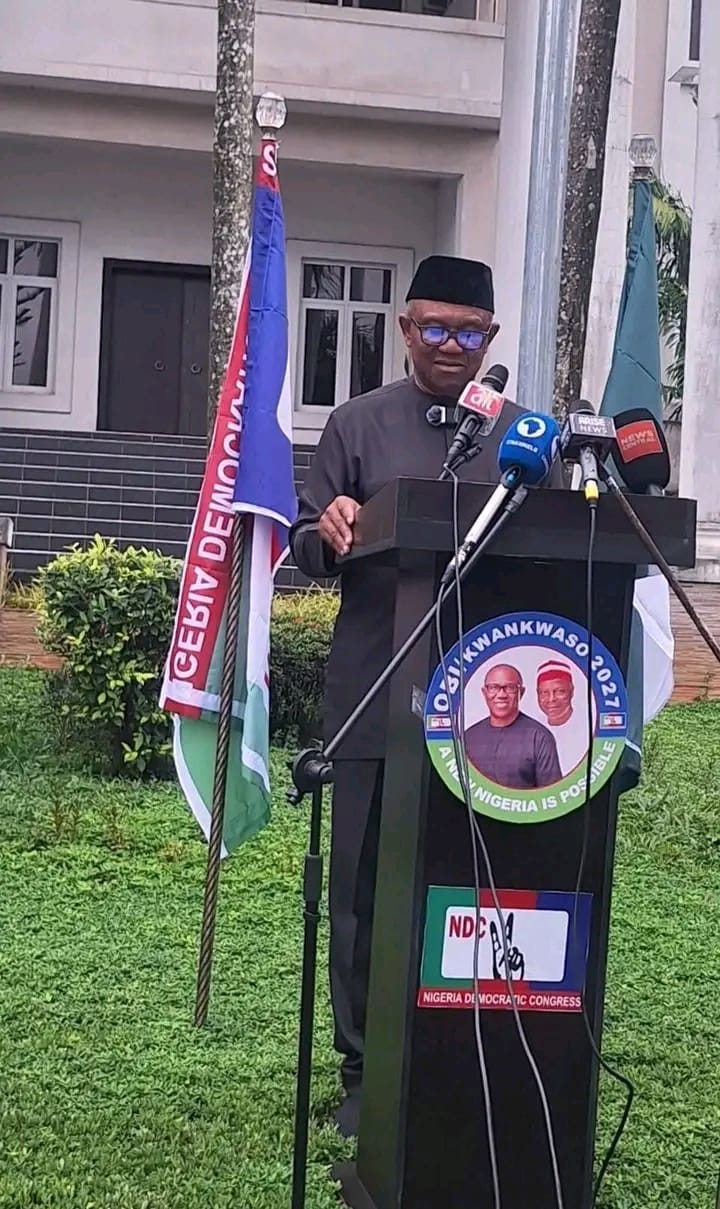
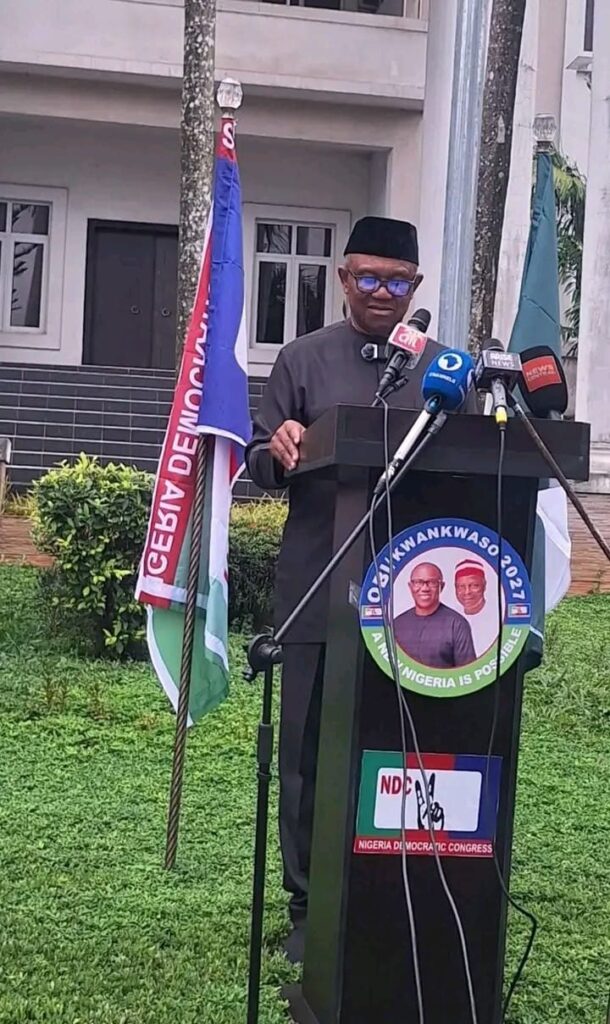
MY ADDRESS TO MARK THE COMMENCEMENT OF THE 2027 PRESIDENTIAL AND NATIONAL ASSEMBLY CAMPAIGNS21 August 2026
Dear Compatriots,Members of the Press,Distinguished ladies and gentlemen,Wednesday, 19 August 2026, marked the official start of the campaign period for the 2027 Presidential and National Assembly elections.
There is no doubt that this is a defining moment for our democracy. This moment gives Nigerians the opportunity to assess the records, ideas, and plans of those seeking their mandate to lead their country at a time of grave uncertainty in our rapidly changing world.
I consider myself quite privileged to be one of those seeking your mandate to deal with these challenges facing our country.I enter this contest with one firm conviction: Nigeria can work, and Nigeria must work.
Nigeria faces several serious challenges. Some of them are indeed of existential proportions.
According to the IMF, 63%, or over 140 million Nigerians, live at or below the national poverty line, while humanitarian agencies estimate that 35 million people will need food assistance during the 2026 lean season. About 3.6 million Nigerians remain internally displaced, largely because of conflict and insecurity. Each year, millions of young people enter the labour market, yet too many struggle to find productive opportunities. Weak infrastructure, unreliable power, insecurity, and the excessive cost of doing business continue to burden households and constrain enterprise.
These are more than statistics. They reflect the daily realities of Nigerian families, farmers, workers, students, and businesses.Yet I do not believe Nigeria lacks the ability to overcome these challenges. We have the people, resources, market, talent, and enterprise. What we must do now is turn these strengths into security, productivity, and shared prosperity.
LEADERSHIP MUST DELIVER RESULTS My successful private-sector experience, studies in institutions of repute on policy and business matters, and my service as Governor of Anambra State have shaped my understanding of public leadership. Government must manage resources responsibly, set clear priorities, and measure the outcomes of its decisions. Public office is not a reward; it is a responsibility to the people.In Anambra, I prioritised the foundations of long-term development: education, healthcare, infrastructure, fiscal discipline, and institutional capacity. I do not present that record as perfect, but as an experience from which Nigerians can draw their own conclusions.
Senator Rabiu Musa Kwankwaso brings a different but complementary governing experience.
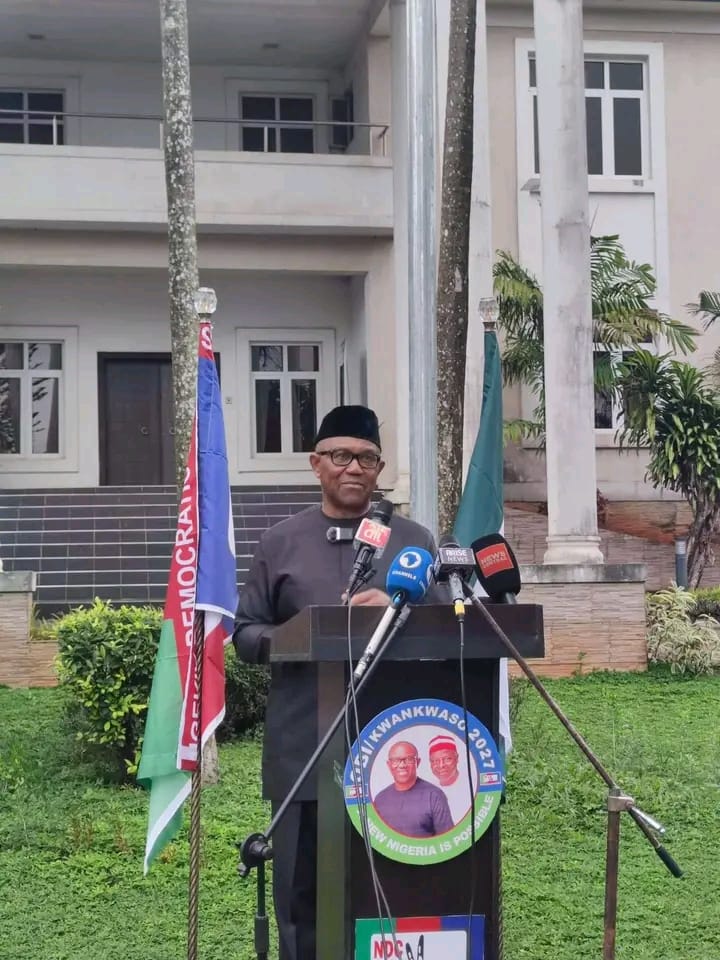
As Governor of Kano State, he focused strongly on education, technical training, scholarships, infrastructure, and human-capital development. His administration’s investments in education and skills showed an understanding that the people are a state’s most important long-term resource.
Our experiences are different, but our conclusion is the same: Nigeria must invest in its people and manage public resources with discipline.
BUILDING AN ECONOMY THAT WORKS Nigeria needs more than reactive reforms. We must focus on the questions that matter:Are Nigerians better off than they were four years ago? Can they afford food, education, and healthcare? Can businesses produce, expand, and create jobs? Can young people find productive work? Can farmers work safely and get their produce to market?
These are the measures that matter.With your mandate, our economic agenda will put production, investment, enterprise, and human capital at the centre of how we lead.We will raise agricultural productivity by securing farming communities, expanding irrigation, improving rural roads and storage, and linking farmers to finance and markets. We will also strengthen manufacturing and agro-processing so Nigeria can export more finished goods and capture greater value from its resources.
We will create a business environment where entrepreneurs can invest, hire, and grow without unnecessary regulatory or infrastructure barriers.
And we will manage public finances responsibly. Every naira should have a clear purpose, and major public investments should have measurable outcomes.The goal is not growth for its own sake, but an economy that produces more, employs more people, creates wealth, and improves living standards.
SECURITY IS THE FOUNDATION No nation can prosper when its people cannot live, farm, travel, or do business safely. Insecurity has displaced millions of Nigerians and continues to disrupt agriculture, education, trade, and investment. Our response must therefore be comprehensive.
We must improve intelligence gathering and coordination among security agencies, strengthen policing and border management, and make better use of technology. We must also support lawful community-based systems that identify threats early and enable effective responses.
The imperative of decentralising security management, but with strong systems of coordination between the levels, is critical to our plans.Security policy must also address the conditions that make vulnerable young people susceptible to criminal recruitment. Farmers cannot produce food if they cannot reach their farms safely. Children lose the chance to learn when they cannot attend school safely. Businesses cannot create jobs when they cannot move goods securely.
FROM CONSUMPTION TO PRODUCTION Nigeria, with a population now above two hundred million and projected to continue growing rapidly, has one of Africa’s largest domestic markets and labour forces. That is an opportunity we must seize to turn the future of our country around.
Nigeria cannot import its way to prosperity. We will produce more of what we consume, process more of what we produce, and compete more effectively in global markets.
We will deploy our experiences in public funds management, the private sector, and the civil service to turn our population into productive human capital, our natural resources into value-added industries, and our domestic market into an engine for investment and enterprise.
Agriculture, manufacturing, technology, construction, energy, creative industries, and services all have important roles to play. Nigeria does not lack opportunities; what it needs are the systems that enable its people to turn those opportunities into prosperity.
OUR YOUNG PEOPLE ARE OUR GREATEST ASSET I reject the idea that Nigeria’s young population represents a burden. It represents an enormous opportunity, but only if we prepare young Nigerians to participate productively in the economy.
We will improve basic education, strengthen universities, and expand technical and vocational training. Nigeria needs doctors, engineers, scientists, and lawyers, as well as technicians, mechanics, builders, nurses, farmers, programmers, manufacturers, artisans, and entrepreneurs. Our goal is to secure a high demographic dividend from our youth bulge.
HEALTH IS HUMAN CAPITAL A productive economy requires a healthy population, yet Nigeria’s health indicators remain deeply concerning. According to available data, Nigeria’s primary healthcare system is very poor, with infant and maternal mortality among the worst globally. We will strengthen healthcare, improve maternal and child health, expand access to essential medicines, and equip healthcare workers to serve effectively.
EVERY REGION MUST BECOME PRODUCTIVE AND PROSPER Nigeria’s diversity is an economic strength. Each region has distinct assets, and national policy must unlock those assets while connecting them to one productive economy.
The North-West can expand agriculture, livestock, irrigation, agro-processing, and manufacturing while strengthening education and security.
The North-East can speed up reconstruction, restore livelihoods, and expand agriculture, education, enterprise, and regional trade.
The North-Central can strengthen food production and processing while developing its mineral resources responsibly.
The South-West can build on its strengths in manufacturing, technology, finance, trade, and the creative economy.
The South-East can expand its entrepreneurial and industrial strength through better infrastructure, stronger connectivity, and greater access to investment.
The South-South can derive greater value from oil and gas while expanding maritime services, fisheries, agriculture, and other productive sectors, supported by stronger environmental protection.
The Federal Capital Territory must demonstrate what efficient urban planning, transportation, housing, sanitation, security, and public services can achieve.Every region must produce. Every region must contribute. Every region must benefit.
A DIFFERENT STANDARD OF GOVERNANCE. Sustainable development requires more than reactive reform. Reform is not the goal; better lives are. The World Bank’s April 2026 Nigeria Development Update makes clear that Nigeria’s challenge is to turn economic reform and stabilisation into improved livelihoods, stronger human capital, wider opportunities, and inclusive growth. We will pursue practical reforms that deliver lasting results, combining fiscal discipline with productive investment, as Senator Kwankwaso and I have demonstrated.
We will cut wasteful spending while protecting investments that create jobs and expand productive capacity. We will raise public revenue without stifling businesses and invest in education, healthcare, security, and infrastructure because they are foundations for future prosperity, not costs to defer. We will also build institutions that endure beyond any single administration. That is the standard by which every government should be judged.
Fellow Nigerians,The campaign period gives every citizen an opportunity to join the national conversation. I urge Nigerians to examine each candidate’s record and proposals, ask tough questions, and demand evidence behind every promise.
We should debate ideas without hatred, compete without violence, and disagree without weakening the bonds that unite us. When Nigerians make their choice, that choice must be respected.
Democracy does not end on election day. Citizens must continue to demand transparency, accountability, and results from those entrusted with the mandate to govern.
Nigeria’s challenges are real, but so are its opportunities. We have the people, resources, enterprise, and creativity to build a safer, more productive country. Our task is to turn these possibilities into results. We have the credentials, experience, and record to collaborate with Nigerians on this transformative journey.
Our journey will be harder if we do not unite as one people and one nation. A united Nigeria, guided by shared purpose and a commitment to fairness, justice, and equity, will make transformation easier, strengthen our institutions, and help us hold our leaders accountable.
Finally, the 2027 election must be guided by capacity, competence, compassion, character, and commitment. Our campaign will focus on the urgent concerns of Nigerians and not on ethnicity or religion. Nigerians must reject and disregard any campaign driven by propaganda, ethnicity, religion, elitism, or cronyism.
As my team and I travel across the country, we will listen to Nigerians, understand their needs and concerns, and assure them that we have the competence, character, and compassion to lead and reset Nigeria for the benefit of all.
Nigerians deserve leaders who will engage them, listen to their concerns, and present clear solutions to unite the country, defeat insecurity, pull people out of poverty, drastically reduce hunger and the number of out-of-school children, improve education and healthcare, and build growth that serves everyone, especially the most vulnerable. Every candidate must be willing to present their credentials, defend their records, and subject their vision to open scrutiny.
No candidate should hide behind the high walls of power, send proxies or surrogates to the hustings, and expect Nigerians to entrust them with the leadership of the country. Every candidate seeking the presidency must have the courage to come before the people, answer their questions, defend their records, and subject their vision to public scrutiny.
True leadership requires presence and empathy. No one can lead from the front without standing with communities across Nigeria devastated by banditry, criminality, terrorism, and flooding. You cannot truly lead people you are unwilling to visit, listen to, and understand.
Today, I make this clear commitment: my running mate and I will take our message directly to Nigerians. We will listen to them, understand their concerns, and engage them openly. We will not delegate this duty to proxies. We will answer questions, defend our record and character, and present our plan to rebuild Nigeria. Any presidential candidate who lacks the resolve to travel across the country, meet the people, and respond to their questions lacks the capacity to govern it.
I commit to commencing the journey of resetting Nigeria by uniting it, securing it on the path of economic and inclusive growth, and moving our country from consumption to production.A New Nigeria is possible.
God Almighty bless Nigeria.
– PO