Physical Address
304 North Cardinal St.
Dorchester Center, MA 02124
Physical Address
304 North Cardinal St.
Dorchester Center, MA 02124

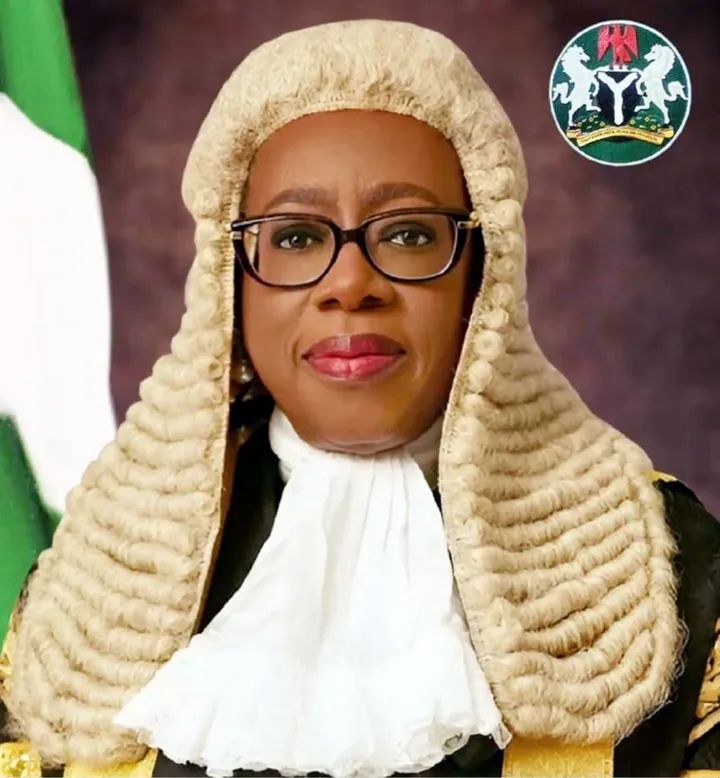
The Nigerian Law Society (NLS) has challenged the directive of the Chief Justice of Nigeria, Justice Kudirat Kekere-Ekun, directing lawyers to stop using the title “Barrister” before their names and instead adopt “Esquire” in official engagements.The society argued that the directive has no clear foundation in the existing legal framework governing the legal profession in Nigeria.
The controversy followed a directive issued by the CJN asking lawyers and court officials to discontinue the use of “Barrister” before their names in official dealings at the Supreme Court.
The directive was contained in a memorandum dated July 13, 2026, signed by the Chief Registrar of the Supreme Court, Kabir Akanbi, and addressed to legal practitioners, court registrars and other lawyers. According to the memo, the measure was intended to uphold professional standards at the apex court.
However, the NLS has taken issue with the directive.
In a statement issued on Wednesday, the society’s Executive Director, Dr Tonye Jaja, argued that the Legal Practitioners Act, 1962 recognises “Barrister” and “Solicitor of the Supreme Court of Nigeria” as professional descriptions applicable to persons called to the Nigerian Bar.
Jaja acknowledged that using “Barrister” alone may not represent the complete professional title of a Nigerian lawyer because it leaves out the solicitor component. However, he maintained that the alternative title being recommended by the CJN, “Esquire”, is itself not expressly recognised by the relevant legislation.
“Using ‘Barrister’ as a title is a half-truth that leaves out the title of ‘Solicitor’. As an alternative title, the title of ‘Esquire’ or its abbreviated version ‘Esq.’ was to be used as the appropriate suffix by Nigerian lawyers in their official correspondences to the Supreme Court of Nigeria,” Jaja observed.
The NLS executive director further questioned the legal authority upon which the CJN’s directive was issued, arguing that there is no provision in the Legal Practitioners Act empowering the Chief Justice to introduce such a requirement.
“The problem with this recommended title of ‘Esquire’, or even other alternatives ‘Barrister-At-Law’ or ‘Attorney-At-Law’ is that they do not appear inside the Legal Practitioners Act, 1962,” Jaja said.
According to him, professional requirements imposed on lawyers must have a clear statutory foundation. He argued that neither the CJN, the Legal Practitioners Privileges Committee (LPPC) nor the Nigerian Bar Association can impose requirements that are not expressly provided for under the governing legislation.
The NLS also raised questions about what it described as an inconsistency in the treatment of the controversial “Blue Silks” rank of Senior Counsel of Nigeria, SCN.
The society took exception to arguments attributed to the LPPC and Justice James Omotosho of the Federal High Court in Abuja, suggesting that the SCN title should not be recognised because it is not expressly provided for in the Legal Practitioners Act.
According to the NLS, the argument that a professional designation must appear expressly in the statute before it can be recognised cannot be selectively applied.
The society maintained that although the Senior Advocate of Nigeria (SAN) rank is expressly recognised in law, that fact alone does not mean every other professional designation not specifically mentioned in the legislation is automatically invalid.
The dispute has now opened a wider conversation within the Nigerian legal profession over professional titles, statutory authority and the extent to which administrative directives from the judiciary can regulate established professional practices.
At the heart of the disagreement is a simple but important legal question: can a professional title be prohibited or replaced by administrative directive when the governing statute does not expressly provide for such prohibition?