Physical Address
304 North Cardinal St.
Dorchester Center, MA 02124
Physical Address
304 North Cardinal St.
Dorchester Center, MA 02124

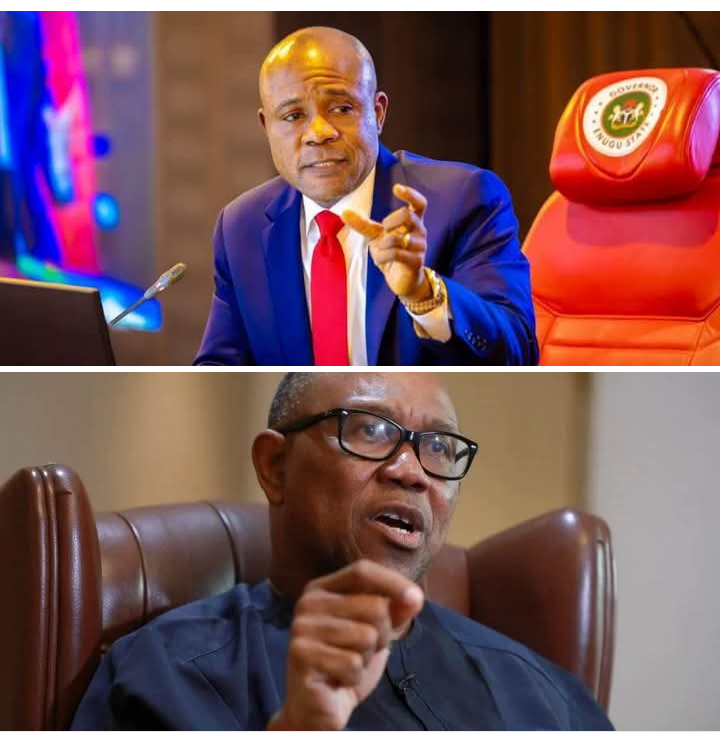
Enugu State Governor, Peter Mbah, has denied allegations that he ordered the withdrawal of a private venue reportedly secured for a town hall meeting scheduled to feature Peter Obi, the presidential candidate of the Nigeria Democratic Party (NDP), and his running mate, Rabiu Kwankwaso. The controversy has generated political discussions, with questions being raised about the circumstances surrounding the reported loss of access to the venue and whether political considerations played any role in the development. However, Mbah has rejected claims linking him to the incident, insisting that he did not direct anyone to withdraw the facfocility from the organisers of the proposed gathering.
The proposed town hall meeting was expected to bring Obi and Kwankwaso before supporters, residents and other interested members of the public in Enugu State. Such engagements provide political candidates with opportunities to communicate their programmes, respond to public concerns and strengthen their relationships with voters ahead of elections. The reported difficulty in securing the venue therefore attracted attention, particularly because of the political significance of the individuals expected to attend and the wider debate about the freedom of political parties to organise meetings in different parts of the country.
Obi, a prominent opposition politician and former governor of Anambra State, has continued to attract supporters across different regions of Nigeria. His political activities frequently generate considerable public interest, particularly among young Nigerians and voters seeking alternatives to the country’s established political leadership. Kwankwaso, who has also maintained a substantial political following, was expected to join Obi at the proposed town hall meeting. Their planned appearance in Enugu consequently placed the reported venue controversy under public scrutiny, with political observers likely to examine whether the incident would affect the meeting’s organisation or public perception of the state government’s attitude towards opposition activities.
Governor Mbah’s denial is central to the emerging controversy. By distancing himself from the reported withdrawal, the governor has rejected suggestions that he personally intervened to prevent the event from taking place at the intended location. The denial, however, does not by itself establish the precise circumstances surrounding the venue arrangement or explain why the organisers reportedly encountered difficulties. Determining what happened would require clarification from the venue’s management, the event organisers and any other parties directly involved in the arrangement.The incident has also renewed discussions about political tolerance and the responsibilities of government officials in a democratic society. Nigeria’s 1999 Constitution provides in Section 14(1) that the Federal Republic of Nigeria shall be a state based on the principles of democracy and social justice. Section 14(2)(a) further states that sovereignty belongs to the people of Nigeria, from whom government derives its powers and authority. These provisions establish important democratic principles against which public conduct and the relationship between government and citizens are often assessed, although the constitutional provisions must be interpreted within the broader legal framework.
Freedom of expression and peaceful assembly are also protected under the Constitution. Section 39 recognises the right to freedom of expression, while Section 40 guarantees the right to assemble freely and associate with other persons, subject to the Constitution and applicable law. These rights are particularly relevant to political campaigns, public meetings and peaceful gatherings. Nevertheless, the precise legal implications of a private venue’s withdrawal would depend on the facts, the contractual arrangement, the reasons given by the venue’s management and any applicable legal restrictions. The governor’s alleged involvement should therefore not be treated as established without supporting evidence.For political parties and candidates, access to suitable venues is an important aspect of organising public engagements. Town hall meetings allow candidates to present their policies on economic development, employment, education, security, healthcare and other issues affecting ordinary Nigerians. They also provide an avenue for voters to question political leaders directly and evaluate their responses. When an event encounters an unexpected obstacle, organisers may face logistical challenges, including the need to identify an alternative location, notify participants and adjust their preparations. Such disruptions can also generate speculation, especially when prominent political figures are involved.
The controversy may equally have implications for Enugu State’s political image. As political competition intensifies, the manner in which public institutions and private organisations respond to activities involving opposition figures can influence perceptions of democratic openness. However, it is important to distinguish between a reported administrative or commercial decision by a private venue and an action allegedly directed by the state government. Without credible evidence establishing a connection, attributing the venue’s withdrawal to Mbah would risk presenting an allegation as a proven fact. Equally, a transparent explanation from the parties involved could help address public concerns and prevent unnecessary political tensions.
Mbah’s administration and the organisers of the proposed town hall meeting may therefore face growing calls for clarification about the circumstances surrounding the incident. If the venue was withdrawn, the reasons for the decision, the timing of the notification and any communication between the organisers and management would be relevant to understanding what occurred. The organisers could also clarify whether an alternative venue was considered or whether the reported development affected the meeting’s schedule. Until such details are established, the controversy remains a matter requiring careful reporting rather than conclusions based solely on political interpretations or competing claims.
Ultimately, the dispute highlights the importance of evidence, transparency and respect for democratic participation in Nigeria’s political environment. Governor Mbah has denied ordering the withdrawal of the venue, and that denial should be reported alongside the original allegation and any independently verified response from the parties concerned. As the situation develops, attention will remain on whether the organisers can proceed with their planned engagement and whether further explanations emerge about the venue arrangement. In a democratic society, political disagreements are best addressed through open communication, credible evidence and respect for citizens’ constitutional rights, rather than unverified accusations that could deepen divisions among political groups and their supporters.