Physical Address
304 North Cardinal St.
Dorchester Center, MA 02124
Physical Address
304 North Cardinal St.
Dorchester Center, MA 02124

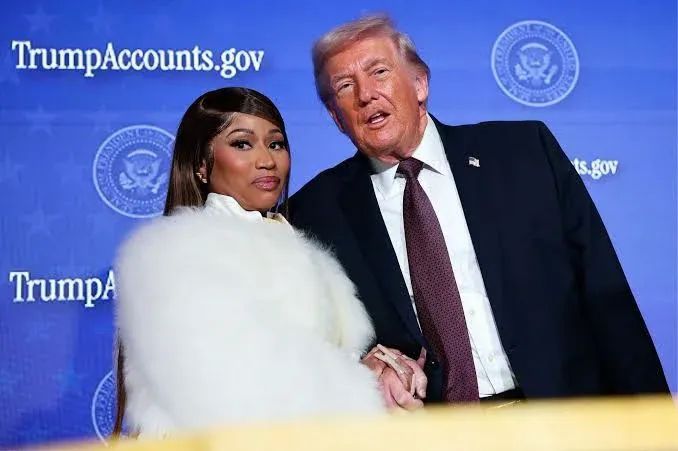
American rapper Nicki Minaj has praised United States President Donald Trump, saying his leadership has changed the mood and energy of the country. The rapper made the remarks while campaigning for Republicans at a rally in Michigan, where she expressed support for the president and his political movement. Her comments have attracted attention because of her growing involvement in political discussions and the influence her celebrity status could have on conversations surrounding American politics. Minaj’s appearance also highlights the continuing relationship between entertainment and politics in the United States, where prominent musicians, actors and other public figures frequently use their platforms to express political opinions.
Minaj’s statement that Trump has changed America’s mood reflects her positive assessment of the president’s influence on the country’s political atmosphere. The comment suggests that she believes his leadership has affected how some Americans perceive the direction of the country and the political issues shaping public debate. However, the mood of a nation as politically diverse as the United States cannot easily be described through a single perspective. While Trump’s supporters may view his leadership as a source of renewed confidence and political energy, his critics continue to disagree with many aspects of his policies and approach to governance.
The rapper’s participation in a Republican rally also underscores the importance of celebrity endorsements in modern political campaigns. Political parties increasingly recognise that entertainers with large followings can help attract public attention, particularly among younger audiences who may not always engage with conventional political messaging. A well-known musician’s appearance at a campaign event can generate significant media coverage, extend the reach of a political message and encourage discussions beyond the immediate audience at the rally. Nevertheless, the effectiveness of such endorsements in changing voting behaviour depends on several factors, including voters’ existing political preferences and their views on the issues being discussed.
Nicki Minaj, whose real name is Onika Tanya Maraj, has built an international reputation through her music, distinctive style and strong connection with her fan base. Over the years, she has developed a substantial following that extends beyond the music industry, giving her considerable visibility whenever she comments on political or social issues. Her decision to publicly praise Trump therefore places her views within a wider conversation about the role of celebrities in shaping political discourse. For some supporters, her involvement may be an example of a public figure exercising her right to express her political convictions, while others may question the motivations and implications of celebrity participation in partisan campaigns.
Trump’s political movement has consistently attracted strong support from voters who believe he represents an alternative to established political leadership. His supporters frequently point to his positions on immigration, economic policy, national security and American identity as reasons for backing him. His communication style and ability to command media attention have also played important roles in his political career. Minaj’s comments about the change in America’s mood appear to align with the positive assessments held by some of his supporters, although the statement should be understood as her personal political opinion rather than an established conclusion about the views of the entire American population.
At the same time, Trump’s presidency remains a subject of intense debate across the United States. His policies and political decisions have generated support among sections of the electorate while attracting criticism from others. Issues such as the cost of living, immigration enforcement, healthcare, employment and the country’s international relationships continue to influence public opinion. These competing perspectives mean that any assessment of the president’s impact must take into account the experiences of different communities and the broader political and economic circumstances facing the country. Minaj’s remarks may resonate with those who share her assessment, but they are unlikely to settle the wider debate about Trump’s leadership.
The Michigan rally also illustrates how American political campaigns seek to combine policy discussions with public appearances designed to energise supporters. Campaign events often feature speeches, endorsements and messages intended to strengthen party loyalty and encourage participation in the democratic process. The presence of a globally recognised entertainer can add a different dimension to such gatherings, attracting audiences who might otherwise pay limited attention to a political event. For Republicans, support from a prominent figure such as Minaj may offer an opportunity to broaden the conversation around their campaign, although the long-term political impact of her appearance remains uncertain.
Minaj’s political involvement also raises questions about the influence of popular culture on public opinion. Celebrities command attention through their professional achievements, social media platforms and relationships with fans, which can give their political statements considerable reach. However, public recognition does not necessarily translate into political authority, and voters ultimately make decisions based on a wide range of personal, social and economic considerations. While celebrity endorsements can introduce political messages to new audiences, their influence depends partly on whether those messages connect with the concerns and priorities of the people they reach.
For Minaj’s fans, her support for Trump may generate mixed reactions, particularly among listeners whose political beliefs differ from hers. Music audiences often include people with diverse ideological perspectives, and an artist’s political choices can influence how some fans relate to their work. At the same time, others may separate their appreciation of an artist’s music from their political opinions. The response to Minaj’s remarks will therefore depend on individual perspectives, as well as the broader political conversations taking place in the United States. Her comments are likely to remain part of discussions about celebrity endorsements and the relationship between entertainment, personal convictions and electoral politics.
Ultimately, Minaj’s declaration that Trump has changed America’s mood represents a public expression of confidence in the president and the political direction she believes he represents. Her appearance at the Republican rally in Michigan demonstrates how influential entertainers can become part of political campaigns and national conversations. However, whether Trump’s leadership has improved the country’s overall mood remains a contested question that can only be assessed by considering a broad range of public opinion, policy outcomes and social conditions. As American political debates continue, the involvement of celebrities such as Minaj is likely to remain a source of attention, discussion and disagreement among supporters, critics and the wider public.