Physical Address
304 North Cardinal St.
Dorchester Center, MA 02124
Physical Address
304 North Cardinal St.
Dorchester Center, MA 02124

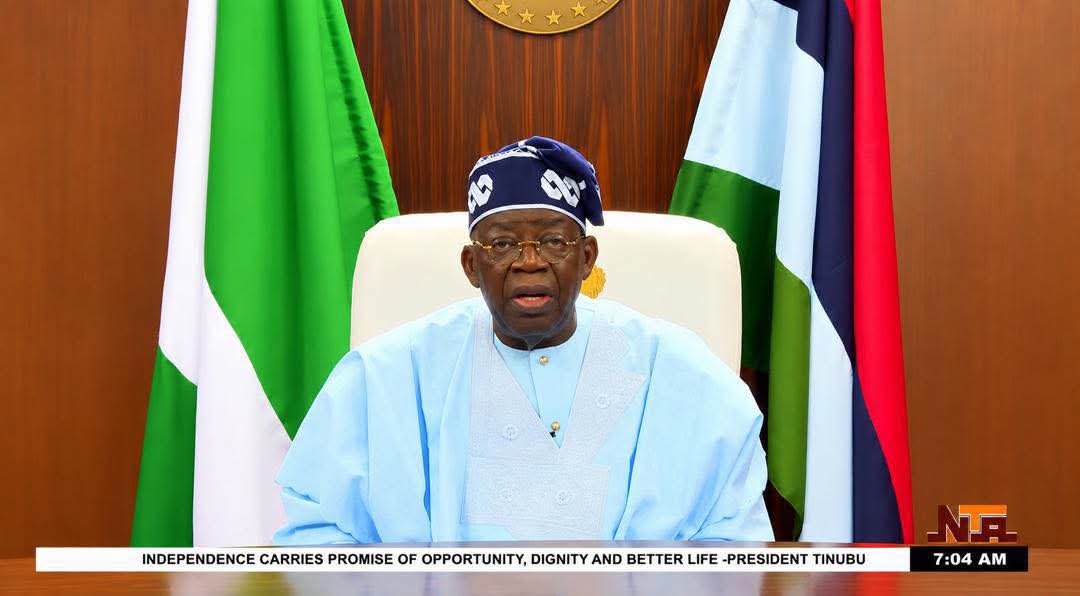
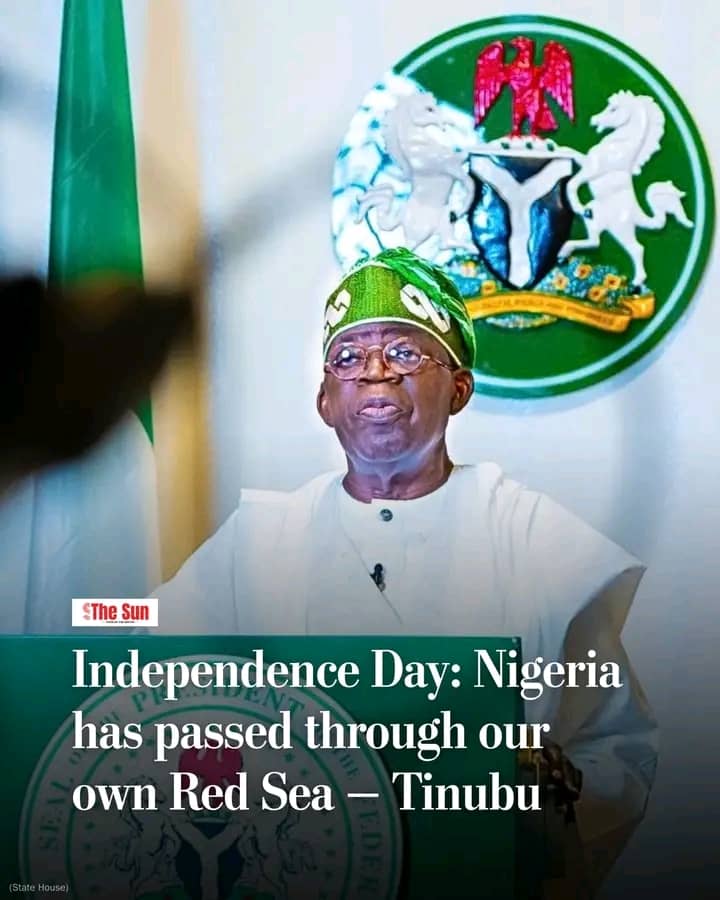
President Bola Ahmed Tinubu’s Independence Day address, titled “From Reform to Prosperity,” focused heavily on Nigeria’s economic journey, the hardship experienced by citizens and his administration’s argument that the reforms introduced since 2023 are beginning to change the country’s direction. Speaking on Thursday, October 1, 2026, as Nigeria marked its 66th Independence Anniversary, Tinubu acknowledged that millions of Nigerians are still struggling with food, school fees, medical bills and transportation costs. He argued, however, that many of these difficulties predated his administration and were the accumulated result of decades of low productivity, inadequate infrastructure, limited opportunities and institutional weaknesses.
A central message of the President’s speech was that long-standing economic problems cannot be completely reversed within a single four-year administration. Tinubu said, “We cannot erase in four years what accumulated over generations. But we can change its course.” He maintained that his government inherited an economy with deep structural problems and chose to confront those weaknesses through difficult reforms rather than continue policies that, in his account, merely postponed the underlying problems. He also argued that the reforms themselves did not create Nigeria’s economic weaknesses but were introduced to address them.
Tinubu used the address to defend the direction of his administration’s economic programme, including the removal of petrol subsidy and other fiscal and monetary changes. He argued that Nigeria had reached a point where difficult decisions could no longer be avoided. At the same time, he acknowledged that the consequences of those decisions had placed considerable pressure on households, workers and businesses. The President said the government was therefore expanding measures intended to support vulnerable Nigerians while pursuing longer-term economic growth.
On social protection, Tinubu highlighted programmes including direct support for poorer households and improvements to the National Social Register. He also pointed to the Nigerian Education Loan Fund, saying it was intended to ensure that students from low-income families are not denied higher education because of their parents’ inability to pay fees. He mentioned CREDICORP as another intervention, saying the consumer-credit scheme was helping working Nigerians obtain essential assets such as vehicles, solar systems and digital devices. He further said the Federal Government would continue working with state and local governments to strengthen primary healthcare, basic education and other essential public services.
The President also presented the speech as a transition from what he described as an era of economic reform to what he called an “age of prosperity.” According to Tinubu, the immediate task is now to translate economic reforms and stabilisation into higher incomes, jobs, wider opportunities and better living conditions. He acknowledged that the government’s programmes are not themselves a substitute for prosperity, describing them instead as a bridge toward a broader economic recovery.
Another significant part of the address was Tinubu’s call for Nigerians to look beyond the difficulties of the present and maintain confidence in the country. He paid tribute to ordinary Nigerians, including farmers, traders, teachers, entrepreneurs and members of the Armed Forces and security services, recognising their contribution to keeping the country moving despite its challenges. He linked the spirit of independence to the responsibility of building a nation capable of providing opportunity, dignity and a better life for its citizens.
The President also spoke about the need to reduce vulnerability and make economic growth more widely felt. He said the government’s objective was not simply to manage poverty but ultimately to defeat it, although he acknowledged that achieving that goal would require sustained economic growth, discipline and the creation of millions of productive opportunities over time. His argument was that reforms should eventually produce conditions in which Nigerians can depend less on government assistance because the economy itself is generating more opportunities.
Tinubu ended the address on a strongly forward-looking note, saying Nigeria had corrected its economic course and should not turn back. He urged Nigerians to move forward together, expressing confidence in the country’s future and describing the destination as a Nigeria where prosperity is broadly shared and children can pursue opportunities beyond the circumstances of their birth. The full official address is published by the Nigerian Presidency under the title “From Reform to Prosperity.”