Physical Address
304 North Cardinal St.
Dorchester Center, MA 02124
Physical Address
304 North Cardinal St.
Dorchester Center, MA 02124

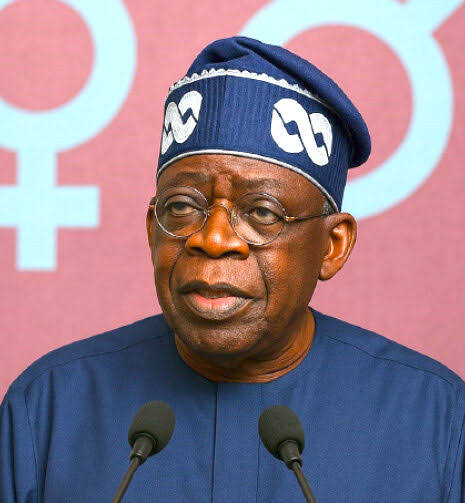
President Bola Tinubu’s extended stay outside Nigeria has sparked renewed public and political debate after the Presidency announced that his working vacation in Europe had been extended by a few more days.Tinubu left Nigeria on August 30 for London, where he began what was initially announced as a three-week working vacation. He later travelled to Paris, France, where he held engagements including a meeting with French President Emmanuel Macron and a meeting with businessman Vincent Bolloré. The Presidency has now said the President is expected to return to Nigeria at the weekend.
In announcing the extension, the Presidency maintained that Tinubu has remained actively involved in the affairs of the country despite being physically outside Nigeria. His Special Adviser on Information and Strategy, Bayo Onanuga, said the President had continued to receive updates from home, issue directives and monitor developments across the country.
According to the Presidency, one of the decisions Tinubu took while abroad was the establishment of an independent panel to investigate the deaths of 37 suspected illegal miners who died after being detained by the Nigeria Security and Civil Defence Corps in Minna, Niger State. The incident has generated significant concern and calls for accountability, making the President’s decision to order an investigation one of the matters cited by the government as evidence that he remains engaged with events at home.
The Presidency has therefore rejected the suggestion that the President’s physical absence means that government has been left without direction. It insists that modern communication allows the President to remain in contact with officials and continue making decisions even while travelling.
President Tinubu’s absence has, however, become more politically sensitive because Vice-President Kashim Shettima is also currently outside the country. Shettima travelled to New York to represent Nigeria at the 81st session of the United Nations General Assembly, where he is expected to deliver Nigeria’s national statement and participate in high-level diplomatic engagements.
The Presidency said Tinubu specifically delegated Shettima to represent him at the UN General Assembly and that Nigeria’s interests would continue to be advanced at the international gathering. The Federal Government has stressed that Shettima is carrying the President’s full mandate and that his participation at the UN does not diminish Nigeria’s diplomatic presence.
With both the President and Vice-President outside Nigeria at the same time, however, opposition politicians have questioned the constitutional arrangements surrounding the exercise of presidential powers.
Former Vice-President Atiku Abubakar has particularly raised questions about whether a formal constitutional process was followed when Tinubu proceeded on his vacation. Atiku referred to Section 145 of the 1999 Constitution and argued that Nigerians should be shown the relevant written declaration concerning the transfer of presidential functions when the President is away.
Atiku’s position has become part of a wider political argument about whether the phrase “working vacation” adequately addresses the constitutional procedures governing presidential absence. The Presidency, on the other hand, has maintained that Tinubu remains in charge and continues to direct the affairs of government from abroad.
The disagreement is therefore not simply about whether the President is physically present in Abuja. It has developed into a debate over presidential authority, constitutional procedure and the extent to which modern technology allows a President to continue governing while outside the country.
The government has also pointed to the continued functioning of Nigeria’s official institutions. While Shettima is representing the President in New York, the Secretary to the Government of the Federation, George Akume, has been representing the President at some official functions. The Presidency says those arrangements allow government business to continue during Tinubu’s absence.
Minister of Information and National Orientation Mohammed Idris has similarly defended the President’s decision to remain away from the country, saying Nigeria would be fully represented at the UN General Assembly. He said the government’s position was that Shettima had the necessary mandate to represent Nigeria and that Tinubu’s absence should not be interpreted as a reduction in the country’s diplomatic standing.
The debate has nevertheless attracted criticism from opposition figures. The African Democratic Congress, through its National Publicity Secretary Bolaji Abdullahi, questioned the simultaneous absence of Tinubu and Shettima and described the situation as a matter requiring constitutional clarification. These are the ADC’s political criticisms and do not establish, by themselves, that any constitutional violation has occurred.
Atiku has also questioned whether the National Assembly should become involved if the constitutional conditions surrounding presidential absence have not been fulfilled. His argument is that presidential authority is not simply a matter of informal communication but is governed by constitutional provisions.
The Presidency has rejected the broader criticisms surrounding Tinubu’s absence, insisting that the President remains engaged with Nigeria’s affairs. Presidential spokesman Daniel Bwala separately argued that the President’s constitutional powers are not limited by geography and that he can issue directives, delegate responsibilities and administer government while outside the country.
Beyond the constitutional argument, the timing of Tinubu’s extended stay has also attracted attention because of the issues currently confronting the country. Nigeria is dealing with security challenges, economic pressures and the aftermath of the Niger State detention tragedy involving the 37 suspected miners. At the same time, the President’s absence coincides with the UN General Assembly, one of the major annual events on the international diplomatic calendar.
The Presidency’s explanation is that the President remains at work despite being abroad. His absence from particular physical engagements, according to the government, does not mean he has stopped exercising his responsibilities.
For now, the official position is straightforward: Tinubu’s working vacation has been extended by a few days, he is expected back in Nigeria at the weekend, and the Presidency says he continues to direct the country’s affairs from Europe.
The controversy surrounding the extension, however, is likely to continue until the President returns and the questions being raised about the constitutional handling of his absence are addressed more fully. What remains established is that the Presidency says governance has continued and that Tinubu has remained in communication with officials, while opposition figures are demanding greater clarity about the constitutional arrangements for exercising presidential authority during his prolonged absence.