Physical Address
304 North Cardinal St.
Dorchester Center, MA 02124
Physical Address
304 North Cardinal St.
Dorchester Center, MA 02124

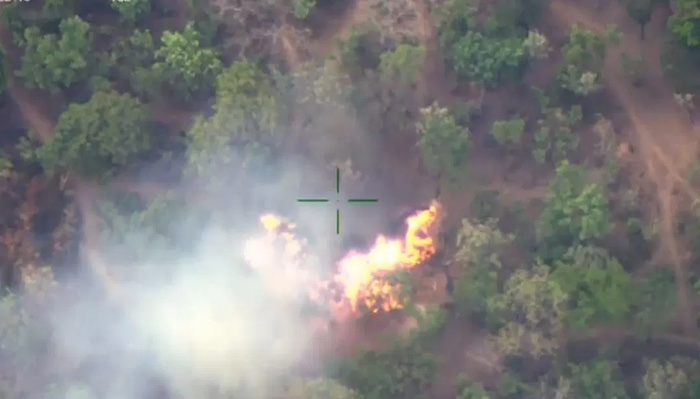
The Nigerian military has recorded another significant strike against terrorist groups operating in Borno State, with more than 18 fighters reportedly neutralised and a number of terrorist structures and logistics facilities destroyed during an intelligence-led air operation.
The operation was carried out by the Air Component of Joint Task Force North-East, Operation Hadin Kai (OPHK), in coordination with ground troops from Sector 1 of the task force. According to the military, the strikes targeted terrorist enclaves at Tumbunma Baba in the Tumbuns general area of Borno State, following intelligence gathered over a period of time.
The operation reportedly took place in the early hours of Friday, September 11, 2026, after security authorities received intelligence indicating that terrorist elements were converging around the area.
According to the Acting Military Information Officer of Operation Hadin Kai, Captain Mohammed Goni, the information initially gathered by intelligence operatives was subjected to further surveillance and verification. Intelligence, Surveillance and Reconnaissance (ISR) activities were subsequently used to establish the exact locations of the suspected terrorists and identify the structures and logistics facilities being used by them.
The intelligence reportedly revealed several structures serving as gathering points and logistics nodes for the terrorists. The location was believed to be more than just a temporary hideout; it was reportedly being used as a support base where fighters could assemble and receive logistical assistance.
That information paved the way for the military’s air operation.
The Nigerian Air Force aircraft reportedly struck the identified targets, destroying several terrorist structures and logistics hubs while killing more than 18 terrorist elements, according to the military’s account. Other reports described the operation as a precision or surgical strike designed to hit the terrorist infrastructure identified through intelligence gathering.
The significance of the operation goes beyond the number of fighters reportedly killed. For security forces battling insurgency in the North-East, destroying logistics infrastructure can be just as important as eliminating fighters because terrorist groups depend heavily on supplies, movement networks, meeting points and other support structures to sustain their operations.
By targeting those facilities, the military hopes to disrupt the ability of the terrorists to regroup, move personnel and maintain their operational activities across the difficult terrain of Borno.
The operation also demonstrates the increasing reliance on intelligence, surveillance and reconnaissance in the military’s campaign against terrorism. Rather than simply carrying out indiscriminate attacks, the military said the latest operation followed weeks of intelligence gathering and subsequent confirmation of the targets before the strikes were authorised.
This intelligence-led approach is particularly important in Borno, where terrorist groups have operated for years across remote communities, forests and the difficult terrain around the Lake Chad basin. The ability to identify specific locations before deploying air assets can give the military an opportunity to strike fighters while reducing the risk of hitting civilians.
The latest success comes at a time when Operation Hadin Kai continues to face a determined insurgency in the North-East. Terrorist groups, particularly factions associated with Boko Haram and the Islamic State West Africa Province, have continued to operate in parts of Borno despite sustained military pressure.
Only days before the latest air operation, Nigerian troops were involved in other counter-terrorism operations in Borno. Earlier in September, troops recovered the bodies of five terrorists and weapons during exploitation operations following a failed attack on Kukawa. The military said the discovery brought the number of additional terrorist bodies recovered during the follow-up operations to nine.
The military has also recently reported operations in which air support was used against terrorists attempting to regroup or withdraw after attacks on security positions. In one such operation in the Pulka area of Gwoza Local Government Area, Nigerian troops reportedly repelled an attack by suspected ISWAP fighters, with air assets subsequently striking hostile elements as they attempted to retreat.
Taken together, the operations show that the battle against insurgency in the North-East is being fought on several fronts—ground operations, intelligence gathering and aerial bombardment.
Still, the reported killing of more than 18 terrorists should not be interpreted as the end of the insurgency. Previous military operations have shown that terrorist organisations can suffer significant losses and still reorganise, recruit new members and establish new bases.
That is why the destruction of logistics hubs could prove particularly important. If the military succeeds in consistently disrupting the infrastructure that supports terrorist operations, it could make it considerably harder for the groups to coordinate attacks and sustain their fighters.
For residents of Borno, however, the real measure of success will ultimately be felt on the ground. Military victories are important, but communities want to see fewer attacks, safer roads, the return of displaced residents and the restoration of normal economic and social life.
The latest operation nevertheless represents another blow to terrorist elements operating in the Tumbuns area. With more than 18 fighters reportedly killed and several structures and logistics facilities destroyed, the military has signalled that it intends to maintain pressure on terrorist groups operating across Borno.
As Operation Hadin Kai continues, the focus will now be on whether the military can build on the intelligence breakthrough, prevent the surviving elements from regrouping and translate tactical victories such as this into sustained security for communities across the North-East.
For now, the military’s message is clear: terrorist hideouts and logistics networks will remain targets as security forces intensify the campaign to degrade insurgent operations in Borno.