Physical Address
304 North Cardinal St.
Dorchester Center, MA 02124
Physical Address
304 North Cardinal St.
Dorchester Center, MA 02124

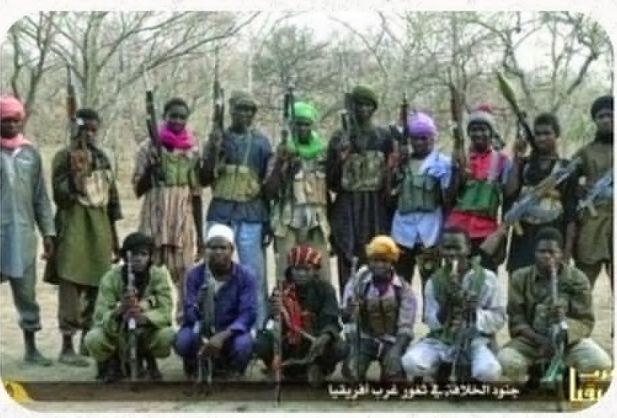
BLOOD ON EVERY FRONT: BORNO, KEBBI, BENUE AND A NATION DEVOURING ITSELF — HOW BOKO HARAM, ISWAP, LAKURAWA BANDITS AND A FAILING STATE ARE KILLING NIGERIANS IN 2026. Nigeria is bleeding from every direction. In the northeast, the northwest, the north-central, and now even further south, armed groups are killing, kidnapping, and terrorizing communities with a frequency and ferocity that has stripped away every pretence that this government has the situation under control. As Nigerians wake up today, Friday, March 27, 2026, the security picture across this nation is nothing short of catastrophic.
Start with the northeast, where the insurgency has entered what experts are now calling a “dangerous new phase.” The March 16, 2026, coordinated suicide bombings in Maiduguri — striking the Monday Market axis, the post office corridor, the entrance to the University of Maiduguri Teaching Hospital, and the Kaleri area — killed and injured ordinary people who had simply been trying to end the day in peace. Two days later, the militants went further. On the night of March 18, Boko Haram and ISWAP militants attempted to storm a military position in the Mallam Fatori area along the border with Niger. Nigerian troops under Operation Hadin Kai, having received advance intelligence, deployed artillery, aircraft, and intercepted enemy drones. At least 80 terrorists were eliminated, including three field commanders, with four soldiers wounded and none killed. It was one of the Nigerian military’s most effective strikes in recent months — but the fact that 80 armed men could marshal such a coordinated assault on a military base should sober every Nigerian.In Borno, between March 4 and 6, suspected Islamic militants attacked the town of Ngoshe, reportedly abducting more than 300 civilians, including women and children, and killing many others. The military responded with both airstrikes and ground troops, reportedly killing many assailants — as well as civilians, including local elders and religious leaders. That last detail deserves to sit with every Nigerian. In the rush to respond, the military fired on the very people it was supposed to protect. Where is the accountability?
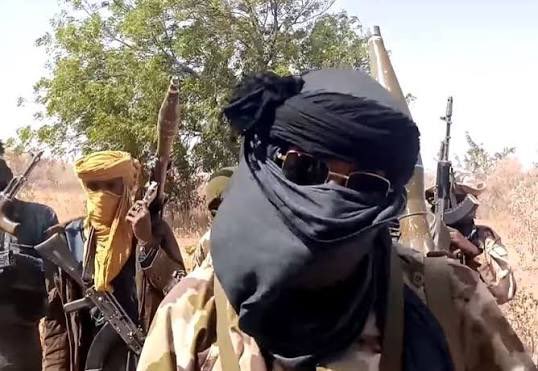
Then there is Kebbi State in the northwest, where the emerging Lakurawa threat is now costing soldiers their lives. No fewer than nine soldiers, a police officer, a civilian, and two unidentified individuals were killed after suspected Lakurawa terrorists ambushed them in the Shanga Local Government Area of Kebbi State, where they were on patrol. Governor Nasir Idris visited wounded survivors at the Federal Teaching Hospital and condemned the attack as barbaric. The Lakurawa group, linked to jihadist networks operating out of Mali and Niger, is no longer a distant Sahelian problem. It has arrived in Nigeria’s northwest and is now killing Nigerian soldiers on Nigerian soil.
Just last week in Borno, troops of Operation Hadin Kai arrested two suspected informants linked to Boko Haram and ISWAP in the Damboa axis — intercepted at 5:30 a.m. after exhibiting suspicious movements near the Timbuktu Triangle, a known terrorist enclave. This is intelligence work done right. But it underscores how deeply entrenched these networks have become, with local informants embedded inside communities, passing coordinates to killers.
Meanwhile, the human cost keeps mounting. The rise in insurgent attacks is threatening regional stability and causing a spike in hunger. Nearly 35 million people are projected to face severe food insecurity during the 2026 lean season from June to August — the highest number ever recorded in the country. Guns and hunger are now travelling together, each feeding the other in a vicious cycle that no military operation alone can break.
Security experts are no longer holding back their verdicts. Analysts say the renewed attacks result from intelligence gaps, overstretched security forces, porous borders, and the ability of terror groups to regroup in rural enclaves. They warn that government must move beyond a purely reactive military approach and adopt a comprehensive national security response. One university professor went further, alleging that some individuals within political and government circles are complicit in sustaining insecurity, and that as long as financiers and sponsors of violent groups remain untouched, the violence will persist.
That is the sentence that should rattle the corridors of Aso Rock. Not a foreign analyst. Not an opposition politician. A Nigerian professor, publicly on record, saying that people in power are benefiting from this bloodshed.
There was at least one rare moment of judicial accountability this week. A Benue court convicted nine out of ten suspects linked to the abduction of worshippers at St John Catholic Church in the Ojeji community in Ado Local Government Area. The victims were kidnapped during a night vigil, but swift security operations led to their safe rescue. Police recovered AK-47 rifles, arrested ten suspects, and dismantled the criminal network. Justice was served, but it is a drop in a very large ocean of impunity.
The broader picture is damning. Nigeria’s armed forces are now deployed in two-thirds of the country’s states and are critically overstretched, as Boko Haram, ISWAP, and bandit groups continue to expand their areas of operation and attack all populations. A military stretched this thin, fighting this many battles simultaneously, cannot win through force of numbers alone.President Tinubu declared a national security emergency last November. He launched Operation Savanna Shield. He ordered thousands of new police and army recruits. None of it has stopped the blood from flowing. The bodies keep arriving. The mass graves keep filling. And somewhere in the forests of the northwest, the northeast, and the north-central, the men with guns are planning their next move.
This is not a security crisis. It is a governance failure dressed in military fatigues. Nigeria deserves better.