Physical Address
304 North Cardinal St.
Dorchester Center, MA 02124
Physical Address
304 North Cardinal St.
Dorchester Center, MA 02124

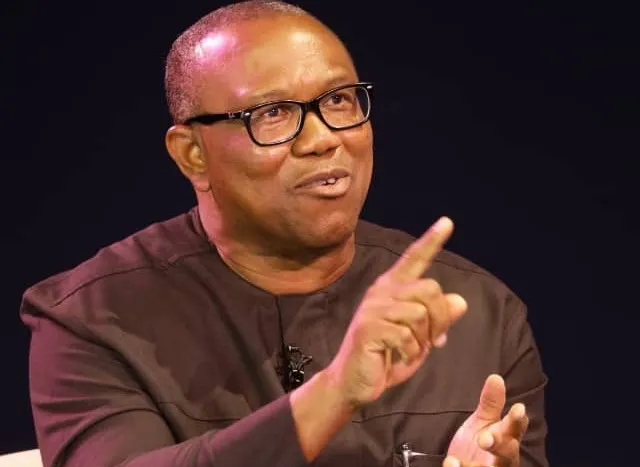
Former presidential candidate and Labour Party chieftain Peter Obi has once again stirred the national conversation with a bold and provocative declaration that strikes at the very heart of Nigeria’s economic identity. Speaking to the press in Kaduna, Obi made the kind of statement that Nigerian leaders rarely have the courage to say out loud — that agriculture, not crude oil, holds the key to this country’s financial salvation.
“Nigeria can make more money from agriculture than oil if our system is working,” Obi declared, in words that are simple in delivery but devastating in implication.
Let that statement sink in for a moment.
Here is a man who has run for the highest office in the land, who has studied the numbers, who has walked the streets and the farms of this nation, standing before the press and telling Nigerians that the very thing we have neglected — our land, our soil, our farmers — is worth more than the black gold we have mortgaged our future to extract from the Niger Delta.
And the most painful word in that sentence is not “agriculture.” It is not even “oil.” The most painful word is “if.” If our system is working.
Because that single word carries the weight of decades of failure. It is a quiet indictment of every administration that has presided over a country with some of the most fertile land on the African continent, yet allows its farmers to be slaughtered by herdsmen, chased off their fields by bandits, and abandoned by a government too distracted by oil revenue projections and foreign loans to invest seriously in food production.
Nigeria is endowed with approximately 84 million hectares of arable land. The River Niger and the Benue alone water vast territories capable of feeding not just this nation but a significant portion of West Africa. We have distinct climatic zones that allow for the cultivation of virtually every crop on earth — from cocoa and rubber in the South, to groundnuts and cotton in the North, to rice, cassava, maize, and sorghum across the middle belt. We once led the world in groundnut exports. We were once the largest producer of palm oil on the planet. That was before oil was discovered and we collectively lost our minds.
Peter Obi is not saying anything that economists and development experts have not been saying for years. But the context and location of this statement matter enormously. He said it in Kaduna — a state that sits at the epicenter of Nigeria’s food belt crisis, a state ravaged by farmer-herder conflicts, banditry, and insecurity that has driven millions of smallholder farmers off productive land. He said it in the North, where agriculture was once the backbone of regional and national prosperity, and where the collapse of that sector has contributed directly to poverty, unemployment, and the recruitment pipeline for insurgency and criminality.
This is the conversation Nigeria must have urgently.
The oil sector, even at its most productive, employs a fraction of this country’s workforce directly. It generates revenue that is notoriously difficult to distribute equitably, that feeds corruption at every level, and that has created what economists call the resource curse — a perverse condition where the presence of natural wealth actually stunts economic development, institutional growth, and diversification.
Agriculture, by contrast, is inherently distributive. When a smallholder farmer in Benue thrives, his family thrives. When a commodity chain from farm to market is functioning, traders, transporters, processors, packagers, and retailers all benefit. When Nigeria’s agricultural sector is properly funded, supported, and secured, it creates wealth that reaches into rural communities that oil revenue has never touched.
But here is where Obi’s statement demands more than applause — it demands accountability.
We have heard this argument before. We have seen governments launch agricultural initiatives with great fanfare — Anchor Borrowers Programme, Green Alternative, various farmer support schemes — only to watch them collapse under the weight of mismanagement, diversion of funds, and lack of follow-through. We have seen fertiliser subsidies stolen. We have seen irrigation infrastructure abandoned. We have seen extension services gutted. We have seen rural roads left to decay, making it impossible for farmers to move produce to market.
The issue, as Obi rightly identifies, is systemic. It is not a lack of knowledge or resources. It is a failure of governance. It is the unwillingness of those who control power in Nigeria to deploy that power in service of the people rather than in service of themselves.
For Nigeria to make more money from agriculture than oil, a number of things must happen simultaneously and urgently. Security in farming communities must be guaranteed — no farmer can cultivate in fear. Rural infrastructure must be built and maintained — roads, storage facilities, irrigation systems, electricity. Access to affordable credit must be democratised — smallholder farmers cannot compete without financing. Extension services must be revived — knowledge transfer from research institutions to farmers must be systematic. And the commodities market must be structured to give Nigerian farmers fair value for their produce rather than selling cheap and buying expensive.
None of this is impossible. None of it is even particularly innovative. Countries with far less endowment than Nigeria have transformed their agricultural sectors into engines of national wealth. Brazil did it. Indonesia did it. India has been doing it. The question is never whether Nigeria can. The question is always whether those in power will.
Peter Obi is right. Nigeria’s real gold is in its soil. But statements alone, no matter how accurate, do not plant crops or build markets or protect farmers or fix broken institutions.
The system he speaks of will only work when Nigerians collectively demand, and relentlessly hold accountable, leaders who are willing to build it.