Physical Address
304 North Cardinal St.
Dorchester Center, MA 02124
Physical Address
304 North Cardinal St.
Dorchester Center, MA 02124

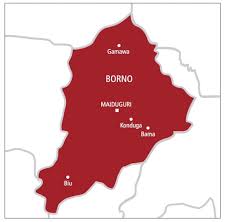
BLOOD ON THE STREETS OF MAIDUGURI: 23 KILLED, 146 WOUNDED AS BOMBINGS SHATTER BORNO’S FRAGILE PEACE
The nightmare has returned to Maiduguri.
On Monday night, a series of devastating explosions tore through one of Nigeria’s most historically besieged cities, killing at least 23 people and leaving 146 others wounded — many of them ordinary Nigerians going about their lives in what they had hoped was a city finally breathing free from terror.
The blasts hit with calculated precision. The entrance of the University of Maiduguri Teaching Hospital, Monday Market, and the Post Office area — all densely populated, all civilian. Whoever planted these bombs was not targeting soldiers. They were targeting people. Mothers, traders, students, civil servants. That is the face of this cowardice.
HOSPITALS OVERWHELMED, FAMILIES SHATTERED
According to the National Emergency Management Agency, a total of 169 victims were evacuated to hospitals across the city. As of the time of filing this report, 108 victims are receiving treatment at UMTH, 20 at Umaru Shehu Hospital, and 17 at Maiduguri Specialist Hospital. Behind every one of those numbers is a family torn apart, a life hanging in the balance, a future uncertain.
Residents who spoke to reporters described the night in language that should chill every Nigerian to the bone. This felt, they said, like a chilling return to the darkest days — days the people of Maiduguri had prayed they would never see again.
And who could blame them? For years, the Lake Chad region bore the full weight of Boko Haram’s bloodlust. Maiduguri was the epicentre. Markets bombed. Mosques targeted. Schoolgirls taken. The city bled for over a decade. Then, slowly — painfully slowly — security improved. Streets that once emptied at dusk began to fill with life again.
That fragile peace was shattered Monday night.
A PATTERN TOO CHILLING TO IGNORE
The last major attack in Maiduguri occurred in 2021 — mortar strikes that killed at least 10 people, followed by a suicide bombing at a mosque in Gambarou Market. Since then, relative calm had prevailed. But Monday’s coordinated bombings did not come in isolation.
Hours before the explosions ripped through the city centre, another attack had already been recorded — this time on a military installation in Ajilari, on the outskirts of Maiduguri. Two attacks. One night. One city.
That is not a coincidence. That is a statement.
Whoever is behind this is sending a message — that the war is not over, that no location is sacred, and that the people of Borno remain fair game. The Borno State Police Command has deployed its Explosive Ordnance Disposal team, and joint security operatives have reportedly taken control of the situation. We have heard those lines before.
THE QUESTION NIGERIA MUST ANSWER
The Federal Government cannot afford to treat this as a routine security update. Maiduguri is not just another city. It is the symbolic battleground of Nigeria’s longest-running insurgency. When Maiduguri bleeds at this scale, it signals something far more dangerous than a lone incident — it signals a possible resurgence, a recalibration of terrorist strategy, a deliberate test of the nation’s security architecture.
President Tinubu and the military high command must address Nigerians directly and urgently. The people of Borno — who have sacrificed more than any other community in this country’s fight against terrorism — deserve more than condolences and EOD deployments.
They deserve answers. They deserve protection. They deserve peace.
Twenty-three people went to sleep on Sunday night not knowing Monday would be their last. One hundred and forty-six others are fighting for their lives in hospitals across a shaken city.
Nigeria must not look away.