Physical Address
304 North Cardinal St.
Dorchester Center, MA 02124
Physical Address
304 North Cardinal St.
Dorchester Center, MA 02124
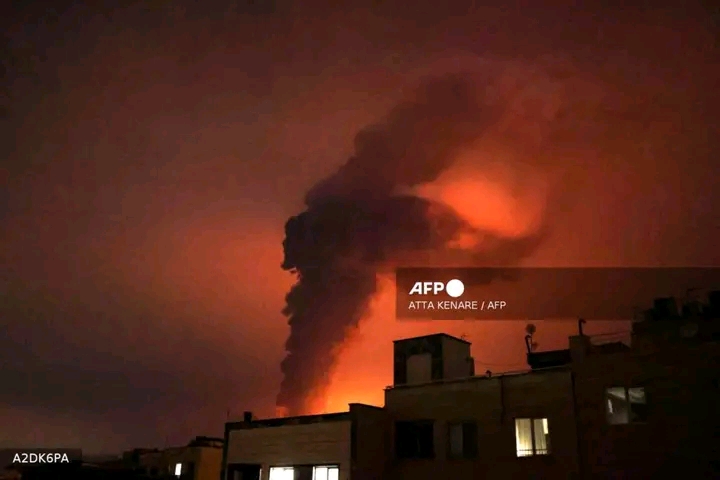
US and Israel Strike Five Iranian Oil Sites Near Tehran in Overnight Blitz — Four Confirmed Dead. The Middle East woke up to the smell of burning oil and the weight of escalating dread as confirmation emerged that the United States and Israel conducted coordinated overnight strikes on five oil facilities in and around Tehran, killing at least four people. An Iranian official has confirmed the devastating attacks, and the world is now scrambling to calculate what comes next.
This is not a skirmish. This is not a warning shot fired across a distant bow. This is a direct, surgical strike on the economic heartbeat of the Islamic Republic of Iran — its oil infrastructure — and it carries implications that stretch far beyond the borders of the Middle East.
Five oil sites. One night. Two of the world’s most militarily capable nations acting in concert. Whatever diplomatic language follows in the coming days, the message delivered in the darkness over Tehran was unmistakably blunt.
The four lives confirmed lost are the human cost we know of today. But the strategic cost may take months to fully calculate. Iran’s oil sector is not merely an economic engine — it is the lifeblood of a government that has used petroleum revenue to fund proxy militias from Beirut to Baghdad, from Sana’a to the Gaza Strip. Striking oil facilities is striking the treasury. It is a message delivered not just in fire and shrapnel, but in the language of economic warfare.
For Israel, this fits a pattern of increasingly bold offensive action against Iranian assets, no longer confined to shadow operations and targeted assassinations.
For the United States, participation in these strikes — if fully confirmed — represents a dramatic escalation of direct military engagement with Iran, a line that Washington has historically been cautious about crossing too visibly.
Iran will respond. That is not speculation — it is historical certainty. The question dominating every intelligence briefing in every capital city tonight is how, when, and through which of its many regional proxies or direct military channels that response will come.
And here at home in Nigeria, we cannot afford to watch this as a distant drama. Nigeria is an oil-producing nation operating in a global crude market that is exquisitely sensitive to Middle East instability. Every missile that lands on an Iranian oil facility sends a tremor through global supply chains, and those tremors eventually arrive at our fuel pumps, our import costs, and our already battered foreign exchange reserves.
The Dangote Refinery may offer Nigeria some buffer from global fuel price shocks, but we are not insulated from the broader economic consequences of a Middle East spiraling toward open warfare between Iran and a US-Israeli alliance.
The world changed overnight. The fire over Tehran is not just Iran’s problem. It belongs to all of us now.