Physical Address
304 North Cardinal St.
Dorchester Center, MA 02124
Physical Address
304 North Cardinal St.
Dorchester Center, MA 02124

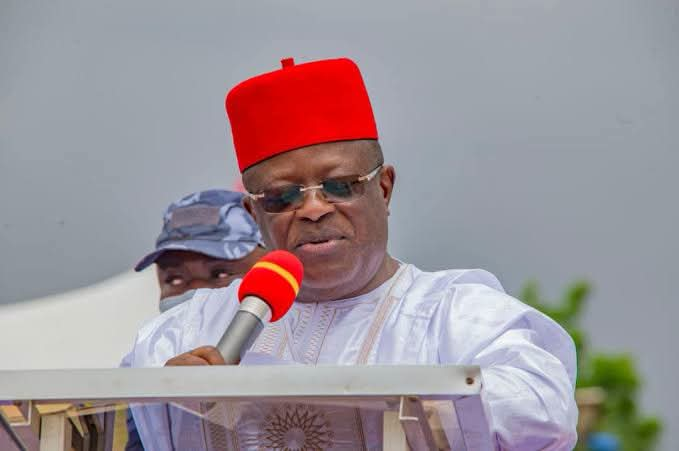
Minister of Works, Senator David Umahi, has described himself as the political lion of the South-East, making a bold statement about his standing in the region while questioning the political influence of former Labour Party presidential candidate Peter Obi. Umahi’s remarks come amid growing political realignments ahead of the 2027 general elections, with political leaders across Nigeria positioning themselves and their preferred candidates for the next presidential contest. The minister has also reaffirmed his support for President Bola Ahmed Tinubu’s re-election bid, arguing that the current administration deserves another opportunity to continue its policies and development agenda.
Umahi’s declaration has added another dimension to the political debate over who commands the greatest influence in the South-East, a region where competing political interests and questions of national representation remain significant. By referring to himself as the region’s lion, the minister appeared to project confidence in his political strength, experience and relationship with the Federal Government. The statement also reflects the determination of some South-East political figures to assert their influence within the ruling All Progressives Congress (APC) and strengthen the party’s position in a region where opposition parties have traditionally enjoyed considerable support.
The minister’s comments about Peter Obi have attracted attention because of the former Anambra State governor’s continued prominence in national politics. Obi became a major political force during the 2023 presidential election, attracting substantial support from young Nigerians, urban voters and citizens seeking an alternative to the country’s established political parties. His campaign, built around governance, public accountability and economic management, generated a movement that extended beyond the South-East. As discussions about the 2027 election intensify, Obi remains an important figure in debates about opposition politics and the region’s political direction.
Umahi’s challenge to Obi’s standing raises a broader question about how political influence should be measured. While electoral performance provides one indication of a politician’s popularity, influence can also depend on party structures, relationships with political institutions, legislative experience, government appointments and the ability to attract development projects. Obi’s supporters may point to his performance in the 2023 presidential election as evidence of his national appeal, while Umahi’s supporters may highlight his experience as a former governor of Ebonyi State, senator and serving minister. Ultimately, the political strength of both figures will be tested by public opinion, party decisions and the electoral process.
As Minister of Works, Umahi occupies a significant position in the Tinubu administration, particularly because roads and other transport infrastructure are central to Nigeria’s economic development. The ministry is responsible for overseeing federal road projects and related infrastructure initiatives intended to improve connectivity between communities, facilitate the movement of goods and passengers, and support commercial activity. The minister’s performance in this role is therefore likely to influence public assessments of his leadership. For many Nigerians, political claims of influence are most convincing when accompanied by visible improvements in infrastructure and the effective use of public resources.
Umahi’s endorsement of Tinubu’s anticipated 2027 re-election bid also reflects the ruling party’s efforts to consolidate support ahead of the next general elections. Supporters of the President argue that his administration’s economic reforms, infrastructure programmes and other policy initiatives require continuity to deliver their expected long-term benefits. They maintain that major structural changes often take time to produce measurable improvements and that another term could provide an opportunity to consolidate the administration’s development agenda. Critics, however, continue to question the immediate impact of some of the government’s policies, particularly amid concerns about the cost of living, transportation expenses and household purchasing power.
The political debate is especially important in the South-East, where the APC has continued to seek wider acceptance among voters. The region’s political landscape includes supporters of different parties, and no single individual can automatically speak for every community or determine the choices of all voters. Umahi’s position represents one strand of the region’s political conversation, particularly among those who believe closer cooperation with the Federal Government could improve the South-East’s access to national development opportunities. Others may argue that political support should depend on policy performance, regional inclusion and the extent to which government decisions address the concerns of residents.
The question of regional development is likely to remain central to the political calculations of South-East leaders as the 2027 election approaches. Residents continue to expect improvements in roads, electricity, employment opportunities, security, healthcare, education and support for businesses. Political leaders seeking the region’s support will therefore need to demonstrate how their preferred alliances can deliver practical benefits. For Umahi, backing Tinubu provides an opportunity to advocate continuity and stronger engagement with the Federal Government, but the effectiveness of that argument will depend partly on whether voters believe the administration has adequately addressed the region’s needs.
The contest for political relevance between prominent South-East figures also illustrates the broader competition taking place within Nigerian politics. Politicians are increasingly using public appearances, media statements and party engagements to communicate their positions before formal campaign activities gather momentum. However, strong declarations and political labels alone cannot settle questions of popularity or electoral legitimacy. Those questions are ultimately determined by political participation, credible party processes and the decisions of voters. In a democratic society, both supporters and critics of Umahi and Obi have the right to present their arguments, provided political disagreements remain peaceful and within the law.As preparations for the 2027 general elections continue, Umahi’s self-description as the South-East’s lion and his support for Tinubu’s re-election are likely to remain part of the wider political debate. His remarks underscore the competition among regional leaders to shape the South-East’s relationship with the Federal Government and influence the region’s electoral choices. Meanwhile, Peter Obi’s political standing will continue to be assessed through his public engagement, alliances and ability to maintain support beyond his established base. Ultimately, the electorate—not political declarations—will determine which leaders command the strongest mandate when Nigerians go to the polls in 2027.