Physical Address
304 North Cardinal St.
Dorchester Center, MA 02124
Physical Address
304 North Cardinal St.
Dorchester Center, MA 02124

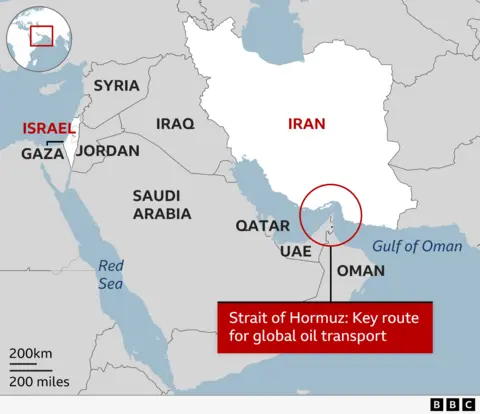
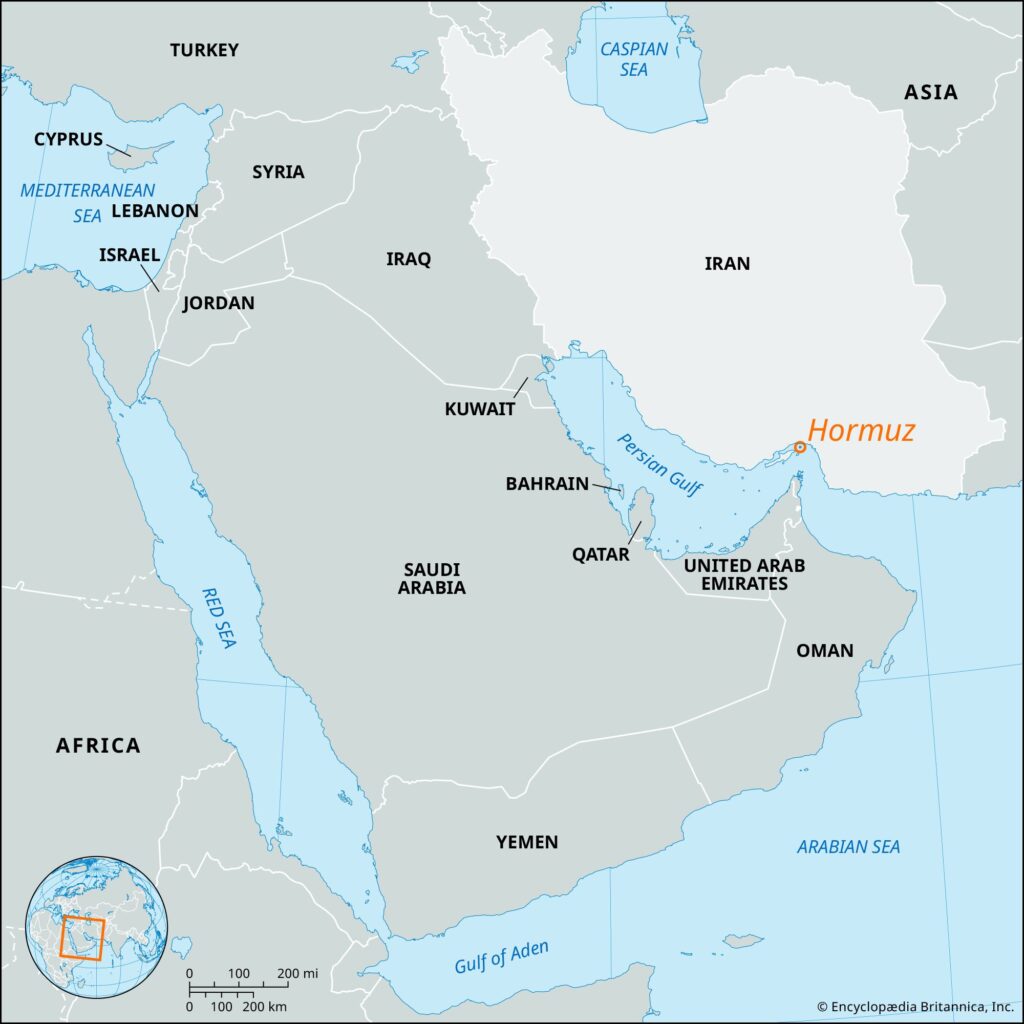
THE STRAIT OF HORMUZ IS ON FIRE — AND THE WHOLE WORLD IS FEELING THE HEAT. The world’s most important oil corridor has become the most dangerous stretch of water on the planet. The Strait of Hormuz — that narrow, 21-mile-wide passage between Iran and Oman through which roughly 20% of the world’s daily oil supply flows — is now effectively closed, and the consequences are being felt from Lagos to London, from Tokyo to Abuja. Here is everything you need to know — the facts, the drama, the rumours, and the real stakes.
HOW DID WE GET HERE? On 28 February 2026, the United States and Israel launched coordinated airstrikes on Iran — codenamed Operation Epic Fury — targeting military facilities, nuclear sites, and key leadership figures, resulting in the death of Supreme Leader Ali Khamenei. (Wikipedia) That single event detonated the geopolitical equivalent of a nuclear bomb in the Middle East.Iran was never going to absorb such a strike in silence. In response, Iran launched retaliatory missile and drone attacks on US military bases, Israeli territory, and other Gulf states, while its Islamic Revolutionary Guard Corps (IRGC) issued warnings prohibiting vessel passage through the strait, bringing shipping traffic to an effective halt. (Wikipedia)Starting on March 4, 2026, Iranian forces officially declared the Strait “closed,” threatening and carrying out attacks on ships attempting to transit it.
THE SCALE OF THE SHUTDOWN: Let these numbers sink in: Tanker traffic first dropped by approximately 70%, with over 150 ships anchoring outside the strait to avoid the risks. Shortly afterwards, traffic dropped to virtually zero. In 2023, oil flows through the Strait averaged nearly 21 million barrels per day, accounting for roughly 20% of global petroleum liquids consumption. All of that is now in jeopardy. Shipping giants Maersk, MSC, Hapag-Lloyd and CMA CGM have all suspended operations through the strait and rerouted vessels around the southern tip of Africa.
OIL PRICES ARE GOING THROUGH THE ROOF: Oil prices have surged dramatically — at one point breaking the $100 per barrel mark. Brent crude jumped 8% in just the two trading days surrounding the start of the conflict. West Texas Intermediate crude was trading around $93 per barrel on March 14, up from about $67 just a day before the war began on February 28. For Nigeria, an oil-dependent economy, this is a double-edged sword — potentially higher revenue on paper, but crippling implications for fuel imports and the downstream sector. Don’t pop champagne just yet.
WHAT IS IRAN SAYING?
Iran’s new supreme leader has vowed to keep the Strait closed, stating through state television that it should remain blocked and that Iran will continue attacks on its Persian Gulf neighbours. IRGC Navy Chief Alireza Tangsiri pushed back on Western narratives, insisting, “The Strait of Hormuz has not yet been militarily closed and is merely under control.” (Al Jazeera) That is a classic bit of Iranian diplomatic double-speak — closed enough to stop ships, open enough to deny blame.On 5 March, Iran clarified its position: the Strait would remain closed specifically to ships from the US, Israel, and their Western allies. By 13 March, Iran had reportedly allowed a Turkish ship, two Indian-flagged gas carriers, and a Saudi oil tanker carrying one million barrels to pass through. (Wikipedia) So Iran is selectively letting allies through — a calculated geopolitical move designed to fracture the Western coalition against it.
WHAT IS AMERICA DOING — OR NOT DOING?
This is where the chaos and the contradictions get embarrassing. On the same morning, US Energy Secretary Chris Wright told CNBC that the Navy was not ready to escort oil tankers through the strait. Hours later, Treasury Secretary Scott Bessent told Sky News that the Navy — and possibly an international coalition — would begin escorting ships “as soon as militarily possible.” Two cabinet ministers. Two opposite stories. Same morning.Defense Secretary Pete Hegseth dismissed concerns, saying at a Pentagon press briefing, “We have been dealing with it, and don’t need to worry about it,” — even as global oil markets screamed the opposite.Meanwhile, Trump posted on Truth Social threatening to bomb “the hell out of the shoreline” and pledging to shoot Iranian boats out of the water. He also confirmed that the US military is planning operations to take out land-based anti-ship missiles that Iran has deployed around the strait before any escort convoys begin. A massive US strike was carried out on Kharg Island — the centre of Iran’s oil exports — destroying naval mine storage facilities, missile bunkers, and over 90 military targets. Trump described it as a warning shot; the real target was Iran’s will to keep fighting.
THE MINING THREAT — FACT OR RUMOUR? US forces have reportedly sunk 16 Iranian minelayers amid reports that Tehran is actively mining the Strait of Hormuz. If confirmed, this dramatically raises the stakes — naval mines are indiscriminate killers that can lurk for months. When asked about removing mines from the strait, US Admiral Caine said only, “We retain a range of options to solve a whole variety of problems.” Vague. Very vague.
THE INTERNATIONAL COALITION — WHO IS ACTUALLY COMING?
Trump declared that “many countries” would dispatch warships to keep the Strait open and called it a “team effort.” (Al Jazeera) He specifically named China, France, Japan, South Korea, and the UK as countries he hopes will join. Neither Beijing nor London confirmed to CNN whether they are actually sending warships. China’s response was particularly telling: Beijing called for an immediate ceasefire and said “all parties have the responsibility to ensure stable and unimpeded energy supply” — without committing a single ship. Defense Secretary Hegseth has ordered the USS Tripoli — an amphibious assault ship — along with a Marine expeditionary unit to the Middle East. The Marine unit is capable of conducting ground operations if ordered. (Axios) The words “ground operations” should make everyone nervous.
ALTERNATIVE ROUTES — AND THEIR LIMITS
As of 10 March, Saudi Arabia has been diverting oil to the Red Sea port of Yanbu via the East-West Crude Oil Pipeline, while the UAE has been diverting oil through the Abu Dhabi Crude Oil Pipeline to the port of Fujairah on the Arabian Sea. However, the combined capacity of these pipelines cannot replace what flows through the strait — leaving a deficit of roughly 12 million barrels per day. Additionally, the Red Sea route remains vulnerable to Houthi attacks. Meanwhile, several drones struck Oman’s deep-water ports of Duqm and Salalah — potential bypass routes — damaging at least one fuel storage tank. The port of Sohar fell within an insurer’s war risk area, driving up costs there too. (Wikipedia) Iran is methodically closing every escape valve.
THE HUMAN COST
The US-flagged vessel Stena Imperative was struck twice at the port of Bahrain, causing a fire. One port worker was killed and two others injured. (Wikipedia) A Thai cargo ship was struck and set ablaze in the strait. Three crew members remain missing, 20 others were rescued. Thailand filed a formal protest with Iran’s ambassador.
THE RUMOURS SWIRLING
Several unverified but widely circulating claims deserve mention. Hegseth claimed that Iran’s new supreme leader Mojtaba Khamenei — who succeeded his father — is “wounded and likely disfigured,” pointing to the fact that he has only been posting text on X with no video or audio appearances. This has not been independently confirmed. There are also reports that Russia has told Trump it has not shared intelligence with Iran during the war — but few analysts believe that completely. The Kremlin has confirmed that Moscow and Washington are “discussing” cooperation to stabilise energy markets, which signals that backchannels are very much alive.
WHAT DOES THIS MEAN FOR NIGERIA?
Nigeria’s oil sits in the Atlantic — far from the Strait of Hormuz — but make no mistake: this crisis will reach Naija. Global oil prices above $100 per barrel benefit Nigeria’s NNPC revenues on paper, but imported refined petroleum products and LPG will become more expensive as shipping costs explode. Expect the pump price pressure to intensify. The Dangote Refinery’s importance just went up another notch. If there was ever a moment that proved Nigeria must achieve true energy self-sufficiency, this is it.
THE BOTTOM LINE
The Strait of Hormuz is not just a waterway — it is the jugular vein of the global economy. Right now, that vein has a knife at it. The US doesn’t have a clear plan. Iran is playing chess while America plays checkers on Twitter. The coalition Trump is calling for hasn’t materialised. Oil is at $93 and climbing. Ships are sitting idle outside the strait. And the world is holding its breath.One thing is certain: until this strait reopens, nobody — not Nigeria, not China, not Europe — is truly safe from the economic shockwave coming.