Physical Address
304 North Cardinal St.
Dorchester Center, MA 02124
Physical Address
304 North Cardinal St.
Dorchester Center, MA 02124

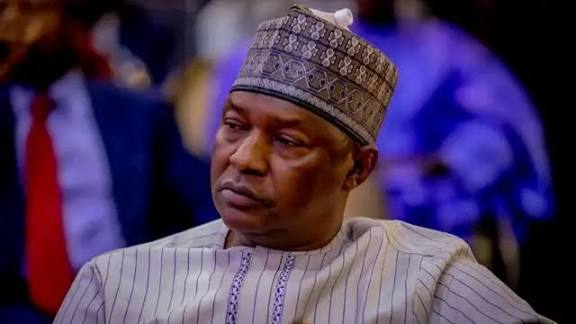
Nigeria’s fight against corruption took a dramatic twist today as Justice Obiora Egwuatu of the Federal High Court in Abuja suddenly withdrew from the high-profile cases filed by the Economic and Financial Crimes Commission (EFCC) against former Attorney-General of the Federation, Abubakar Malami, SAN.The judge announced his decision in open court, citing “personal reasons” and the need to act “in the interest of justice.” His withdrawal came shortly after one of the cases — involving the alleged forfeiture of 57 properties reportedly linked to Malami and valued at over ₦213 billion — was called up for mention.⚖️ The Case That Could Shake Nigeria’s Elite CircleThe EFCC’s legal battle against Malami is not a small matter. The anti-graft agency accuses the former chief law officer of corruption, abuse of office, and unlawful acquisition of assets during his time in power.These allegations strike at the heart of Nigeria’s governance, because Malami once held the country’s most powerful legal office — the very office responsible for upholding justice and prosecuting corruption.
The cases include: Civil proceedings seeking permanent forfeiture of 57 luxury properties allegedly tied to Malami Allegations of money laundering and abuse of public trust Separate criminal investigations and legal disputes involving anti-corruption authorities Why the Judge’s Withdrawal Matter
Justice Egwuatu did not provide detailed reasons, but he emphasised that stepping aside was necessary to preserve fairness and maintain public confidence in the judicial process. While judicial recusal is a legitimate legal step, it comes with serious implications — especially in cases involving powerful political figures.
Here’s what this means: Delay in justice: The cases must now be reassigned to another judge, which could slow down proceedings.⚖️ Risk of prolonged legal uncertainty: Nigerians may have to wait longer for clarity and accountability.
Public trust at stake: Citizens want assurance that no individual is above the law. Nigerians Are Watching Closely.
This development raises serious questions. Nigeria has long struggled with prosecuting high-profile corruption cases to conclusion. Too often, cases involving powerful individuals drag on for years, fade away, or collapse under technicalities. For ordinary Nigerians struggling with economic hardship, unemployment, and rising inflation, corruption is not just a legal issue — it’s a survival issue. When billions allegedly linked to public officials are tied up in legal battles, Nigerians are left asking:Will justice truly be served?Or will the system once again protect the powerful?
Justice Must Not Only Be Done — It Must Be Seen; Justice Egwuatu’s decision may have been made to protect judicial integrity. But ultimately, what Nigerians demand is simple: transparency, fairness, and accountability — regardless of status or political influence.If Nigeria is serious about fighting corruption, cases like this must be handled swiftly, transparently, and without interference.Because justice delayed, especially in corruption cases, often becomes justice denied — and Nigerians deserve better. What do you think? hit the comment 👇