Physical Address
304 North Cardinal St.
Dorchester Center, MA 02124
Physical Address
304 North Cardinal St.
Dorchester Center, MA 02124

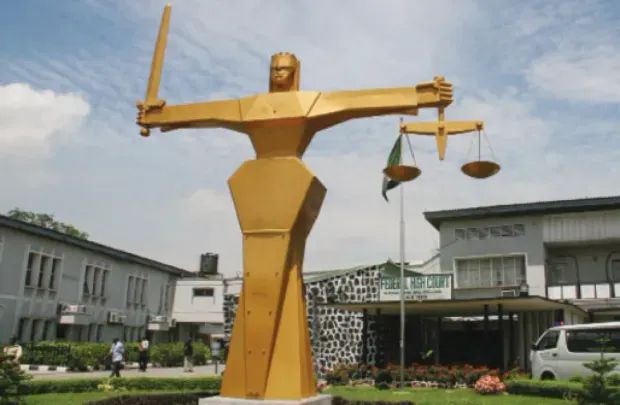
An Enugu judge has warned against the growing trend of what he described as the “judicialisation of elections” in West Africa, expressing concern that excessive reliance on the courts to determine electoral outcomes undermines citizens’ democratic rights. The judge argued that when election disputes increasingly shift from the ballot box to the courtroom, the people’s power to determine who governs them risks being weakened. According to the judicial officer, democracy must remain a system in which citizens exercise their political choices through credible elections rather than one in which courtrooms become the decisive battleground for determining political leadership.
The warning comes amid continuing debates across West Africa about the credibility of elections, the independence of electoral institutions and the role of the judiciary in resolving disputes arising from the electoral process. In democratic societies, courts are expected to interpret electoral laws, protect constitutional rights and provide remedies where irregularities occur. However, concerns arise when litigation becomes the principal means through which political parties and candidates seek to obtain electoral victories they failed to secure at the polls. The judge’s position highlights the need to strike a balance between the legitimate role of the judiciary and the fundamental principle that political power derives from the will of the people.
The concept of judicialisation of elections refers to the increasing involvement of courts in determining electoral outcomes, resolving political contests and addressing disputes that arise before, during and after elections. Although judicial intervention is often necessary to correct violations of electoral laws, the process becomes controversial when courts are repeatedly called upon to determine who should occupy political offices following contested elections. In such circumstances, the judiciary may find itself at the centre of political controversies, while citizens who participated in the electoral process may begin to question whether their votes are ultimately decisive.
The judge’s warning also raises important questions about democratic agency, which describes the ability of citizens to exercise meaningful control over political decisions and the selection of their leaders. Elections are designed to give voters the opportunity to express their preferences freely and hold elected officials accountable. When electoral disputes are routinely settled through prolonged legal battles, citizens may develop the impression that their choices at the polling stations can be overturned or displaced by decisions made after the election. Such perceptions can weaken public confidence in democratic institutions and discourage participation in future elections.
Nevertheless, the role of the judiciary in electoral disputes cannot be dismissed. Courts serve as essential safeguards against electoral malpractice, unlawful disqualification of candidates, manipulation of results and violations of constitutional provisions. Where an election has been conducted contrary to the law, judicial intervention may be necessary to protect the integrity of the democratic process. The challenge, therefore, is not to prevent courts from adjudicating electoral disputes, but to ensure that litigation does not become a substitute for credible elections, effective electoral administration and the genuine expression of the electorate’s will.
In Nigeria, election petitions have become a significant feature of the democratic process since the restoration of civilian rule in 1999. Candidates and political parties regularly approach election tribunals and appellate courts to challenge declared results, alleging irregularities, non-compliance with electoral laws, unlawful exclusion or other grounds recognised by law. These proceedings are an important part of the legal framework for electoral accountability. However, they can also generate intense political tension, particularly when disputes over major political offices continue long after voters have cast their ballots. The resulting uncertainty may affect governance, public confidence and the perceived legitimacy of elected officials.
The situation is not limited to Nigeria. Across West Africa, countries have experienced varying degrees of electoral controversy, political instability and disputes over the legitimacy of election results. In some instances, courts have been called upon to interpret constitutional provisions, determine the validity of candidacies or resolve disagreements concerning electoral outcomes. While judicial intervention can provide a peaceful and lawful means of resolving political disputes, an excessive dependence on litigation may expose deeper weaknesses within electoral systems. Where electoral commissions lack public confidence or political actors refuse to accept credible results, courts can become overwhelmed by disputes that might otherwise have been prevented through stronger institutions and greater respect for electoral rules.
Another concern associated with the judicialisation of elections is the pressure it may place on judicial independence. Election cases often involve powerful political interests, intense public scrutiny and significant consequences for the distribution of political power. Judges handling such cases must remain impartial and decide disputes strictly according to the law and the evidence presented before them. At the same time, political parties and members of the public must respect the independence of the courts and refrain from attempting to intimidate judicial officers. A judiciary that is perceived as partisan risks losing the public confidence necessary for the effective administration of justice.
The warning also points to the responsibility of political parties, electoral commissions and other stakeholders to strengthen the electoral process before disputes arise. Electoral bodies must ensure that voter registration, candidate nomination, voting, collation and the announcement of results are conducted transparently and in accordance with the law. Political parties, in turn, must respect electoral rules, select candidates through lawful procedures and pursue complaints through appropriate channels. Governments should also support institutional reforms that improve the credibility of elections and reduce avoidable litigation. When the electoral process is transparent and reliable, the likelihood of widespread disputes may be reduced, although the right to challenge unlawful conduct must always remain protected.
Ultimately, the judge’s warning presents an important question for democratic development in West Africa: how can societies preserve the judiciary’s role as a guardian of the law without allowing court proceedings to overshadow the political choices of citizens? The answer lies in building electoral institutions that command public trust, ensuring that political actors respect the rules of democracy and maintaining an independent judiciary capable of resolving genuine disputes fairly and promptly. Courts must remain available to correct unlawful conduct, but they should not be treated as alternative polling stations where political contests are routinely fought after voting has ended. A sustainable democracy requires both the rule of law and respect for the electorate’s voice. When citizens can vote freely, electoral institutions act transparently and courts intervene where the law requires, democratic agency is strengthened rather than diminished.