Physical Address
304 North Cardinal St.
Dorchester Center, MA 02124
Physical Address
304 North Cardinal St.
Dorchester Center, MA 02124

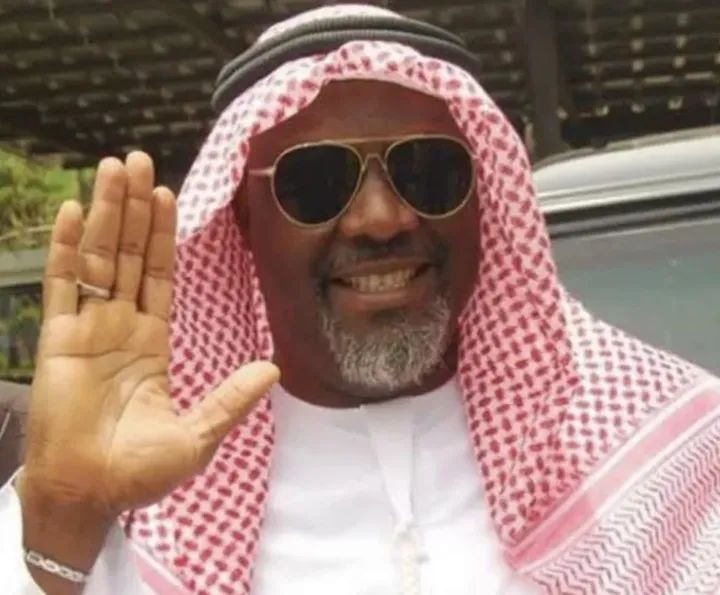
Former Kogi West Senator, Dino Melaye, has challenged President Bola Ahmed Tinubu to a Quranic recitation competition following the President’s recent spiritual visit to Saudi Arabia to perform Umrah, also known as the lesser Hajj. Melaye’s challenge has attracted attention because it brings together religion, political rivalry and public debate over the relationship between personal faith and political leadership in Nigeria. The former lawmaker, known for his outspoken comments on national issues, used the occasion to question the President’s religious knowledge and challenge him to demonstrate his familiarity with the Islamic holy book.
The challenge followed Tinubu’s recent trip to Saudi Arabia, where he performed Umrah, a voluntary Islamic pilgrimage to the holy city of Makkah. Unlike the Hajj, which is performed during a specific period of the Islamic calendar and is obligatory for Muslims who meet the required conditions, Umrah can be undertaken at different times of the year. The pilgrimage is regarded as an important spiritual exercise involving acts of worship, reflection and supplication. Tinubu’s visit was presented as an opportunity for prayers for Nigeria and its people amid the country’s continuing economic and security challenges.
Melaye’s remarks have added a political dimension to the President’s religious journey. By proposing a Quranic recitation competition, the former senator appears to be challenging Tinubu to demonstrate his ability to recite passages from the Quran. However, the significance of the challenge extends beyond the proposed contest itself, raising questions about the extent to which politicians should use religious knowledge or expressions of faith as instruments of political criticism. In Nigeria, where religion remains an important aspect of public life, comments involving the religious identity and practices of prominent political figures often attract considerable attention.
Dino Melaye is a former senator who represented Kogi West Senatorial District in the National Assembly and has remained a vocal figure in Nigerian politics since leaving the Senate. He is widely recognised for his confrontational political style, public commentary and criticism of political opponents. Over the years, Melaye has used public statements and social media to challenge government policies and question the conduct of political leaders. His latest challenge to Tinubu is consistent with his tendency to use provocative remarks to draw attention to political disagreements and generate public discussion.
President Tinubu’s visit to Saudi Arabia comes at a time when his administration continues to face scrutiny over its economic policies, particularly the effects of reforms on the cost of living, transportation, food prices and household purchasing power. Although the President has defended his administration’s economic direction, many Nigerians remain concerned about the practical consequences of these policies. Against this background, the timing of his spiritual journey has provided political commentators and opposition figures with another opportunity to discuss his leadership and the expectations Nigerians have of their President.
For some observers, Melaye’s challenge may be interpreted as political mockery rather than a serious proposal for a religious competition. Public figures frequently use sarcasm, rhetorical questions and symbolic challenges to question the credibility or public image of their opponents. Nevertheless, without further clarification, it would be inappropriate to assume that the proposed contest will take place or that the President has accepted the challenge. The statement is best understood as part of the continuing political exchanges surrounding Tinubu’s administration.
The controversy also highlights the sensitive relationship between religion and politics in Nigeria. The country is home to Muslims, Christians and adherents of other religious traditions, and its political leaders operate within a society where religious identity can influence public perception. However, religious devotion is a personal matter, and a pilgrimage alone does not establish the depth of an individual’s religious knowledge. Similarly, the ability to recite passages from a holy book should not automatically be treated as a complete measure of a person’s character, integrity or competence in public office.
The Quran occupies a central position in Islam, serving as the religion’s holy scripture and a fundamental source of spiritual guidance for Muslims. Quranic recitation is an important aspect of Islamic worship, and proficiency involves more than simply memorising passages; proper pronunciation, observance of established recitation rules and understanding of the text may also be relevant, depending on the nature of a competition. If Melaye intends his challenge to be taken literally, the terms of the proposed contest would need to be clearly defined, including the passages to be recited, the judging criteria and the qualifications of those assessing the participants.
Meanwhile, the President’s supporters may regard Melaye’s remarks as an attempt to ridicule a private act of worship and divert attention from more pressing national issues. Critics, on the other hand, may see the challenge as an example of the combative political atmosphere that has continued to shape public discourse in the country. Regardless of the differing interpretations, the exchange demonstrates how the actions of political leaders can quickly become subjects of wider debate when they intersect with religion, public expectations and partisan disagreements.
Ultimately, Melaye’s challenge to Tinubu has drawn attention to the continuing rivalry between political figures in Nigeria and the role of provocative statements in shaping public conversations. Whether the President responds or ignores the challenge remains uncertain. What is clear is that Nigerians continue to expect their political leaders to demonstrate responsibility, integrity and a commitment to addressing the country’s problems. Beyond questions about Quranic recitation or religious knowledge, the broader test of leadership will remain the ability to improve citizens’ welfare, strengthen national unity and provide effective governance.