Physical Address
304 North Cardinal St.
Dorchester Center, MA 02124
Physical Address
304 North Cardinal St.
Dorchester Center, MA 02124

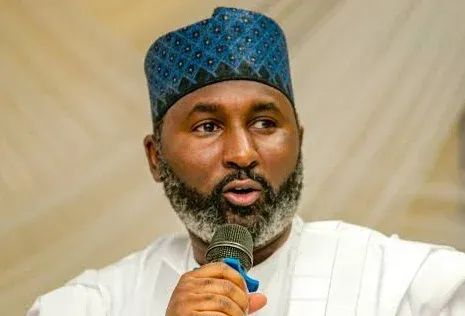
A member of the House of Representatives from Kano State has argued that the late former President Muhammadu Buhari would not have become Nigeria’s president in 2015 without the political support and strategic contribution of President Bola Ahmed Tinubu. The lawmaker, while reflecting on the political developments that led to Buhari’s historic victory, maintained that Tinubu played a significant role in building the alliance that eventually brought the All Progressives Congress (APC) to power. He also urged voters in the North to remember Tinubu’s contribution and support his re-election bid in the 2027 presidential election.
According to the Kano lawmaker, the political partnership between Buhari and Tinubu was an important factor in the emergence of the APC as a formidable opposition party capable of challenging the Peoples Democratic Party (PDP), which had governed Nigeria at the federal level since the return to democracy in 1999. Before the 2015 election, opposition politicians recognised the need to unite their forces rather than continue contesting against the PDP under separate political platforms. The eventual merger brought together major opposition groups and produced a coalition that successfully challenged the incumbent government.
Tinubu, a former governor of Lagos State and a prominent political leader in the South-West, was one of the influential figures associated with the process that led to the formation and consolidation of the APC. His political structure, particularly in Lagos and other parts of the South-West, contributed to the party’s organisational strength. Buhari, who had contested the presidency several times before 2015, eventually secured victory after the opposition coalition presented a united front behind his candidacy. The Kano representative’s remarks underscore the importance he attaches to Tinubu’s role in that political arrangement.
Buhari’s victory in the 2015 presidential election marked a significant turning point in Nigeria’s democratic history. He defeated then-President Goodluck Jonathan, making him the first opposition candidate to unseat a sitting Nigerian president through the ballot box since the country’s return to civilian rule in 1999. The outcome reflected several factors, including public dissatisfaction with the incumbent administration, concerns about insecurity and the economy, Buhari’s longstanding political following in the North, and the consolidation of opposition parties under the APC. Tinubu’s supporters have consistently highlighted his contribution to the coalition that made the victory possible.The Kano lawmaker’s appeal to Northern voters appears to be rooted in the argument that political support should be reciprocated. By reminding the region of Tinubu’s contribution to Buhari’s emergence as president, he is urging voters to consider that history when making decisions ahead of the 2027 election. The position suggests that political alliances should not be viewed solely in terms of immediate electoral benefits but also through the contributions different leaders make to shared political objectives. However, whether voters will accept this argument as sufficient reason to support Tinubu remains a matter for public debate.
The North remains an important electoral region because of its population, voting strength and historical influence on Nigeria’s presidential contests. Support from Northern voters contributed significantly to Buhari’s electoral victories, and the region is expected to remain a major battleground in the 2027 presidential race. Political parties and candidates will therefore be keen to demonstrate their commitment to the region’s concerns, including security, economic opportunities, agriculture, education, infrastructure and poverty reduction. Appeals based on past political relationships may influence some voters, but many will also assess candidates according to their current performance and proposed policies.
Tinubu’s administration faces the challenge of convincing Nigerians that its economic and governance policies are producing tangible improvements in their lives. Issues such as the cost of living, food prices, unemployment, exchange-rate pressures, insecurity and access to essential services are likely to feature prominently in political discussions ahead of the next general election. While the Kano representative has emphasised Tinubu’s historical contribution to the APC and Buhari’s presidency, voters will also be concerned about how the current administration has addressed the problems confronting households and businesses across the country.
The lawmaker’s comments may also renew discussions about the political relationship between Buhari and Tinubu, two influential figures whose cooperation helped shape the APC’s rise to national power. Their political partnership formed part of a broader alliance involving leaders from different regions and political backgrounds. Such alliances can be instrumental in winning elections, particularly in a diverse country like Nigeria, where successful presidential campaigns often require broad geographical and political support. Nevertheless, the durability of political coalitions frequently depends on negotiations, leadership decisions and the ability to manage competing interests.
As the 2027 presidential election approaches, statements such as the Kano representative’s are likely to form part of the wider contest over political loyalty, historical contributions and regional support. The APC will need to maintain unity among its different political blocs while persuading voters that its candidate deserves another mandate. Opposition parties, meanwhile, are likely to challenge the ruling party’s record and seek to build their own coalitions. In that environment, references to the 2015 election may serve as a reminder of how political cooperation can reshape Nigeria’s electoral landscape, but they are unlikely to settle the debate over the country’s future leadership.
Ultimately, the Kano lawmaker’s claim that Buhari would not have become president without Tinubu’s support is a political assessment of the forces behind the APC’s 2015 victory. It places Tinubu’s contribution at the centre of the alliance that ended the PDP’s sixteen-year hold on federal power and presents support for his 2027 ambition as a possible form of political reciprocity. Whether Northern voters will respond to that appeal will depend on a combination of political loyalties, regional interests, economic realities and their assessment of the administration’s performance. As Nigeria moves closer to another presidential election, the contest will test not only the strength of established alliances but also the extent to which past political contributions can influence the choices of today’s electorate.