Physical Address
304 North Cardinal St.
Dorchester Center, MA 02124
Physical Address
304 North Cardinal St.
Dorchester Center, MA 02124

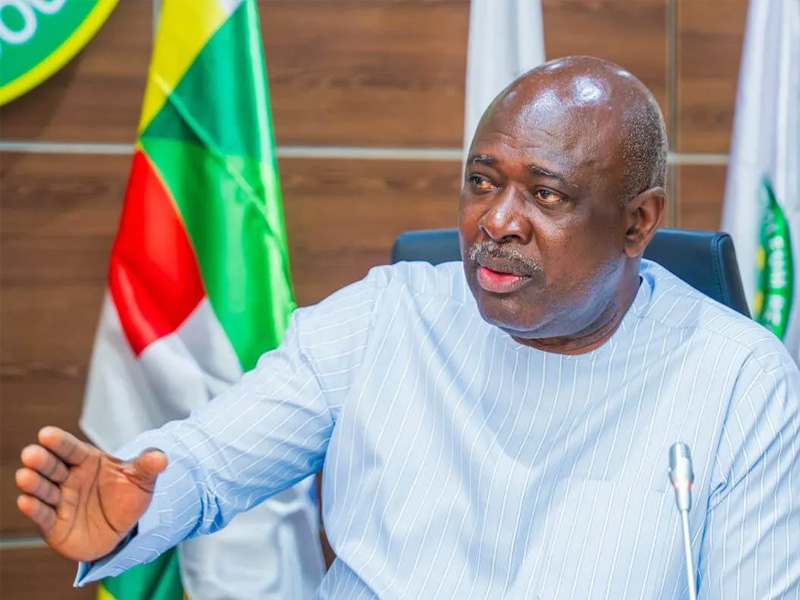
Nigeria’s oil and gas industry is witnessing a significant shift in ownership and participation, with Minister of State for Petroleum Resources (Oil), Senator Heineken Lokpobiri, saying indigenous Nigerian companies now account for about 60 per cent of the country’s crude oil production.
Lokpobiri made the disclosure in Abuja while receiving a delegation from the Republic of Congo led by its Minister of Hydrocarbons, Stev Simplice Onanga. The Congolese delegation was in Nigeria to study the country’s local-content framework and explore ways of adapting some of its experiences to strengthen indigenous participation in Congo’s own petroleum industry.
According to Lokpobiri, the development represents a major change from the period when international oil companies dominated most aspects of Nigeria’s oil production. He said that, previously, international oil companies accounted for about 90 per cent of production, whereas Nigerian indigenous operators now account for around 60 per cent.
He attributed the change partly to Nigeria’s deliberate local-content policies and the divestment of some onshore and shallow-water assets by international oil companies. Those assets have subsequently provided opportunities for Nigerian operators to expand their presence, acquire technical experience and take greater responsibility for production activities.
The Federal Ministry of Petroleum Resources has similarly reported that indigenous operators now account for more than 60 per cent of Nigeria’s daily crude production, while international oil companies have increasingly concentrated their investments in deep offshore operations. The ministry said Nigeria’s crude production had risen to more than 1.8 million barrels per day, although production figures can fluctuate depending on operational and market conditions.
Lokpobiri’s argument is that the growing role of indigenous companies means more value from the petroleum industry can potentially remain within Nigeria. Rather than simply producing crude and relying heavily on foreign companies for technical services and operations, Nigerian firms are increasingly involved in ownership, production, oilfield services and other parts of the petroleum value chain.
He pointed to the emergence of companies such as Renaissance Africa Energy, Seplat Energy and Oando as examples of Nigerian operators that have taken advantage of asset divestments and expanded their activities. A recent report on the Congo delegation’s visit noted that the transfer of some assets from international oil companies to indigenous operators has created opportunities for Nigerian firms to build technical and operational capacity.
The minister also highlighted the growth of Nigerian oilfield service companies. He said the country now has more than 20 to 30 competent indigenous service companies operating alongside international firms. While foreign companies continue to play an important role, particularly in technically demanding deepwater operations, Nigerian companies have increasingly taken responsibility for activities in land, swamp and shallow-water areas.
At the heart of this transformation is Nigeria’s local-content policy. The Nigerian Oil and Gas Industry Content Development Act established a framework aimed at increasing Nigerian participation in the petroleum industry, developing local skills and encouraging the use of Nigerian companies and resources.
The Nigerian Content Development and Monitoring Board, NCDMB, has been central to implementing that policy. Lokpobiri explained that the Board is funded through a statutory one per cent contribution from oil and gas industry contracts, rather than depending entirely on direct government funding. According to him, the arrangement has helped provide a sustainable mechanism for supporting local-content development.
The numbers also show how Nigeria’s local-content journey has evolved. The NCDMB reported that Nigerian content performance reached 56 per cent in 2024, while officials have since highlighted further growth in indigenous participation. The Board has continued to focus on developing local manpower, technology, businesses and capacity across the petroleum value chain.
For Congo, this is precisely where Nigeria’s experience becomes important.
Speaking during the Abuja meeting, Congolese Minister Stev Simplice Onanga said his delegation came to Nigeria specifically to learn how the country developed and implemented its local-content policy. He described the visit as an opportunity for Congo to learn from Nigeria’s experience and determine how similar mechanisms could be adapted to its own circumstances.
The Congolese delegation includes officials responsible for different areas of the petroleum industry, including upstream and downstream operations, gas, local content and engineering, alongside representatives of Congo’s national oil company and indigenous businesses. The delegation’s visit is expected to include engagements with the NCDMB and other institutions involved in Nigeria’s oil and gas industry.
Onanga said Congo wants to improve indigenous participation so that the country’s oil and gas resources create greater opportunities for its citizens and retain more value within the domestic economy. The Nigerian experience is being examined as a possible reference point as Congo works to strengthen its own framework.
The significance of the visit goes beyond Nigeria and Congo. Across Africa, many oil-producing countries face a similar challenge: how to ensure that natural resources translate into local businesses, employment, technical expertise and broader economic development rather than simply generating revenue from the export of raw commodities.
Lokpobiri believes African countries must increasingly develop their own capacity to manage their natural resources. He said the solution to Africa’s energy challenges lies substantially within the continent itself and argued that African countries should take greater responsibility for developing their energy resources and building the expertise required to operate the industry.
Nigeria’s experience, however, also illustrates that increasing local participation is a gradual process. The country’s oil and gas industry still relies on international expertise and investment, particularly for complex offshore operations. The shift is therefore not necessarily about replacing international companies entirely, but about increasing the capacity and participation of Nigerian companies alongside them.
There is also a wider economic argument behind the policy. When Nigerian companies participate more extensively in oil production and related services, more opportunities can emerge for local workers, contractors, engineers, manufacturers and service providers. The growth of indigenous operators can therefore create a chain of economic activity beyond the crude oil itself.
Reuters had previously reported that local firms were already producing more than half of Nigeria’s oil, following the acquisition of assets previously held by international oil majors. The report also noted that companies taking over these assets were investing in previously underdeveloped fields and infrastructure, although the sector continues to face challenges including high operating costs, insecurity, community disputes and ageing infrastructure.
For Nigeria, the challenge now is sustaining the progress. Increasing indigenous participation is one thing; ensuring that local companies have the capital, technology, skilled manpower and regulatory environment required to maintain and expand production is another.
Lokpobiri’s remarks therefore come at an important point in the country’s petroleum story. The ownership and operational structure of Nigeria’s oil industry is changing, and the government is presenting the rise of indigenous operators as evidence that the country’s long-running local-content policy is producing tangible results.
For Congo, the visit offers an opportunity to examine those results closely and determine which aspects of Nigeria’s model can work within its own economic and regulatory environment. For Nigeria, meanwhile, the interest from another African oil-producing country is a sign of the growing regional attention being paid to its experience in developing indigenous capacity.
The bigger question is whether the growing presence of Nigerian companies can continue translating into higher production, more local jobs, stronger technical expertise and greater value retention within the country. Those outcomes will ultimately determine how far the local-content journey has progressed.