Physical Address
304 North Cardinal St.
Dorchester Center, MA 02124
Physical Address
304 North Cardinal St.
Dorchester Center, MA 02124


Nigeria’s economy may be showing signs of improvement on paper, but for millions of Nigerians still battling high food prices, expensive loans and a difficult cost of living, the big question remains: when will the economic recovery actually be felt in their pockets?
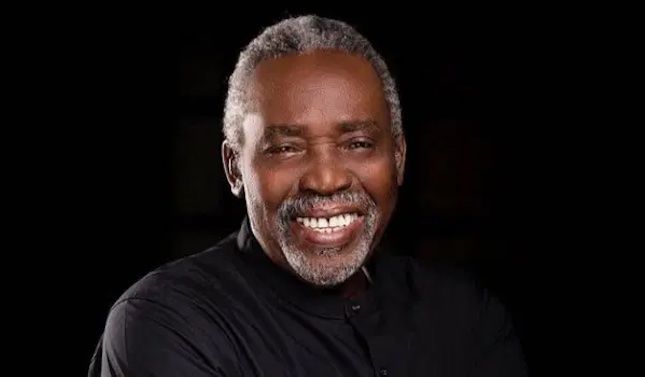
That is the concern raised by Dele Oye, Chairman of the Alliance for Economic Research and Ethics and former President of the Nigerian Association of Chambers of Commerce, Industry, Mines and Agriculture (NACCIMA), who says the country’s improving macroeconomic indicators have not yet translated into meaningful improvements in the daily lives of ordinary citizens.
Oye’s argument comes at a time when the Federal Government and monetary authorities have been pointing to several signs of economic stabilisation. Nigeria’s headline inflation has fallen considerably from the highs recorded in 2024, while economic growth has strengthened. Foreign exchange reserves have also improved, giving the country a stronger external buffer.
But Oye says Nigerians cannot eat economic statistics.
For the trader who visits the market every morning, the farmer trying to get produce from the farm to the city, the small business owner looking for a bank loan or the family struggling to put three meals on the table, the real economy is measured by the prices they encounter and the income they have left after paying their bills.
Speaking on AIT, Oye argued that the decline in headline inflation and the improvement in economic growth do not adequately capture the realities facing households across the country. He specifically pointed to differences between the national figures and conditions at the state level, noting that the national inflation rate could hide severe food-price pressures in individual states.
He cited Adamawa, where he said food inflation stood at about 51 per cent in July, as an example of how national averages can sometimes tell a very different story from what consumers experience locally. His point was that a national inflation figure may look encouraging while families in particular parts of the country continue to see food prices rising sharply.
And that distinction matters.A reduction in the rate at which prices are increasing does not necessarily mean that prices have returned to where they were before. If the price of rice, yam, vegetables, transport or other essentials has already climbed significantly, slower inflation simply means those prices are rising at a slower pace. It does not automatically mean that households are finding food affordable again.
This is the gap Oye wants policymakers to confront.‘GDP figures do not mean anything’ to hungry households
Oye’s criticism is not that Nigeria has made no economic progress. In fact, he has acknowledged that the Tinubu administration’s reforms have produced improvements in some areas.
Earlier this month, he credited the government with taking difficult decisions, including the removal of the petrol subsidy, foreign-exchange reforms, ending monetary financing of fiscal deficits, rebuilding external reserves and pursuing tighter monetary policy. He said those measures had helped address some of the distortions affecting the Nigerian economy.
The issue, according to him, is what comes next.Economic stability, in his view, should be the beginning rather than the end of the conversation.
Oye recently pointed to Nigeria’s foreign exchange reserves reaching $53.11 billion as of August 24, 2026, which he described as evidence of stronger external buffers. He also referenced National Bureau of Statistics data showing that the economy grew by 4.43 per cent year-on-year in the second quarter of 2026, compared with 3.89 per cent in the preceding quarter.
Those figures are significant, but Oye says they must eventually be reflected in household welfare.
His argument is essentially that GDP is a scorecard, but people’s purchasing power is the referee.
That is why he is calling for a stronger focus on food prices, employment and access to affordable financing.
The problem of expensive creditOne of the areas Oye has repeatedly highlighted is the cost of borrowing.
For businesses, particularly small and medium-sized enterprises, access to affordable credit can determine whether a company expands, employs more workers or shuts down.
Oye has argued that businesses cannot meaningfully grow when lending rates remain extremely high. In his latest comments, he questioned how the economy can achieve broad-based growth if productive businesses are unable to access reasonably priced loans.
He specifically argued that interest rates around 30 per cent make it extremely difficult for businesses to expand and called for mechanisms that would provide loans at single-digit rates to productive sectors.
The issue extends beyond business owners.
When borrowing becomes expensive, businesses often pass some of those costs through to consumers. A manufacturer paying heavily for working capital, for example, has to factor financing costs into production. The same applies to farmers, transport operators, wholesalers and retailers.
In the end, expensive money can become another cost embedded in the price of goods.Oye therefore wants government at both federal and state levels to consider ways of directing more resources toward affordable credit for industries and productive businesses rather than spending scarce funds on projects that may have limited immediate economic impact.
Food prices remain at the heart of the crisisFor Oye, however, food is the most immediate test of whether economic reforms are reaching ordinary Nigerians.He has called for a “food-first” approach to economic policy, arguing that food prices are among the clearest indicators of how the economy is affecting poorer households.
That concern comes against the backdrop of Nigeria’s recent inflation trends. The IMF reported earlier this year that inflation had declined for more than a year before pressures from global fuel and food prices pushed it higher again in March 2026.
Oye’s position is that government cannot celebrate macroeconomic stability while ignoring what families are paying at markets across the country.
He has also linked food prices to other structural problems, including insecurity, poor roads and high transportation costs. These issues increase the cost of moving agricultural products from farms to consumers and can ultimately make food more expensive.
For farmers, getting crops out of rural communities is only one part of the problem. There is also the cost of seeds, fertiliser, labour, transportation, storage and energy.When all those costs rise, the final price paid by the consumer rises too.
What about the reforms?
The Tinubu administration has repeatedly defended its economic reforms, arguing that they were necessary to correct longstanding distortions and place the economy on a more sustainable footing.
The Central Bank of Nigeria has also acknowledged that the benefits of improved macroeconomic indicators have not yet fully reached households and businesses. At the Chartered Institute of Bankers of Nigeria conference earlier this month, CBN officials said they expected fiscal and monetary reforms to increasingly translate into better living conditions.
That admission is important because it shows that the question being raised by Oye is not limited to opposition politicians or critics of government policy.
At the same conference, President Tinubu, represented by Finance Minister Taiwo Oyedele, also acknowledged the distinction between economic stability and prosperity, saying that stability had returned while prosperity was still expected to follow.
In other words, the argument now is less about whether certain economic indicators have improved and more about how quickly those improvements can translate into tangible benefits for households.
The bigger question for Nigeria
Nigeria has experienced several economic reforms over the years, but one recurring problem has been the difficulty of translating national economic growth into widespread prosperity.
A country can record stronger GDP growth while households still struggle with food, housing, transportation, healthcare and education costs. Similarly, foreign exchange reserves can rise without immediately reducing the cost of living for families.
This is why Oye is calling for greater emphasis on inclusive growth.
He argues that economic policies should ultimately produce more jobs, cheaper credit, lower food prices and higher household incomes rather than simply improving figures in government reports.
His concerns also extend to state governments. Oye has criticised what he described as spending on expensive projects that do not directly address basic economic needs, arguing that some resources could instead be directed toward affordable financing for businesses and industries.
The debate is therefore not simply about whether Nigeria’s economy is improving.
It is about who is benefiting from that improvement and how quickly those benefits are reaching ordinary Nigerians.
For a country with a large population of young people and millions of small businesses, affordable credit and productive employment could have an enormous effect. Likewise, improving food production, protecting farmers, fixing rural roads and reducing transportation costs could make a more immediate difference to household budgets.
That is the challenge Oye has placed before policymakers.
Nigeria may have moved away from some of the severe macroeconomic imbalances of the past few years, but the journey from stability to prosperity is a different one.
And until families can walk into markets and buy more with their incomes, businesses can obtain loans without crippling interest charges, and workers can feel their purchasing power improving, the debate over whether the economic recovery has truly reached the people will continue.
As Oye puts it, the figures matter — but the ultimate test of the economy is what Nigerians can actually afford to eat, earn, borrow and live on.