Physical Address
304 North Cardinal St.
Dorchester Center, MA 02124
Physical Address
304 North Cardinal St.
Dorchester Center, MA 02124

NIGERIAN DOCTOR IN CALIFORNIA FACES $1M FINE FOR CUTTING PROTECTED TREES — AND NOW IT IS A RACE WAR TOO
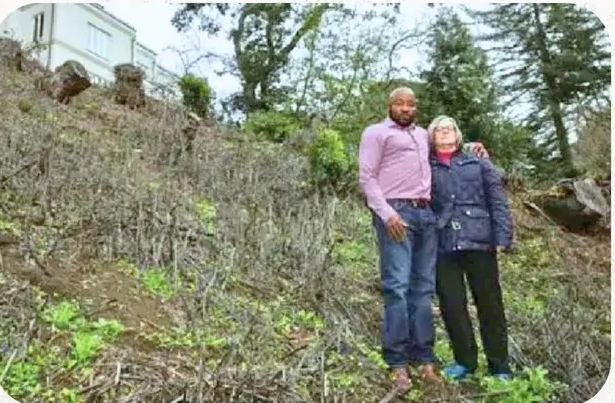
A US-based Nigerian doctor has found himself at the centre of a storm that has gone far beyond the branches of any tree. Facing a potential one million dollar fine in California for allegedly cutting down protected trees on his property, the case has exploded into something much larger — a charged debate about race, environmental law, selective enforcement, and whether America’s legal system treats Black property owners the same way it treats everyone else.
The facts as they stand are straightforward enough on the surface. The doctor, a Nigerian professional who built a life and acquired property in California, allegedly had protected trees removed from his land. California takes its environmental protection laws seriously — some of the most stringent tree protection ordinances in the United States exist precisely in the kinds of affluent communities where disputes like this tend to surface. Cutting down protected trees without the proper permits and approvals can attract massive penalties, and the authorities appear to have come down on this man with the full weight of that regulatory machinery.
One million dollars. For trees.
Now, before anyone rushes to conclude one way or the other, it is worth sitting with the complexity of this case. Environmental protection laws exist for legitimate reasons. Trees in California, particularly heritage and protected species, are not arbitrary bureaucratic designations. They contribute to air quality, ecosystem balance, and community character in ways that have real and measurable value. The law applies to everyone — or at least it is supposed to.
That last part is where this case has ignited a racial firestorm.
Members of the Nigerian and wider Black community in California and beyond are asking a simple but pointed question: would a white property owner in the same neighbourhood face the same one million dollar exposure for the same alleged violation? The question is not paranoia. It is rooted in a long and well-documented history of Black Americans and Black immigrants encountering American institutions — law enforcement, regulatory agencies, courts — with measurably different outcomes than their white counterparts. When a penalty of this magnitude lands on a Black professional, a Nigerian doctor who by every measure represents the aspirational immigrant success story, people are going to ask whether the punishment fits the violation or whether it fits the man.
The racial dimension of this case is impossible to ignore, and it would be intellectually dishonest to pretend otherwise. California has seen its share of controversies around how environmental and zoning regulations are enforced across racial and class lines. The communities that tend to bear the lightest regulatory scrutiny and the lightest penalties are rarely the ones where Black and minority professionals choose to plant roots when they finally achieve the financial standing to do so.
At the same time, the environmental argument cannot simply be dismissed because the defendant is sympathetic. If protected trees were indeed destroyed without authorisation, there is a legitimate public interest in accountability. The credibility of environmental protection depends on consistent enforcement. The argument to watch is not whether the law applies — it is whether it is being applied proportionately and consistently across the board.
For the Nigerian community watching this case unfold, it carries an all too familiar sting. Nigeria’s best and brightest leave home, qualify in some of the most demanding professional fields, build careers in America, buy property, pay taxes, and still find themselves staring down the barrel of systems that seem designed to swallow them whole at the first available opportunity. A Nigerian doctor does not arrive at a one million dollar fine overnight. There are layers of process, negotiation, and legal exposure that got him here, and the community wants to know whether those layers were applied with fairness.
This case is heading toward a legal battle that will be watched closely. If the fine stands at one million dollars, the precedent it sets and the questions it leaves unanswered about race and regulatory equity will outlast the verdict. If it is reduced or dismissed, the authorities will need to explain what changed and why.
Either way, the trees are already gone. What remains to be determined is whether justice in California is as protected as the ones that were cut down.