Physical Address
304 North Cardinal St.
Dorchester Center, MA 02124
Physical Address
304 North Cardinal St.
Dorchester Center, MA 02124

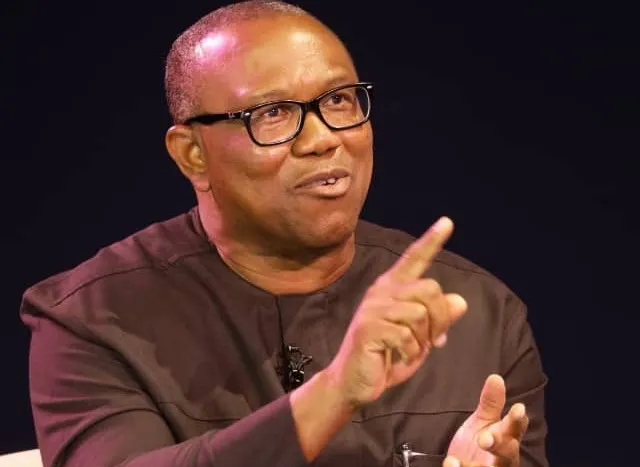
It was an ordinary busy afternoon at Utako Market in Abuja — traders shouting prices, customers bargaining fiercely, and the usual hustle that defines the heart of Nigeria’s informal economy. But suddenly, the atmosphere shifted. Heads turned. Phones came out. Murmurs spread like wildfire. Peter Obi was in the market.
No heavy convoy. No intimidating sirens. Just Peter Obi, walking calmly through the narrow paths between stalls, greeting traders and buyers alike. He eventually stopped at a small roadside stand where an elderly woman was selling groundnuts and cashew nuts in transparent nylon packs neatly arranged in a basin. She looked up, slightly confused at first, then surprised. “Madam, how much be this one?” Obi asked, pointing at the cashew nuts. She mentioned #7,000, still unsure if she was seeing clearly. Obi smiled, picked a few packs of groundnuts and cashew nuts, and paid beyond the asking price— something rare in a market where every naira is negotiated.
Then, in a moment that would become the highlight of the encounter, he leaned slightly closer and said calmly: “Madam, when election comes, vote for me. ”The woman laughed shyly, covering her mouth with the edge of her wrapper. People around burst into laughter and cheers. Some shouted, “Our President!” Others quickly pulled out their phones to capture the moment.
It wasn’t the money he paid that made the moment special. It was the symbolism. Here was a man who had governed one of Nigeria’s most important states, standing face-to-face with a small trader, speaking directly, human to human — not from a podium, not through a microphone, but in the everyday space where Nigerians struggle daily to survive.
For the woman, it was probably one of the most unforgettable sales she had ever made. For the crowd, it was a story they would tell again and again. And for Nigeria, it was another reminder that sometimes, politics is not only about speeches and promises — it is also about presence, humility, and the ability to connect with the very people whose lives leaders seek to change.
Whether one supports him or not, moments like this capture something powerful: the simple act of meeting Nigerians where they truly live — not in government offices, but in markets, on the streets, and in the reality of everyday life.
See video below: